

Not only are storms getting stronger due to warming sea surfaces, but they are also prolonging the time that they can cause significant harm. Additionally, the affected coastlines are unprepared.
You can see newly poured concrete, rebuilt homes, and the cautious optimism that follows disaster when you stand on the shore in Fort Myers Beach today. However, there is a different kind of understanding at work when you speak with the elderly residents, who have survived several storms and witnessed their neighborhoods being completely redrawn by water. Almost instinctively, they will tell you that the storms feel different now. longer. It was wetter. more inclined to stay.
It is more than a sensation. It is getting more difficult to refute the science. The way hurricanes form, how quickly they intensify, and—most importantly—how long they can maintain their strength before making landfall are all changing due to rising ocean temperatures. The ocean serves as both fuel and a passive stage for these storms. Additionally, the fuel is hotter than it has ever been in history.
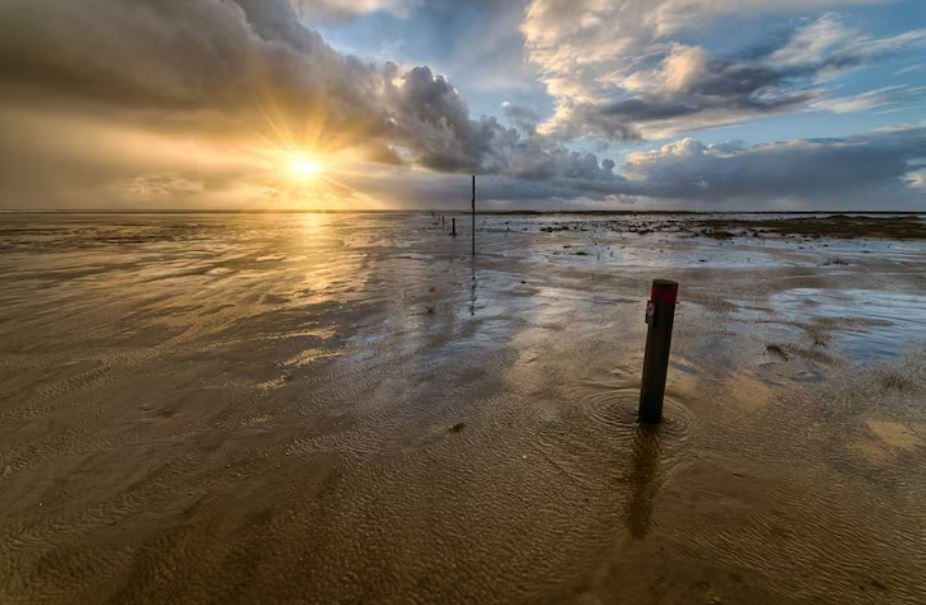
Water is necessary for hurricanes. In particular, for them to form at all, the ocean surface temperature must be at least 79°F. The warmer the water, the more aggressively a storm can feed. This threshold is being crossed more frequently, for longer periods of time, and in ocean areas that were previously too cold to support significant storm activity as the planet warms. Once a natural kill zone for weakening tropical systems, the northern Atlantic is also warming. Meteorologists are still trying to fully quantify this unsettling shift.
Researchers are currently particularly interested in the speed at which storms are gaining power rather than just their raw intensity. When a storm significantly intensifies in less than a day, scientists refer to it as rapid intensification. Before destroying the Florida Panhandle in 2018, Hurricane Michael changed from a Category 2 to a Category 5 in about a day. Before it hit Mexico in 2023, Hurricane Otis did something similar. The warm ocean water below played a significant role in both situations. It becomes nearly impossible to respond to evacuation warnings in a timely manner when such an escalation occurs near a populated coastline.
Another issue is pace, or rather, the absence of it. Compared to earlier decades, hurricanes now travel more slowly. Although the exact mechanism is still unknown, the most likely explanation is that as the climate warms, atmospheric steering winds weaken, especially when the Arctic warms and disturbs large-scale wind patterns. Rainfall is dumped over a single area for longer during a slower storm. In 2017, Hurricane Harvey stalled over Houston and dropped more than 60 inches in some areas. That is now a siege rather than a storm.
All of this is being quietly and relentlessly exacerbated by sea level rise. Since 1900, the global average has increased by more than half a foot, and several more feet are anticipated this century. Because of this baseline shift, every storm surge begins at a higher point for coastal communities. Sea levels at the time caused flood elevations that were 15–60% higher than they would have been in 1900, according to studies of Hurricane Katrina. It wasn’t just the storm that caused the levees in New Orleans to collapse; the ocean’s new normal made the storm’s worst impulses potentially disastrous.
The way all of this compounds is difficult to ignore. Larger storms result from warmer water. Larger storms travel more slowly. More rain is dumped by slower storms. Rainfall is pushed farther inland by higher seas. Additionally, there are fewer opportunities to prepare because the storms themselves are getting stronger more quickly. On its own, each component would present a management challenge. When combined, they create something that begins to resemble a structural change in the way these events take place rather than a weather pattern.
Researchers monitoring long-term trends have found that the percentage of major hurricanes—Category 3 and above—in the Atlantic has nearly doubled since 1980. Just that number ought to be enough to make an arrest. The overall number of storms per season may not change significantly, but the storms that do form are growing more capable of causing the kind of devastation that transforms coastlines. Whether the next big storm will be more powerful than the ones that have come before is not a question worth pondering. Whether the infrastructure in its path was constructed for a world that no longer exists is the question.
