

A certain type of organizational confidence doesn’t make a big deal out of it. It manifests itself in boardroom choices that initially appear to be poorly timed, such as entering a market just as the market’s headlines start to look bleak. That quality is present in DHL’s entry into deep-sea chartering. Calm and thoughtful. Just a little bit against the grain.
Context is important. To put it mildly, global sea routes are not doing well. For months, disruptions in the Gulf have been altering freight flows between Asia and Europe. In May, DHL warned that blocked sea lanes and closed airspace continue to reroute cargo volumes across the network. The cost of shipping is still unpredictable. Geopolitical unpredictability is now more of an ongoing operating environment than a transient circumstance. The majority of logistics firms are tightening risk frameworks and controlling exposure. DHL seems to be acting more in the opposite way.
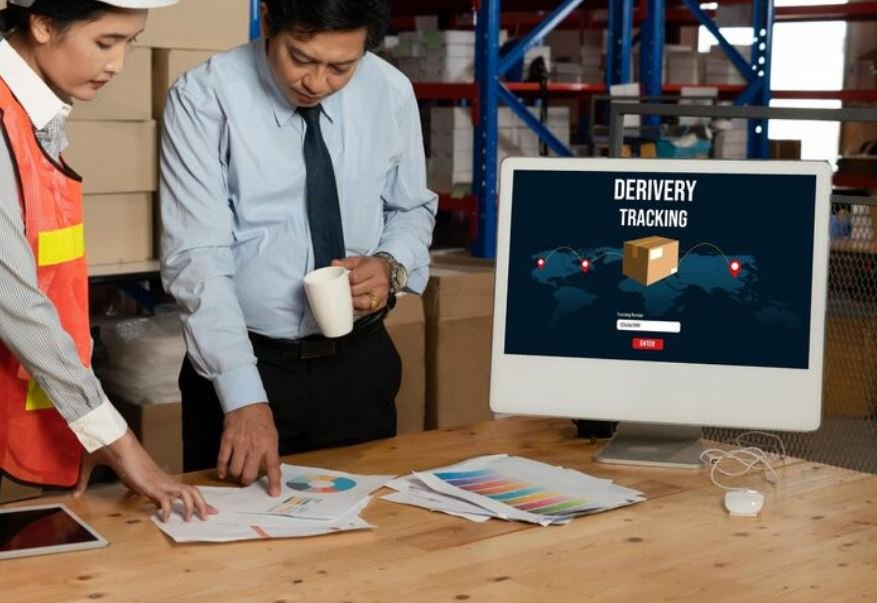
DHL’s decision to go straight into deep-sea chartering instead of buying transport capacity from shipping firms at arm’s length marks a dramatic change in the company’s positioning within the global freight ecosystem. For many years, the company’s Global Forwarding division functioned as a kind of broker, obtaining transport services from shipping firms and airlines and then making money by controlling the difference between the cost of procurement and the customer’s price. Although the model is effective, it exposes the business to uncontrollable price fluctuations. By giving DHL more control over capacity and pricing in particular trade lanes, direct chartering modifies that calculation, at least in part.
It’s important to consider the context of this action. In order to increase its revenue from €600 million to €3 billion by 2030, DHL has been heavily investing in the new energy logistics market, focusing on wind turbine maintenance, EV battery infrastructure, and clean energy supply chains.
They have constructed EV centers in France, established battery logistics hubs in the Netherlands, and are implementing a custom time-definite service for remote wind farm locations. It’s not a subtle ambition. Interestingly, deep-sea chartering fits into this same strategic logic as a control mechanism rather than as a stand-alone adventure. You don’t want to rely solely on the availability of third-party vessels when transporting heavy energy components from producers in East Asia to wind farms off the coast of Scotland or turbine sites in Peru.
DHL’s declared stance on AI and data is also instructive. The company’s Global Head of Ocean Freight, Casper Ellerbaek, recently stated that data is only useful “when it is translated into concrete actions.” It implies a management culture that is genuinely skeptical of signaling without execution and is a more grounded philosophy than the typical tech optimism. In that context, deep-sea chartering appears less like opportunism and more like infrastructure development, establishing physical control prior to the data-driven optimization layer.
It makes sense that the larger logistics sector has been cautious. Since 2020, supply chain interruptions have created a constant reminder of how quickly things can go wrong at sea. From the standpoint of short-term risk management, it makes sense to instinctively lower exposure rather than increase it. However, it’s possible that some players are missing a window due to the same instinct. Companies that have direct access to vessels may find themselves with a structural advantage that is very difficult to quickly build after the fact when capacity tightens and trade routes remain unpredictable.
As this develops, it’s difficult to avoid the impression that DHL is placing a long-term wager that will pay off over the course of the energy transition decade by absorbing short-term complexity. There is a genuine risk. In an unstable freight market, chartering commitments are uncomfortable. However, businesses that influence industries seldom opted for comfort when it mattered most.
