

An anniversary that no one wants to commemorate brings with it a certain kind of dread. A dead humpback whale was discovered off the coast of Virginia Beach in January 2016. At the time, it appeared to be a tragedy—one-of-a-kind, terrible, the kind of thing that makes local news and then fades. That one death has company ten years later. lots of company. Since the first carcass was discovered, 264 humpback whale deaths have been reported along the Atlantic coast from Maine to Florida, according to the most recent NOAA statistics. The incident that NOAA officially classified as an Unusual Mortality Event, or UME for short, is now in its tenth year.
It takes ten years for something to continue to be “unusual.” The state-by-state figures reveal a grimly particular tale. With 49 confirmed deaths, New York is in the lead. Massachusetts comes in second with 55. North Carolina is at 37, Virginia is at 34, and New Jersey is at 38. Each one depicts a necropsy team traveling to a beach, transporting equipment across sand, and slicing open an animal the size of a small bus to ascertain how it died. These are not merely statistics stored away in a federal database. About 45% of the approximately 129 whales that were studied through the middle of 2025 had signs of human contact, such as entanglement in fishing gear, vessel strikes, or both. propeller injuries. blunt force fractures. evidence of ropes encircling fins.
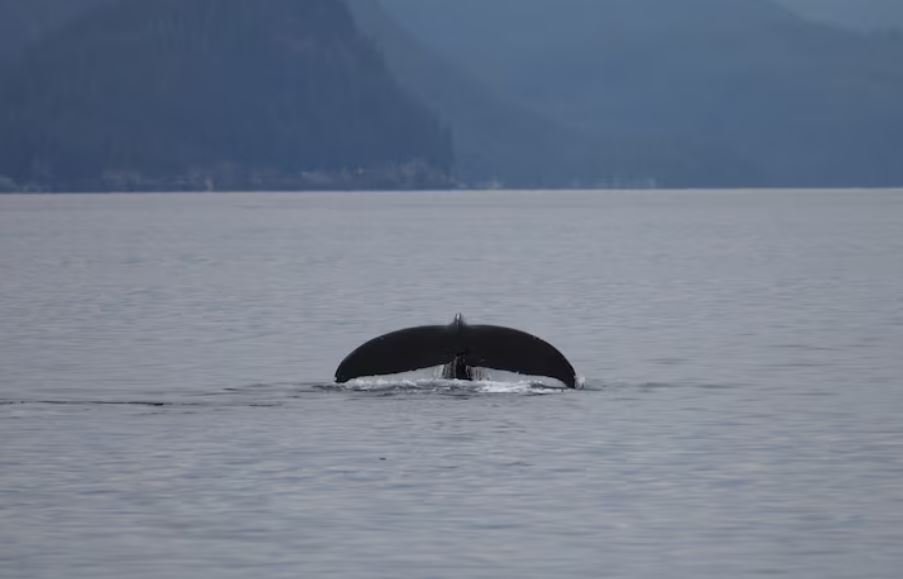
The fact that vessel strikes are not mysterious makes this difficult to accept. It’s not unusual to see a cargo ship navigating the shipping lanes off Virginia Beach on a Tuesday afternoon in the winter. In those same passageways, humpbacks hunt the baitfish that are stirred up by the motion of the ships. Virginia Aquarium researchers have reported seeing whales swim straight into busy shipping lanes while 800-foot ships speed through. Large ships’ sound signatures might not be detected by whales in the same way that other threats are. Or they might just be overly preoccupied with eating. Scientists are still unsure.
It’s important to note that the three prior humpback UMEs, which occurred in 2003, 2005, and 2006, all ended with causes listed as “undetermined.” This uncertainty has continued for the past ten years. There’s a good chance that this one ends similarly.
There were worse years than good ones. 34 people died in 2017. 2023 came in at 37. In 2021, the figures fell to ten before increasing once more. There isn’t a clear pattern or turning point where policies obviously stepped in and the dying slowed. In order to protect the critically endangered North Atlantic right whale, NOAA established ship speed reduction regulations in specific corridors. In theory, humpbacks also benefit from these regulations. It is still difficult to determine with certainty whether those actions have significantly decreased humpback mortality.
It’s difficult to ignore the fact that the public’s awareness of these deaths has never quite reached the urgency that the numbers seem to demand. The West Indies population, which includes animals from the Atlantic coast, was taken off the Endangered Species List prior to the start of this UME, so it’s possible that humpback whales aren’t listed as endangered. Maybe it’s because after the hundredth time, a whale washing up on the coast doesn’t make headlines. The cargo ships continue to pass through the same waters, the whales continue to feed, dive, and occasionally perish, and the whale watching boats continue to depart from Virginia Beach on winter weekends.
The normalization may be the most unsettling aspect of it all. By all reasonable standards, an event that was deemed “unusual” in 2017 is now typical. Energy debates, fisheries overhauls, offshore wind disputes, pandemic years, recovery years, and Democratic and Republican administrations have all seen the dying continue at high rates. None of that has bothered the whales. They simply never stop cleaning.
The Greater Atlantic Marine Mammal Stranding Hotline should be called by anyone who spots a stranded or distressed whale, according to NOAA. It’s a fair request. After ten years, it’s more difficult to determine whether it’s adequate.
