

A bright orange sailing drone is currently pushing through a swell that most commercial ships would gladly navigate around somewhere in the North Atlantic. There is no one on board. No crew is inspecting the rigging, and no captain is yelling commands. Saildrone, a California-based company, created a slim, wind-powered vessel that glides through a storm because that’s precisely where the interesting data resides. This type of mission was primarily a slideshow in a research proposal five years ago. These days, it serves as the foundation for a new method of observing how the ocean truly affects our climate.
The planet’s most giving and underappreciated worker has always been the ocean. Without complaining, it absorbs between a quarter and a third of all the carbon dioxide we release into the atmosphere each year. The warming we are already concerned about would be significantly worse without that silent labor. However, you’ll get a cautious pause if you ask any marine chemist what that precise figure is. There is a lot of uncertainty in that figure, as MIT’s Ryan Woosley puts it plainly. The ocean is not a single entity. Seasons, currents, storms, layer mixing, and a thousand tiny chemistries all occur simultaneously.
It used to be acceptable to have that uncertainty. It is no longer the case. Policymakers want to know if the needle is truly moving as nations begin to invest significant sums of money in efforts to cut emissions. It is nearly impossible to determine whether a decrease in atmospheric CO2 was caused by human policy or by the ocean acting normally without precise measurements of where carbon is going. Woosley refers to it as the “trillion-dollar question.” He’s not being overly dramatic. The entire framework of climate accounting begins to falter if governments are unable to validate their findings.
The data came in fragments for decades. After gathering samples for a few weeks, a research ship would return home. Some commercial ships had sensors on board, which was helpful, but they avoided inclement weather almost instinctively and traveled predictable routes. The problem is that the ocean absorbs carbon most dramatically during severe weather, when churning surface water exposes new layers to the atmosphere. Therefore, the moments that no one was watching were the most crucial. For years, scientists were aware of this. They just lacked the necessary equipment to make the necessary repairs.
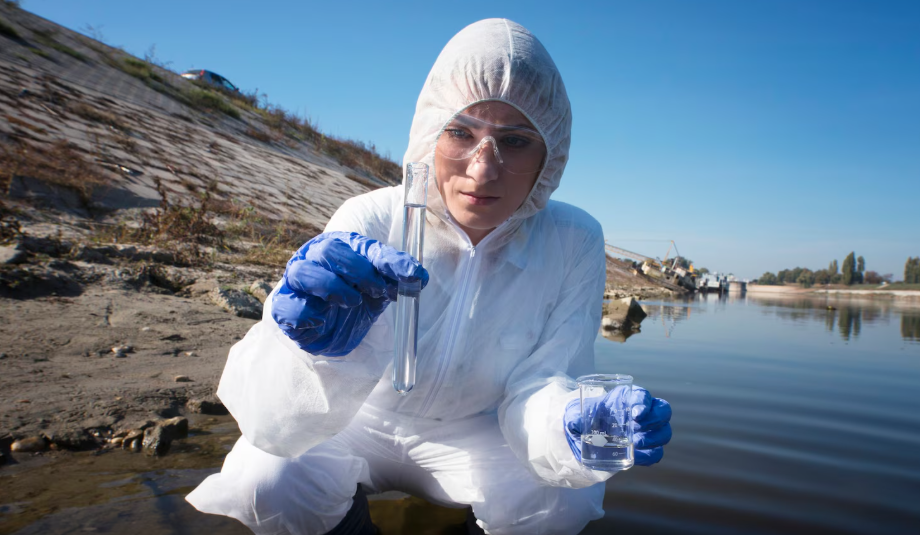
That math is altered by the drones. They don’t get seasick, run on wind and sun, and are less expensive than a research cruise. Woosley and his MIT colleagues have a proposal called Ocean Vital Signs that calls for deploying fleets of them throughout all five ocean basins in order to gather over 5,000 drone-days of continuous measurements over a five-year period. Neural networks would use the data to create a much more accurate image of how the ocean breathes. It’s a modestly ambitious project that wasn’t feasible prior to hardware advancements.
This is important for a deeper reason. In addition to warming the earth, carbon also modifies the chemistry of water. Since the Industrial Revolution, the ocean’s acidity has increased by about thirty percent. This is an abstract statistic until you consider that corals and oysters use calcium carbonate to form their shells, which is dissolved in acidic water. An enormous biological pump transfers carbon from the surface into the chilly darkness below, where it can remain for centuries, deeper down in what oceanographers refer to as the twilight zone. For some time now, Peter de Menocal at Woods Hole has been pointing out that we still don’t fully understand how much this pump is helping us.
It’s difficult not to notice a subtle change in the way climate science is conducted as this develops. Oceanography relied on ships, perseverance, and good fortune for the majority of the previous century. A permanent, dispersed nervous system that spans the oceans is now beginning to take shape. It remains to be seen if five thousand drone-days will be sufficient to resolve the trillion-dollar issue. However, the question feels answerable for the first time.
