

The lack of interest in DePTH-GPT outside of scientific circles is somewhat unsettling. When China introduced it in November 2025, the news spread around the world for a day or two before the discussion largely moved on. That is incorrect. This is not a specialized research tool; rather, it is a sign of the direction and leadership of ocean science.
Deep-sea Perception, Thinking and Habitat GPT, or DePTH-GPT for short, is an artificial intelligence model designed to handle the kinds of data that have always made deep-sea research so challenging: video footage from submersibles traveling through pitch-black water, acoustic recordings of organisms that no one has fully cataloged, sediment patterns that shift over thousands of square kilometers, and hydrothermal activity that operates on timescales that are nearly impossible for human researchers.
| Field | Details |
|---|---|
| AI Model Name | DePTH-GPT (Deep-sea Perception, Thinking & Habitat – GPT) |
| Launch Date | November 2025 |
| Developed By | A collaborative team led by Chinese scientists; affiliated with the Second Institute of Oceanography, Ministry of Natural Resources, China |
| Parent Project | Digital DEPTH Project — focused on deep-sea ecosystem research |
| UN Framework | UN Decade of Ocean Science for Sustainable Development |
| Core Technologies | Deep learning, large language models (LLMs), computer vision, knowledge reasoning |
| Data Types Analyzed | Video footage, topography, hydrodynamics, sediment, bioacoustics |
| Habitats Covered | Seamounts, hydrothermal vents, abyssal plains, continental slopes |
| Current Deployment | Intelligent cognitive systems established for a deep-sea seamount and a hydrothermal vent field |
| Future Availability | Open to global research institutions and international organizations |
| Research Approach Shift | From traditional qualitative methods → intelligent, interpretable, and predictive analysis |
| Institutional Backing | Second Institute of Oceanography, Ministry of Natural Resources, China |
The model gathers all of this data, processes it concurrently, and generates analysis that is theoretically quicker and more cohesive than anything a human team could accomplish using conventional techniques. It’s still unclear if it actually fulfills that promise. However, it is worth stopping to consider that it exists and functions on any significant level.
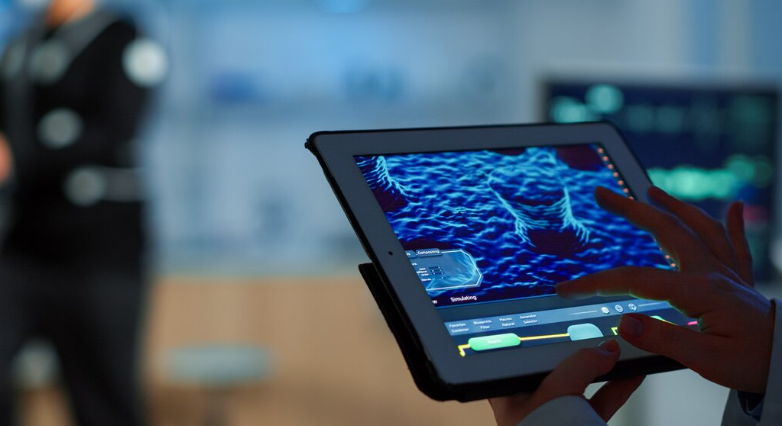
Within the larger framework of the UN Decade of Ocean Science for Sustainable Development, the model was created as part of the Digital DEPTH project. That framing is important. This is science being carried out under an international umbrella with clear plans to make the model available to research institutions worldwide. It is neither a closed military program nor a proprietary commercial tool. That openness has an almost disarming quality, and it’s important to consider whether American institutions are well-positioned to benefit from it or if the disparity in focus and investment has become too great to swiftly close.
DePTH-GPT has already been used by the Second Institute of Oceanography to construct what they refer to as an intelligent cognitive system for a hydrothermal vent field and a deep-sea seamount. In essence, a seamount is an underwater mountain that is frequently rich in mineral deposits and biodiversity.
If anything, a hydrothermal vent is even more remarkable—a fissure in the seafloor where superheated water surges up from the Earth’s interior, sustaining ecosystems that rely solely on chemical energy to survive in the absence of sunlight. These are some of the planet’s most alien settings. At the very least, it is a remarkable technological accomplishment that an AI model is now creating coherent cognitive maps of them.
Despite decades of deep-sea leadership through organizations like NOAA and the Woods Hole Oceanographic Institution, it is difficult to ignore the fact that the United States has not produced anything of a similar magnitude. NOAA is working on deployable AI projects of its own, with an emphasis on seafloor identification and underwater vehicles. This is important and good work. DePTH-GPT, on the other hand, seems to be built to function at a different level of integration, combining various data streams into something that resembles a single interpretive system. Even though the specifics of how well it functions under actual circumstances are still unknown, that is a significant distinction.
American marine scientists should be aware that deep-sea research is about to enter a truly new phase, rather than being alarmed. The most challenging aspect of studying the ocean has always been the data problem: there is too much data, dispersed across formats and instruments that are difficult to communicate with one another.
Discovery could proceed at a rate that is simply unmatched by conventional techniques if an AI model is able to close those gaps. Whether or not China has created something remarkable is not a question worth posing at this time. It obviously has. The question is what will happen next and whether the rest of science will act swiftly enough to address this change before the initial benefits build up into something much more difficult to overcome.
