

A threat that is invisible has a profoundly unsettling quality. The surface of the Arctic Ocean is the same as it has always been: vast, cold, and gray. However, something has been subtly altering for years a few hundred feet below, along the shallow continental shelf north of Siberia. Methane is starting to leak from ice-like crystalline structures known as hydrates or clathrates, where it has been trapped for millennia. Scientists on research vessels have observed columns of gas bubbles rising through the water column like slow-motion warning signals, but not dramatically or in a single catastrophic event just yet.
The continental shelf’s methane hydrates, which are only stable in certain cold, high-pressure environments, are essentially cages of water molecules crammed around individual methane molecules. If either is disturbed, the structure collapses. The cage dissolves and releases the gas inside when the water is even slightly warmed. As a chemistry problem, it sounds almost elegant. It is a completely different issue when it comes to climate change.
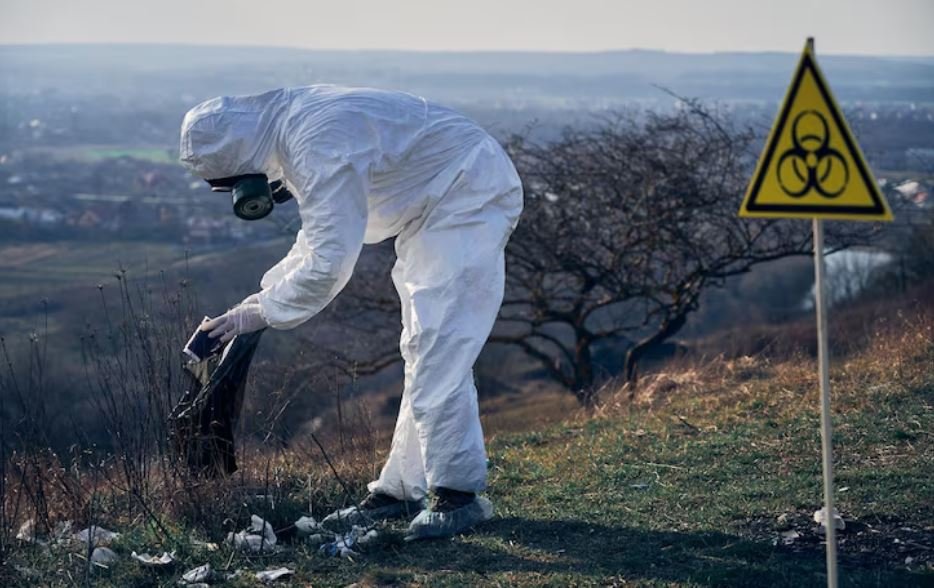
Scientist Natalia Shakhova, who has spent years researching the Siberian shelf, has calculated that if the permafrost layer beneath that single stretch of seafloor thawed, it would release twelve times the current atmospheric concentration of methane. The permafrost layer covers more than 1.5 million square kilometers, which is larger than the combined areas of France, Germany, and Spain. It’s odd that, given what it suggests, that number has received little public attention in the literature. Over various time periods, methane has a heat-trapping capacity that is between 25 and 75 times greater than that of carbon dioxide. The math is unsettling.
Methane chimneys, which are concentrated vertical plumes of the gas rising from the seabed with concentrations up to 100 times above background levels, were discovered by researchers during the 2008 International Siberian Shelf Study. The expedition’s co-leader, Örjan Gustafsson of Stockholm University, was cautious not to definitively attribute the release to global warming. However, he made it clear that the widely held belief that the permafrost was keeping these reservoirs firmly in place needed to be reevaluated. This reconsideration has been sluggish, in part because there is still a dearth of data from these far-off waters and in part because the implications are the kind that scientists typically handle cautiously.
The most truthful framing may be found in the geological record. A gradual and then sudden release of methane from frozen soils may have contributed to a catastrophic warming event that occurred approximately 635 million years ago, the end of what scientists refer to as Snowball Earth, according to sediment evidence cited by UC Riverside geologist Martin Kennedy. A concerning trend is confirmed by ice core data from Greenland and Antarctica: climate change isn’t always gradual. It flips occasionally. According to Kennedy, there is a tipping point that can be reached at the current emission trajectories, and once that point is reached, intervention is useless.
In ways that are rarely covered by mainstream media, the ocean’s numbers are astounding. Methane stored in ocean hydrates alone accounts for about 10,000 gigatons of carbon, which is far more than all recoverable fossil fuel reserves put together, according to the Global Carbon Project. Arctic permafrost contains about 600 gigatons on land. These are not estimates from abstract science. They are carbon reservoirs that have built up over millions of years and are currently situated in a warming system that was not intended for them.
As this science has developed over the last 20 years, it seems as though the research community has been torn between two difficult stances. Exaggerate the danger and run the risk of being written off as an alarmist. Don’t overstate it, and you might be able to quietly watch the window of opportunity for preventive action close. Prior to industrialization, atmospheric methane levels were below 800 parts per billion; by 2015, they had risen to over 1,800 parts per billion, and they have been rising ever since. Fossil fuel operations and agriculture account for a portion of that increase. It’s still unclear how much is coming from thawing permafrost and destabilizing seafloor hydrates, which is one of the things that keeps researchers up at night.
The scale of possible methane release from natural reservoirs could be comparable to events like the Paleocene-Eocene Thermal Maximum, which occurred approximately 56 million years ago when ocean chemistry drastically changed and global temperatures spiked several degrees in a geologically brief window, according to Andrew Glikson of the Australian National University. The speed at which the current warming is occurring will determine whether or not that comparison is instructive, and that, of course, depends on decisions that are still being made. The hydrates are brittle. The shelf is getting warmer. If there is a fuse, it is real. No one can say with certainty how long it lasts.
