

A certain type of money comes in stealthily and transforms everything. Unlike announcements from Silicon Valley, the $15 million grant that Scripps Institution of Oceanography received earlier this March from the Fund for Science and Technology is not ostentatious. No launch of a product. No response from the stock ticker. Just scientists, a strategy, and access to regions of the planet that most people will never see and, to be honest, have hardly given much thought to.
Launched just last year, the Fund for Science and Technology, which is funded by the late Microsoft co-founder Paul G. Allen’s estate, aims to invest at least $500 million in science over a four-year period. That is a significant commitment. Additionally, selecting Scripps, an organization with more than a century of experience in ocean research, as an early beneficiary conveys a purposeful message about the intended use of that funding.
| Scripps Institution of Oceanography — Key Information | Values |
|---|---|
| Full Name | Scripps Institution of Oceanography |
| Parent Institution | University of California San Diego (UC San Diego) |
| Founded | 1903 |
| Location | La Jolla, San Diego, California, USA |
| Director | Meenakshi Wadhwa, Vice Chancellor for Marine Sciences |
| Grant Amount Received | $15,000,000 (largest since joining UC San Diego in 1960) |
| Grant Source | Fund for Science and Technology (FFST) — funded by the estate of Paul G. Allen |
| FFST Commitment | $500 million over four years, launched 2025 |
| Research Focus Areas | Environmental DNA (eDNA), Deep Argo float network, Thwaites Glacier monitoring |
| Key Collaborators | Woods Hole Oceanographic Institution, NOAA’s Pacific Marine Environmental Laboratory |
| Notable Initiative | Ocean Biomolecular Observing Network |
| Floats to Be Deployed | ~50 Deep Argo floats |
| Director Emeritus | Margaret Leinen (leading eDNA research) |
On a clear morning, stroll the bluffs above La Jolla, and the Pacific appears surprisingly motionless. There is a tremendous amount of change occurring beneath that surface calm, which researchers have been finding difficult to quantify due to a lack of resources and reach. Fixing that is one of the goals of the grant. In collaboration with Woods Hole Oceanographic Institution and NOAA’s Pacific Marine Environmental Laboratory, about fifty Deep Argo floats—robotic sensors that drift through the ocean’s depths and gather temperature, salinity, and pressure data from locations where no ship has stayed long enough to look—will be deployed.
Argo floats have been used by Scripps for over 20 years. There is a perception that the program has been subtly undervalued, carrying out crucial but unglamorous work while discussions about climate change have been directed elsewhere. Gaps in ocean data that climate models have been addressing for years could be filled by extending it farther, into water columns that are still mostly unmeasured. Although it’s still unclear if those models will change significantly as new data becomes available, researchers appear cautiously optimistic.
Then there is the eDNA work, which may be the grant’s most subtly remarkable component. Every living thing, including bacteria, fish, whales, and other organisms, leaves a biological trace in the water around them. In order to create something akin to a biological fingerprint of ecosystems that we have hardly cataloged, Scripps Director Emeritus Margaret Leinen and her team intend to gather and examine those traces from understudied ocean regions. Even experts in the field were taken aback by a recent discovery from Scripps that revealed distinct microbial communities are carried by various deep-water masses. That’s the kind of thing that shows you how little the map has really covered.
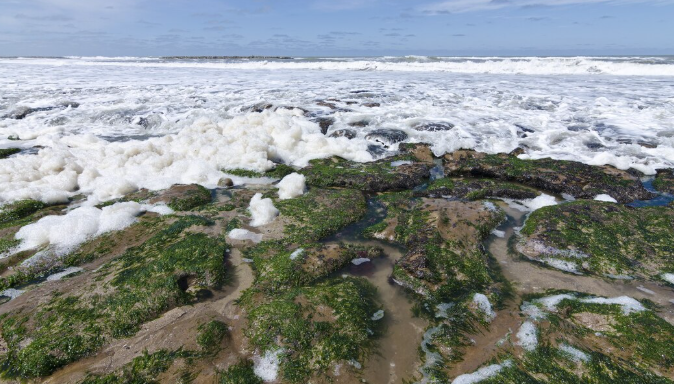
Thwaites Glacier, the third component, has a completely different weight. The Doomsday Glacier is not a colloquial name for it. If it completely destabilizes, the Antarctic ice sheet it anchors contains enough frozen water to raise the world’s sea levels by several feet. The kind of research that makes the stakes of this grant feel very real, very quickly, is studying the ocean conditions beneath it, the warming water eating at its base. It’s difficult to ignore the urgency that permeates this work, which lies halfway between genuine alarm and scientific curiosity.
Meenakshi Wadhwa, director of Scripps, stated that “the ocean holds answers to some of the most pressing questions about our planet’s future, but only if we can observe it.” Even though that sentence seems straightforward, it has a lot of meaning. The basis is observation. Without it, the models, forecasts, and policy discussions are all predicated on conjecture. With this funding infusion, Scripps hopes to lessen the number of locations where scientists have been forced to make educated guesses.
This grant, despite its size, might just be the beginning. The majority of this planet is covered by oceans. There are huge gaps in the data. However, for the time being, fifty robots are venturing into the deep, and answers that no one has been near enough to hear may be found somewhere in the frigid water beneath an Antarctic glacier.
