

When scientists visited the western side of the Mid-Atlantic Ridge in 2007, an Ostracod—a tiny, barely noticeable crustacean known colloquially as a seed shrimp—was swarming in enormous numbers somewhere along the ridge in the complete darkness between Iceland and the Azores. They gathered samples. They sent them to specialists. It turned out that the creature might be a completely unidentified species. It had not yet been given a name. No one had even thought to search for it there. That moment encapsulates a fundamental aspect of the deep North Atlantic: an area so poorly understood that every expedition into it yields discoveries that, if made on land, would make headlines.
Around 2020, the ATLAS project, a five-year coordinated research effort involving scientists from 13 countries and more than 40 Atlantic expeditions, concluded its major phase of work with results that were both exciting and sobering. Sea mosses, mollusks, and corals that had remained undiscovered due to the deep ocean’s lack of exploration rather than their rarity have been identified as at least 12 new deep-sea species. Epizoanthus martinsae is a coral species that has never been seen before. It lives on black corals almost 400 meters below the surface. A novel bryozoan was discovered at an underwater mud volcano off the coast of Spain. It was a new filter-feeding moss animal. These locations weren’t far away or exotic; they were simply places that no one had examined thoroughly enough.
| Field | Details |
|---|---|
| Key Research Project | ATLAS (A Trans-Atlantic Assessment and deep-water ecosystem-based Spatial management) |
| Project Duration | ~5 years (concluding ~2020) |
| Lead Scientist | Professor Murray Roberts, University of Edinburgh |
| Countries Involved | 13 countries around the Atlantic |
| New Species Discovered | At least 12 new deep-sea species |
| New Species Records | ~35 new records of species in previously unknown areas |
| Notable New Species | Epizoanthus martinsae (coral, 400m depth); Microporella funbio (bryozoan, found at mud volcano off Spain); Antropora gemarita (bryozoan, filter-feeding) |
| Hydrothermal Vent Discovery | New field discovered in the Azores region |
| Cold-Water Coral Habitats at Risk | 50% at risk from climate change |
| Deep-Sea Ecosystem Services at Risk | 19% at high risk from acidification and fisheries |
| Ocean Current Status | Major North Atlantic currents have slowed dramatically |
| Carbon Absorption | Oceans absorb up to one-third of atmospheric carbon |
| Key Concern | Coral skeletal degradation from acidification — described as “like osteoporosis” |
| Natural Resource Economist | Prof. Claire Armstrong, University of Tromsø |
| 2007 Mid-Atlantic Ridge Expedition | RRS James Cook; 31 scientists; 1,500 square miles mapped; possible new Ostracod species found |
| Expedition Leader (2007) | Professor Monty Priede, University of Aberdeen / Oceanlab |
| Technology Used | Remotely operated vehicles (ROVs), robotic landers, deep-sea cameras, ocean bottom seismometers |
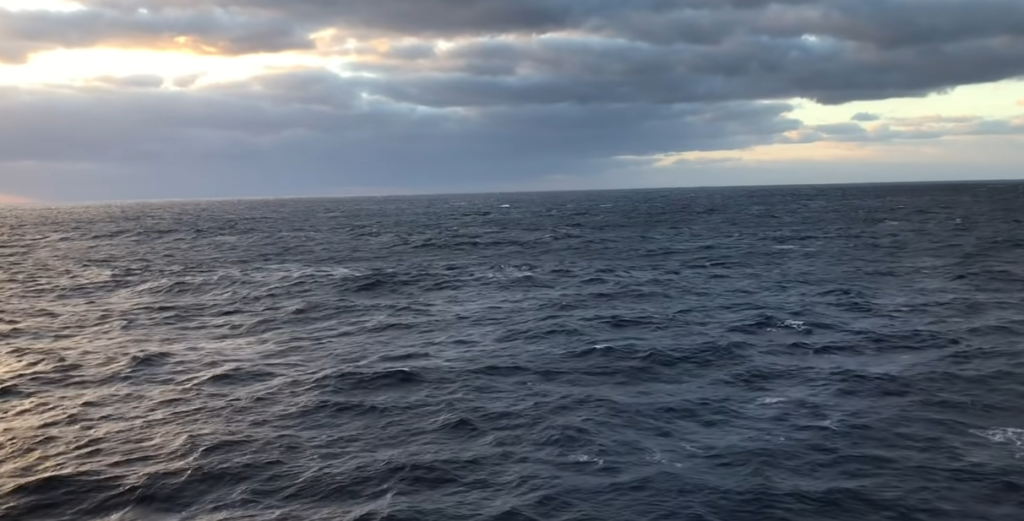
The project’s principal investigator, Professor Murray Roberts of the University of Edinburgh, referred to what the team discovered at depth as “cities of the deep”—large settlements constructed on sponges and cold-water corals that give everything else structure. These locations serve as spawning grounds for significant commercial fish. When the corals are removed, the structure collapses, depriving the fish of their only habitat for reproduction. It’s the kind of cascade that develops so slowly that people frequently fail to recognize the link between cause and effect. “It’s like understanding that the rainforest is an important place for biodiversity on the land,” Roberts stated. Here, about 1,000 meters below the surface, the same is true.
The ATLAS project also discovered that these ecosystems are already undergoing change, which merits greater attention than it typically receives. The North Atlantic’s major ocean currents, which are the highways of the deep—the links between ecosystems that enable species to migrate, food to disperse, and habitats to stay connected over great distances—have significantly slowed in response to climate change. These connections deteriorate as the currents slow. The deep ocean becomes increasingly disjointed. After millions of years of stable equilibrium, species begin to run out of options.
The coral issue is especially noticeable. Climate change has been found to pose a threat to about half of cold-water coral habitats, primarily due to ocean acidification. About one-third of the carbon dioxide that people release into the atmosphere is absorbed by the oceans, which causes a change in chemistry. Coral skeletons are composed of calcium carbonate, which is corroded by the water’s slight increase in acidity. According to Roberts, the outcome is comparable to osteoporosis in that the skeletons become more brittle, porous, and prone to breaking. As atmospheric carbon levels continue to rise, the foundations of entire reef systems are gradually eroding.
It’s difficult to ignore how important the timing is in this situation. During the ATLAS results, Professor George Wolff of the University of Liverpool pointed out that our maps of the Moon’s and Mars’ surfaces are still superior to those of the deep ocean floor. Decisions regarding mining, fishing, and environmental protection are being made with a great deal of uncertainty about what’s actually down there due to this knowledge gap, which is more than just an academic annoyance. The deep ocean is so far away that most people are unaware of the risks involved, according to Professor Claire Armstrong, a natural resource economist from the University of Tromsø who worked on the project. Furthermore, those deep-sea cities do not recover on human timescales after they are damaged. On geological ones, they recover.
