

Sam goes to parkrun in Hampshire’s Alice Holt Forest every Saturday morning. He characterizes his weeks as “hectic”—full of cacophony, sensory overload, and the unique weariness that comes with being neurodivergent in a world that hardly ever slows down. However, something changes beneath the trees. The sound of leaves, the cool air, and the physical rhythm of walking through a living environment. “Even ten minutes in this forest makes the week better,” he said. It may seem insignificant, but it is central to the message that WWF’s Prescription for Nature campaign seeks to convey to the rest of the nation.
The concept is surprisingly simple. With an online toolkit, a free wellbeing guide, and the backing of medical experts like ITV’s Dr. Sara Kayat, WWF UK is advocating that people spend at least 20 minutes a day spending time in nature. This is a formal campaign supported by scientific evidence rather than a vague wellness recommendation. A national park or a forest are not necessary for the prescription. It could be a houseplant that needs to be repotted, a window with a bird feeder, or a lunch break spent listening to the sound of rain on leaves. Contact is the key. Frequent, deliberate, leisurely interaction with a non-screen.
The context of all of this is important. It is difficult to dispute the statistics that indicate the UK is experiencing a mental health crisis. In any given week, one in six people in England report having a common mental health issue, such as depression, anxiety, or both. Half of young people between the ages of 16 and 21 report that they “always feel anxious.” These are not statistics from the periphery. They are describing a widespread and deteriorating situation. Additionally, there is growing clinical interest in what researchers are referring to as “nature prescriptions,” which point patients toward environmentally friendly activities as an adjunct to other forms of treatment, even though therapy, medication, and structural change all have their place. Recent NHS pilots have produced encouraging outcomes, and general practitioners are becoming more inclined to write them.
Alongside all of this, WWF’s research revealed a gap that seems both apparent and unnoticed. Nearly 90% of adults in the UK claim that being in nature improves their mental health. When they are in it, nearly 75% report feeling at ease. However, one-third of those polled only visit the outdoors once a week or less. They wish they had spent more, according to half. The obstacles are well-known: a lack of time, a lack of green space in the area, and, especially among younger people, a perception that natural areas aren’t always safe. Nearly 25% of people between the ages of 18 and 26 reported feeling unsafe in close proximity to nature. More attention should be paid to that detail than is typically the case.
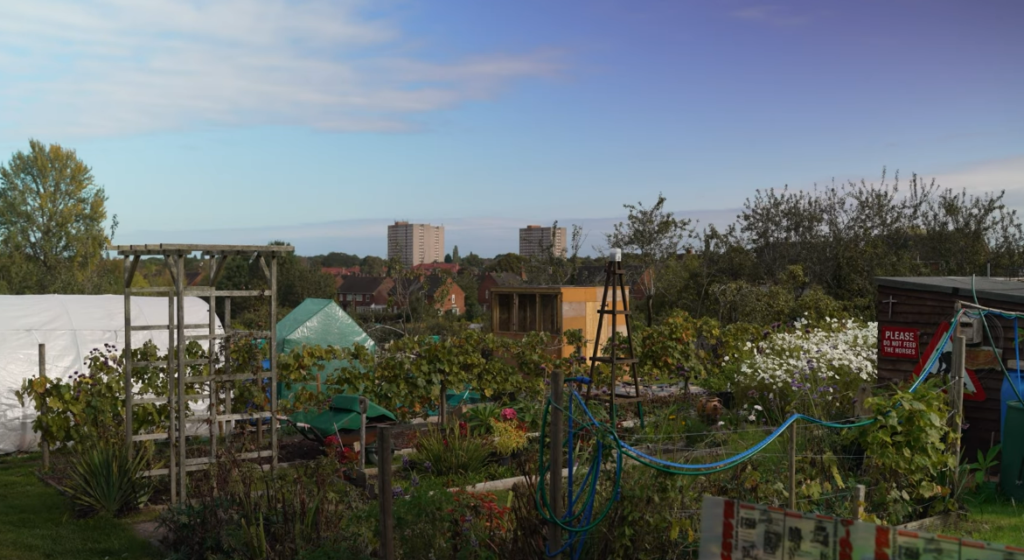
As this campaign develops, it seems like WWF is attempting to accomplish two goals at once. One is directly related to human health: encouraging people to spend time outside, lowering anxiety, and creating a daily routine centered around restorative activities. The other is more tactical. The nonprofit has long recognized that individuals who spend time in nature are more likely to be concerned about its preservation. The Prescription for Nature messaging is powered by this equation: personal well-being leading to environmental concern. “When we restore nature, nature restores us,” as stated by Tanya Steele, CEO of WWF. That could easily be interpreted as a catchphrase. Additionally, it simply describes the relationship accurately.
In order to address the fact that 70% of UK primary schools currently lack daily access to natural environments, the campaign extends into schools through a program called Happy By Nature, which aims to reach one million children by 2028. Children who learn outside exhibit greater resilience, reduced stress, and increased motivation, according to numerous studies. Giving a generation a genuine sense of comfort in nature instead of viewing it as a planned field trip might eventually change things in ways that no single awareness campaign can.
The request is modest for the time being. Twenty minutes. A patch of sky, a houseplant, and a park bench. Given how low that bar is set and how infrequently most people actually pass it, it’s difficult not to find something subtly convincing about it.
