

A series of instruments has been quietly counting molecules for years off the coast of Oregon, somewhere beyond the point where the continental shelf disappears into darkness. They gauge the amount of oxygen that remains in the water far below the surface. Season after season, the response has been essentially the same: slightly lower than the previous year.
There is a name for that layer. The breathable surface and the cold, oxygen-rich deep are separated by the oxygen minimum zone, or OMZ, which is located between 200 and 1,000 meters below the surface. It has always happened naturally. Its size appears to be shifting. The researchers who have devoted their careers to measuring the zone seem to be pushing toward shore and climbing toward the surface, but they cannot agree on how far it will go.
On their own, the figures that do exist are sobering. Since the mid-1900s, the ocean has lost about 2% of its oxygen. The hypoxic boundary shoals upward by nearly 100 meters off southern California, where the decline is steeper and ranges from 20% to 30% at depths of 200 to 300 meters over a few decades. It’s not a rounding error. A habitat is being compressed from below.
Speaking with those who model these things gives the impression that the ocean is acting more like an internal structure than a single, homogeneous blob. The Pacific OMZ is layered “like an onion,” with an inner core that may actually shrink while the outer skin expands, according to a Princeton team led by Laure Resplandy. According to their forecast, if emissions continue to be high, the zone could expand by up to 8 million cubic kilometers by the year 2100, creeping five to fifty meters closer to the surface. It is the biggest such zone on Earth, and it is growing.
This is the point of contention in the agreement. According to some researchers, warming will reduce deep ocean circulation, depriving the interior of new oxygen. Others believe the response will be slower and more patchy than the worst models predict, based on the same physics. The literature made it clear even decades ago that not all scientists agreed with these predictions. That much is certain: warming stiffens the sea’s layering and decreases oxygen solubility. It is still genuinely debatable what that adds up to, region by region, decade by decade.
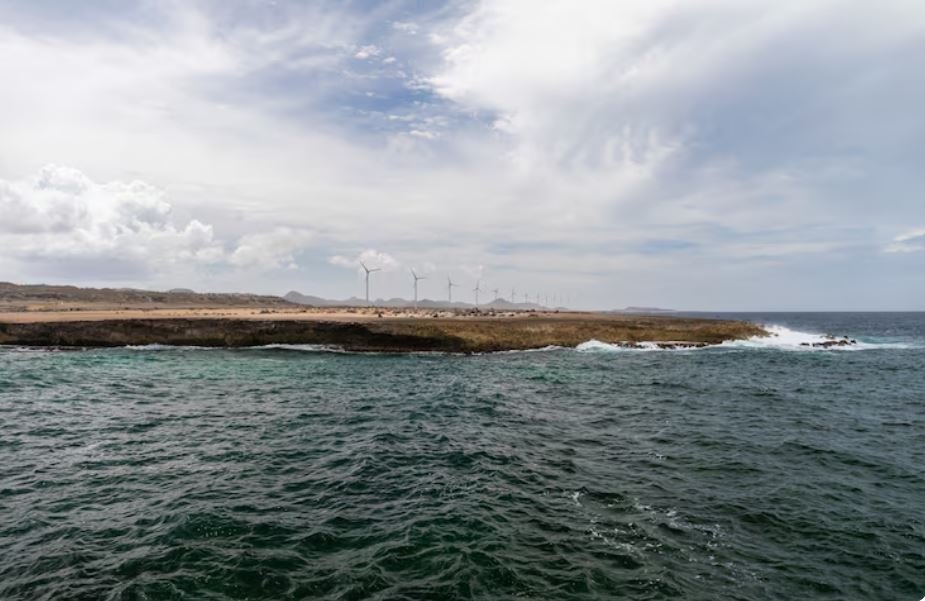
Meanwhile, the animals are already using their fins to cast their votes. Because they cannot tolerate low oxygen levels, tuna and billfish are forced into thinner bands of livable water close to the surface, where they are more easily overfished and captured. Conversely, the Humboldt squid, which is strangely at ease in oxygen-poor water, has expanded its range northward and is now frequently seen off the coasts of Oregon, Washington, and even Alaska. It’s difficult not to read something there. A creature that is flourishing right where others are suffocating.
The timing of this moment is what makes it peculiar. The instruments responding to the questions are becoming quieter as they become more pointed. Parts of the long-running ocean observatory network off the Pacific Northwest—the same sensors that monitor these gradual oxygen shifts year after year—are in danger of being shut down due to federal funding cuts. Oregon scientists have publicly and somewhat desperately warned that losing that record at this time would be equivalent to turning off the lights in the middle of an experiment.
The expansion might come to a standstill. It might accelerate in ways that no model has been able to capture. For the time being, the honest position is uncertainty, the kind that merits more observation rather than less. A society debating whether something is happening while covertly cutting off funding for its investigation is a subtle irony. The oxygen in the water is continuously being lost. The squid continue to head north. Additionally, a sensor that has been reliably counting for years may soon stop somewhere off the coast, leaving the next chapter of this tale unwritten and possibly unread.
