

The thought of an ocean having difficulty breathing is subtly unnerving. Over 70% of this planet’s surface is made up of water, and for the majority of human history, its depths seemed limitless—unknowable, yes, but essentially stable. This assumption is currently undergoing an uncomfortable real-time revision. The ocean is losing oxygen more quickly, more deeply, and in more locations than the models predicted, rather than slowly and neatly as some early predictions suggested.
For years, the numbers have been increasing. The global ocean has already lost about 2% of its oxygen since the 1960s, which is about twice as much as what climate models predicted at the time, according to a 2017 paper published in Nature. The detail that keeps oceanographers up at night is that discrepancy between projection and reality. Less than 25% of the total oxygen loss ultimately locked in by historical carbon emissions has actually happened thus far, according to a 2021 study published in Nature Communications. In other words, regardless of what transpires at the next climate summit, the majority of the harm is still coming and is ingrained in the system.
Although the pace has been mysterious, the mechanics behind this are not particularly so. The physics are the same whether you’re discussing the Pacific Ocean or a heated swimming pool: warmer water just contains less dissolved oxygen. The upper layer warms and becomes more buoyant as surface temperatures rise, sitting atop colder water below and making it more difficult for oxygen to mix downward. When the ocean’s interior is cut off from the surface exchange it depends on, it gradually suffocates. The problem takes a different but no less destructive form in coastal areas: excess nitrogen and phosphorus from agricultural runoff enter estuaries and nearshore waters, causing explosive algal blooms that deplete oxygen as they decay, creating the dead zones that have been found at over 500 coastal locations globally.
Marine life is already reacting, and it’s like watching a slow-motion activation of an early warning system. Fish are in motion. In an attempt to capture the remaining oxygen, species that were previously consistently found in specific depth ranges are compressing upward toward the surface. Pushing fish toward shallower water increases their exposure to predators and fishing fleets, which is one way that compression matters in ways that aren’t immediately apparent. As oxygen minimum zones, which are naturally low-oxygen bands located between about 100 and 1000 meters below the surface, spread outward and upward, their biodiversity is decreasing. Although there’s a chance that some ecosystems are adapting in ways that science hasn’t yet fully understood, the overwhelming evidence points to flight rather than resilience.
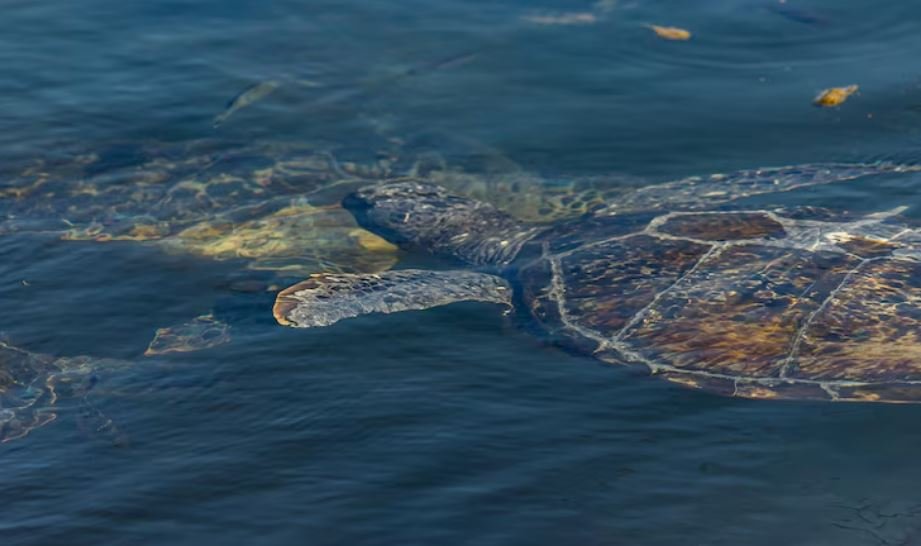
One framework for comprehending why this is so important for fish in particular is the Gill-Oxygen Limitation Theory, which was primarily developed through the work of researcher Daniel Pauly. Fish require more oxygen to maintain basic metabolic processes as the water warms, but because their gills have a limited surface area, they can only draw so much oxygen from the increasingly depleted water. Reduced immune function, impaired reproduction, and stunted growth are the outcomes. smaller fish. fewer fish. distinct fish from those that coastal communities have long relied upon for their livelihoods.
Although the committed loss already ingrained in current emissions is truly sobering, there is still time to slow the trajectory. Reducing greenhouse gas emissions, along with managing nutrient runoff and increasing ocean monitoring in areas with limited data, especially in developing nations, continue to be the most direct levers. Planning for impacted fisheries and coastal economies is challenging because scientists are honest that they are still unable to accurately predict which zones will lose the most oxygen or when. This uncertainty should not be used as an excuse for doing nothing. If anything, it’s a reason to relocate before the picture becomes completely clear because the options will be more limited by then.
People have always mistook the ocean’s silence for permanence. The data increasingly points to a different meaning for the silence: a system under stress, holding its breath, rather than stability.
