

One of the world’s most disputed seafloor areas is located between Hawaii and Mexico, about 12,000 feet below the Pacific Ocean’s surface. There are no residents. Not many people have witnessed it. However, in the years to come, it might be the scene of a collision between two of the ocean’s most economically important industries; the science supporting this is already published.
Three commercially significant Pacific tuna species—bigeye, skipjack, and yellowfin—are being pushed eastward by climate change toward warming waters that just so happen to sit directly over the Clarion-Clipperton Zone, a 4.5 million square kilometer area where the International Seabed Authority has already awarded 17 deep-sea mining exploration contracts, according to a 2023 study published in the Nature sustainability journal. By the middle of the twenty-first century, the average increase in tuna biomass in that zone across all three species and two different emissions scenarios is expected to be about 21%. It is not a slight change. That’s fish migrating in large quantities into a region where mining firms are getting ready to scrape the ocean floor.
The metals in question are polymetallic nodules, which are potato-sized, rocky formations that include manganese, copper, nickel, and cobalt. These same materials are used in solar panels and batteries for electric vehicles. Companies have been circling this area for years, watching the regulatory framework inch forward, and there is real industrial logic to extracting them. The actual mining regulations are still being developed by the International Seabed Authority, the UN agency in charge of overseeing these activities on the high seas. A statement urging a moratorium until the environmental effects are better understood was signed by more than 700 ocean scientists and policy experts. That call has been heard thus far, but nothing has been done about it.
The awkward irony that permeates everything is difficult to ignore. The need for battery metals, which are essential for the shift to clean energy, is a major factor driving the push for deep-sea mining. The tuna is being rerouted by the same warming that is speeding up that transition. In the same body of water, two climate responses are essentially at odds with one another. That’s the kind of issue for which there isn’t a clear solution.
| Field | Details |
|---|---|
| Research Paper | “Climate Change to Drive Increasing Overlap Between Pacific Tuna Fisheries and Emerging Deep-Sea Mining Industry” |
| Published In | npj Ocean Sustainability (2023) |
| Lead Author | Dr. Diva J. Amon, with co-authors from UBC, Scripps, and other institutions |
| Region of Focus | Clarion-Clipperton Zone (CCZ), Eastern Pacific Ocean — between Hawaii and Mexico |
| Zone Size | 4.5 million km² total; 1.125 million km² under mining exploration contracts |
| Mining Contracts Issued | 17 exploration contracts by the International Seabed Authority (ISA) |
| Tuna Species Studied | Bigeye, Skipjack, and Yellowfin tuna |
| Projected Biomass Increase | Average 21% across all three species in CCZ by mid-21st century |
| Annual Tuna Industry Value | ~$5.5 billion USD (WCPFC + IATTC combined) |
| Governing Bodies | ISA (mining), IATTC & WCPFC (tuna fisheries) |
| Key Threat Mechanisms | Sediment plumes, metal contamination, mining noise, vessel congestion |
| Industry Response | Global Tuna Alliance and seafood groups called for pause on deep-sea mining |
| Key Concern | No unified governance framework covers both living and non-living ocean resources simultaneously |
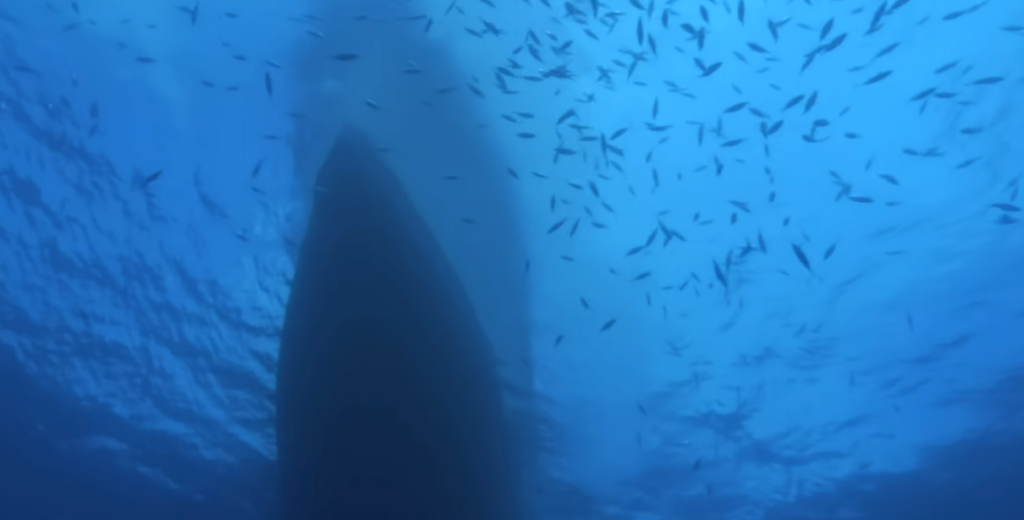
The ways that mining might affect tuna are not hypothetical. At least four have been found by researchers. Equipment dragging across the seafloor may create sediment plumes that cloud the water column for hundreds of kilometers, clogging the gills of tuna and their prey. Elevated concentrations of dissolved metals may be released at depths where fish actually swim in a second plume that is produced when mined material is drawn to the surface for processing and excess water is released back into the ocean. Additionally, there is the issue of noise; large-scale mining operations produce the kind of continuous underwater sound that may change tuna feeding and reproductive migrations in ways that are truly unpredictable. A fleet of slow-moving, maneuvering-restricted mining ships in an area where fishing boats have traditionally operated freely is another example of simple vessel congestion.
These species are the foundation of the tuna industry, which is valued at about $5.5 billion a year. Together, the Western and Central Pacific Fisheries Commission and the Inter-American Tropical Tuna Commission, the two regional fisheries management organizations in charge of the region, accounted for 66% of all tuna catches worldwide in 2022. These are more than just figures for tiny Pacific island nations. Entire national economies are supported by tuna-related income and fishing access fees. Even if more fish arrive and mining is already in progress, it’s still unclear if the industrial activity below will actually cause those catches to rise, remain constant, or be disrupted.
In a sense, the true story lies in that uncertainty. The study’s co-author, Dr. Juliano Palacios Abrantes, a marine scientist at the University of British Columbia, put it bluntly: no research has been done to determine the precise effects. The frameworks for managing the high seas’ living and non-living resources were developed independently, function under distinct legal systems, and lack a genuine means of communicating with one another when their interests collide. The seafloor is managed by the ISA. The fish are managed by the fishing commissions. No one is able to handle both at once.
As this develops, there’s a sense that the next ten years will either result in some real change to the way the high seas are governed or in a costly, highly visible dispute between two industries that both have rightful claims to the same water. The fish have already started to move. The agreements have already been signed. For now, nobody knows what will happen when they fully meet.
