

A version of this story starts with Jacques Cousteau and a grainy underwater film that was first captured in color, with viewers all over the world gazing at a television screen with a mixture of amazement and discomfort. That was seventy years ago. Since then, the technology has evolved to an almost unrecognizable degree. The amount of the ocean that people have truly seen hasn’t really changed. Over 70% of the earth is submerged under water. Roughly 95% of it—depth included—is still unmapped, unresearched, and basically unknown. In 2026, that figure ought to be embarrassing. It appears to do so more and more.
Ocean exploration has been receiving private funding for a number of years, but something about the current situation feels different in scope. In order to test floating AI data centers powered by ocean wave energy in the Pacific, Peter Thiel’s startup Panthalassa raised $140 million in May 2026. A portion of the pressure is driving investors toward sea-based power solutions as Amazon, Google, Meta, and Microsoft are expected to spend more than $700 billion on AI infrastructure capital expenditures this year. In 2026, the Scripps Institution of Oceanography received $15 million for deep-sea research from a foundation associated with the late Paul Allen, co-founder of Microsoft. The funding is coming in from several sources at once, and it’s bringing with it a variety of priorities, not all of which are strictly scientific.
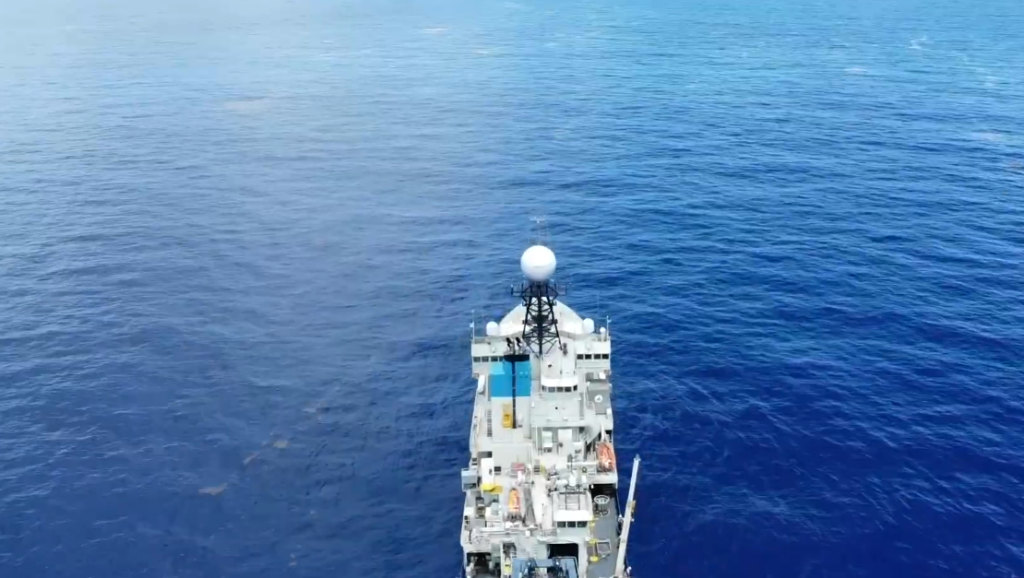
One of the more prominent participants in this change has been OceanX. Co-founded by hedge fund billionaire Ray Dalio and his son Mark, the nonprofit organization runs the OceanXplorer out of ports such as the Azores, conducting missions that blend documentary filmmaking with serious marine research. The ship is equipped with advanced sonar, LiDAR, two manned Triton submersibles, a 40-ton A-frame for equipment deployment, and labs capable of supporting actual peer-reviewed science. Additionally, it has over 3,000 light fixtures of film quality. The combination is intentional. The Dalios have long maintained that it is necessary to show people the ocean in order to make them care about it. Given that the company has more than four million TikTok followers, it is difficult to dispute the reasoning.
| Field | Details |
|---|---|
| Topic | Private and tech sector funding driving next generation of submersible and ocean exploration technology |
| Key Organization | OceanX — exploration and media venture co-founded by Ray Dalio (Bridgewater Associates) |
| Flagship Vessel | OceanXplorer — 286-foot research vessel with two manned Triton submersibles, advanced sonar, ROVs |
| Submersible Depth Capacity | Triton subs: up to 1,000 meters; ROV Deep Discoverer (NOAA): up to 6,000 meters |
| New Funding (2026) | Panthalassa (Peter Thiel-backed): $140M raised for floating AI data centers powered by ocean waves |
| Philanthropic Grants | Paul Allen Foundation: $15 million to Scripps Institution of Oceanography (2026) |
| Big Tech Infrastructure Spend | Amazon, Google, Meta, Microsoft projected to spend $700B+ on AI capex in 2026 |
| Seafloor Mapped to Date | ~25% in high resolution (up from just 6% in 2017) |
| Seabed 2030 Goal | Complete map of entire ocean floor by 2030 |
| Emerging Technology | AI-powered AUVs, bio-inspired shrimp-like submersibles (Brown University), optical underwater modems |
| NOAA Flagship | NOAA Ship Okeanos Explorer — first U.S. civilian vessel dedicated to ocean exploration, commissioned 2008 |
| Notable 2019 Milestone | First-ever footage of a giant squid in its natural habitat, captured using red-light Medusa lander |
However, the larger technological trend is heading toward automobiles that are completely human-free. When researchers discuss the future of this field, they are increasingly describing autonomous underwater vehicles, which are small, AI-driven, and able to navigate terrain with little human input. Helge Renkewitz, an underwater robotics researcher at the Fraunhofer Institute in Germany, makes the direct argument that autonomous systems are just more practical for covering vast areas of the seafloor, while remotely operated vehicles are useful for inspecting a particular object. The missions are too long and the ocean is too big for human operators to be actively involved at all times.
However, the engineering problems are really challenging. Almost everything is corroded by salt water. At the Titanic wreck’s depth of about 4,000 meters, the pressure is 400 times higher than it is at sea level. After just a few hours, a submersible may be hundreds of meters away from where its own systems think it is because position estimation algorithms drift over time. Then there’s energy. When a vehicle must run for weeks or months away from any surface infrastructure, how can it be powered? Texas A&M researchers are developing systems that use temperature variations between water layers at various depths to produce electricity. The ability of shrimp and krill to maneuver, accelerate, and brake is being studied by a team at Brown University in an effort to reverse-engineer it into a new class of small, agile submersibles. Not a single issue has been resolved. Compared to even five years ago, everything is being worked on with seriousness.
It’s important to take a step back and observe what NOAA has been doing in this area for the past 20 years, mostly without receiving the same level of attention as private endeavors. Long before OceanX existed, the agency’s ship Okeanos Explorer, which was put into service in 2008 as the first American civilian vessel devoted to ocean exploration, was mapping the seafloor, finding species, and providing the public with livestreams of deep-sea dives. The first video of a giant squid in its natural habitat was recorded in 2019 by a NOAA-sponsored mission using a red-light lander named Medusa. In 2021, the organization identified and named a new species of comb jelly near Puerto Rico using only video and no physical sample. These accomplishments are not minor ones. When a billionaire’s research ship arrives with a helicopter pad and a film crew, they are often overshadowed.
As all of this is happening, there is a legitimate question that is worth considering: what will happen if marine scientists’ priorities diverge from those of tech infrastructure investors? AI firms that require affordable, sustainable power at sea can benefit from the wave energy data center undergoing testing in the Pacific. It might or might not speed up our knowledge of deep-ocean biodiversity. These objectives are different, and it’s still unclear how frequently they will coincide. As of right now, the science and the money appear to be going hand in hand. Researchers are already quietly considering whether that holds true as the stakes rise and the extractive industries that use the same maps begin to ask their own questions.
