

The way we discuss climate change is peculiar. Nearly everything occurs at the surface, including the heatwaves we experience, the storms we capture on camera, and the coral reefs that photographers can truly access.
However, the portion of the ocean that does the majority of the hard lifting is located far below all of that, in a blackness that most people will never be able to see. Additionally, it’s starting to act in ways that scientists weren’t entirely prepared for.
| Profile: The Deep Ocean Carbon System | Key Information |
|---|---|
| Region of focus | Tasman Sea & global abyssal zones |
| Average depth where issues emerge | 500m to several thousand metres |
| Share of human CO₂ absorbed by oceans | About 30% |
| Share of excess greenhouse heat absorbed | Roughly 93 percent |
| Oxygen produced by oceans globally | 50–80% of world supply |
| Primary threat layer | Intermediate waters, 200m–1,000m |
| Most sensitive species observed | Tuna, marlin, deep coral reefs, polar shellfish |
| Years of consistent deep-sea observation | 15 to 25 (still considered short) |
| Scientific maturity of the field | Less than 150 years old |
| Key protective mechanism | Marine Protected Areas covering deep canyons and seamounts |
| Status | Underfunded, under-observed, increasingly fragile |
For decades, the mess we’ve created has been absorbed into the deep oceans. That’s where around one-third of our carbon dioxide and the vast bulk of the additional heat trapped by greenhouse gasses end up, slowly sinking into a huge, chilly, mostly silent layer of water. The planet hasn’t warmed more quickly because of it. In a subtly awkward sense, it’s also the reason why climate mitigation models might be overlooking something crucial.
You wouldn’t believe any of this if you strolled along the coast close to Newcastle on a winter’s morning. Ships continue to arrive, ports continue to operate, and fishing boats continue to depart before dawn.
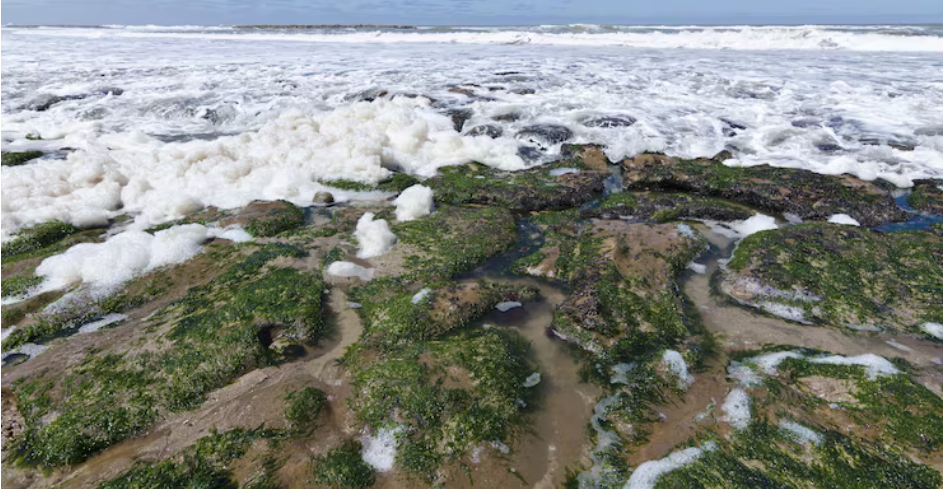
Twenty years later, the Tasman still has the same appearance. However, sea-surface temperatures off southeast Australia have been rising for a century, and this warming is beginning to trickle down in ways that even researchers find perplexing. These days, marine heatwaves occur with startling regularity.
This is where it becomes awkward. Many mitigation strategies, such as those based on carbon budgets, net-zero pathways, and ocean-based removal, presume that the deep ocean will continue to function indefinitely. Perhaps it won’t. Surface waters cease to adequately mix with deeper levels as they warm. This occasionally significantly lowers the amount of oxygen below. Marlin and tuna lose their habitat. Move in, Calamari. Once it gets too cold for them, predator crabs sneak into Antarctic regions and devour animals without defenses because they never needed them.
Speaking with deep-sea ecologists gives me the impression that they are observing a system that is underappreciated. It sounds dramatic until you realize that one researcher’s description of the abyss as a place we’ve explored less than the surface of Mars is essentially accurate. Methane, a gas significantly more powerful than CO2, is silently transformed into minerals by microorganisms on the continental shelf. Most models do not measure this invisible process, and heat that we cannot yet see may be interfering with it.
It’s difficult to ignore the irony. The very ecosystems that have been silently protecting us are under increasing pressure as we pursue extreme carbon-removal scenarios more quickly. At the brink of acidification thresholds are deep coral reefs. Oxygen-poor zones are expanding off Namibia, Peru, and the west coast of the United States. Furthermore, the extraction of resources, such as minerals, hydrocarbons, and deep-water fisheries, is currently occurring at depths that were unheard of a generation ago.
There isn’t just one disaster that worries scientists. It is the rate at which the body reacts. When the chemistry or food supply changes even little, deep-sea biodiversity responds swiftly. It seems insignificant, a tenth of a degree every ten years. It isn’t.
To be honest, we don’t completely understand the risks. Marine protected areas are beneficial, especially at seamounts and canyons where deep and surface organisms converge. However, the bigger picture is still unclear and most likely will be for years. As you watch this develop, you get the impression that we are making decisions about climate change with half of the map missing, and the missing half just so happens to be what keeps everything together.
