

I was sitting in a café watching rain blur the windows when I first learned about China’s new ocean forecast system, and the timing seemed almost too perfect. The news hardly made an impression in the Western press when a nation declared that its experts could now anticipate the path of one of the planet’s most notoriously unpredictable currents seven months in advance. Perhaps the story was just too technical to make headlines. It’s also likely that no one was entirely sure how to interpret it.
For those who haven’t spent much time studying ocean charts, the Indonesian Throughflow is the warm-water highway that runs like a slow, salty river through the Indonesian archipelago, connecting the Pacific to the Indian Ocean.
| Profile: China’s AI Ocean Initiative | Details |
|---|---|
| Lead Institutions | Institute of Oceanology, Chinese Academy of Sciences & Nanjing University of Information Science & Technology |
| Headline System | ITF Inference and Prediction System |
| Forecasting Range | Seven months in advance |
| Companion Model | DePTH-GPT (Digital DEPTH project) |
| Affiliated Body | Second Institute of Oceanography, Ministry of Natural Resources |
| Research Domain | Indonesian Throughflow, deep-sea seamounts, hydrothermal vents |
| Data Sources | Satellite records 1993–2021, sediment, bioacoustics, hydrodynamics |
| Published In | Frontiers in Marine Science |
| Parallel Project | “Supermind” platform, ITIC Shenzhen ($280 million state-funded) |
| Strategic Goal | Xi Jinping’s 2049 science and technology pre-eminence target |
People don’t realize how important it is. El Niño cycles, fisheries, monsoons, and even the mood of far-off beaches are all subtly influenced by what this river chooses to do. The statement from the Institute of Oceanology and Nanjing University seemed truly significant because forecasting it has long been a tangle of skewed models and missing data. Their AI is said to replicate the current with remarkable accuracy after being educated on satellite sea-surface heights from almost thirty years.
Reading the formal report in Frontiers in Marine Science gives the impression that the researchers are a little taken aback by how effectively it functions. Deep learning does it by identifying patterns in data that people wouldn’t think to look for, then refusing to provide an explanation.
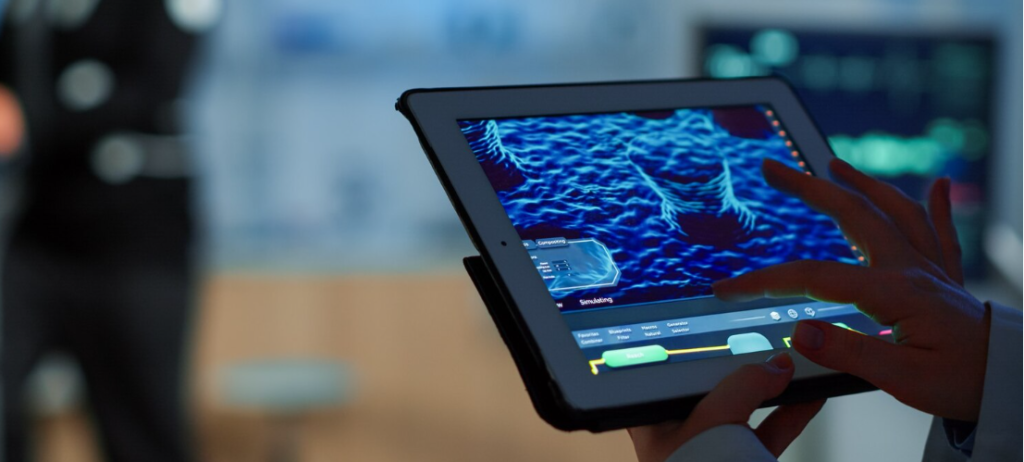
The deep-sea companion model, DePTH-GPT, was then introduced as part of the UN’s Decade of Ocean Science. It is more difficult to write this off as a specialized tool. It creates what its creators refer to as a “intelligent cognitive system” for hydrothermal vents and seamounts by ingesting video, topography, sediment chemistry, and the peculiar auditory fingerprints of species most of us will never witness. On a different day, this kind of project may inspire admiring profiles in National Geographic. But as you watch something develop, you can’t help but observe the larger context from which it is arising.
Because Newsweek was covering “Supermind,” a $280 million Shenzhen platform that scrapes Western academic databases, tracks 130 million researchers worldwide, and covertly creates dossiers on anyone Beijing might want to hire, replicate, or just keep an eye on, at the same time that these oceanographic systems were being unveiled. It’s an awkward juxtaposition. The ocean is mapped by one project, while the people who research it are mapped by another. The same family of algorithms powers both.
It’s difficult to avoid wondering where the line is now, if it exists at all. By most accounts, China’s scientists are producing meaningful and significant work. An actual contribution is the ITF model. DePTH-GPT may alter our perception of abyssal environments. However, over the past year, the same state apparatus that provides funding for these advancements has tightened access to its own databases, raided consultancies, and warned citizens to keep an eye out for foreign spies through comic books.
Perhaps the reality is more straightforward and unsettling than either story permits. Beijing sees no reason to compromise between the prestige of scientific leadership and the power of complete information awareness. After all, things have always been hiding in plain sight in the water.
