
Close Menu
Indeep ProjectIndeep Project
  • Home
  • Privacy Policy
  • Terms of Service
  • Disclaimer
  • About
  • Indeep
  • Marine Life
  • News

Subscribe to Updates

Get the latest creative news from FooBar about art, design and business.

What's Hot

The Skidaway Institute of Oceanography Is Doing Research That Could Reshape Coastal Policy Across the South

April 27, 2026

How the Copernicus Ocean State Report Is Warning That Climate Change Has Now Reached Every Single Ocean Basin

April 27, 2026

A 10,000-Foot Dive: The Undergrad Who Discovered a New Ecosystem From Her Dorm Room

April 27, 2026
Facebook X (Twitter) Instagram
Indeep ProjectIndeep Project
SUBSCRIBE
  • Home
  • Privacy Policy
  • Terms of Service
  • Disclaimer
  • About
  • Indeep
  • Marine Life
  • News
Indeep ProjectIndeep Project
Home»Indeep»The Skidaway Institute of Oceanography Is Doing Research That Could Reshape Coastal Policy Across the South
Indeep

The Skidaway Institute of Oceanography Is Doing Research That Could Reshape Coastal Policy Across the South

Derrick LesterBy Derrick LesterApril 27, 2026No Comments4 Mins Read
Share
Facebook Twitter Reddit Telegram Pinterest Email

On Skidaway Island, which is located just southeast of Savannah, there is a section of salt marsh where the water no longer behaves as it once did. Now, the tides move a bit further inland. After storms, the mud smells different. For years, researchers at the Skidaway Institute of Oceanography have been observing this gradual change, measuring it, cataloging it, debating its implications, and increasingly attempting to draw the attention of those who draft coastal policy in the American South.

So far, the story is not dramatic. However, that is practically the point. From the Georgia barrier islands to the Louisiana bayous, the changes occurring along the Southern coastline are frequently too subtle to make the evening news and too significant to overlook. Located at that awkward intersection, the Skidaway Institute of Oceanography does the kind of meticulous, methodical work that doesn’t make headlines but significantly influences what happens when the next big storm hits land.

CategoryDetails
Institution NameSkidaway Institute of Oceanography
Established1967
LocationSkidaway Island, Savannah, Georgia, USA
Parent OrganizationUniversity of Georgia (UGA)
Research FocusCoastal oceanography, marine ecosystems, water quality, sea-level rise, tidal dynamics
Primary Service AreaU.S. South Atlantic and Gulf Coast regions
Affiliated NetworkNOAA Sea Grant Program
Key Research AreasFlood risk modeling, estuarine chemistry, sediment transport, fisheries ecology
Policy RelevanceInforms coastal zoning, floodplain management, and climate adaptation planning across the South
Public OutreachOffers community education, stakeholder engagement, and regional resilience workshops
Staff & ResearchersMarine biologists, physical oceanographers, coastal geologists, policy liaisons
Notable ToolsReal-time water quality monitoring systems, tidal gauge networks, sediment modeling platforms
Further ReadingUniversity of Georgia Marine Sciences

Researchers at the institute study tidal dynamics, sediment movement, estuarine systems, and water quality—the unglamorous mechanisms that decide whether a coastal community floods or holds. The scope of what’s coming makes their work especially pertinent at this time. Due to a combination of ocean warming, land subsidence, and changing ocean currents, sea levels along the South Atlantic coast of the United States are rising more quickly than the global average. Communities that were constructed with a particular level of risk tolerance are discovering that the calculations are no longer valid. Long before the majority of local governments were prepared to hear those figures, the Skidaway team was working on them.

Speaking with those who follow coastal science in this area gives me the impression that the institute’s research is beginning to take a different turn than it did five or ten years ago. Hurricane seasons have the power to alter people’s opinions.
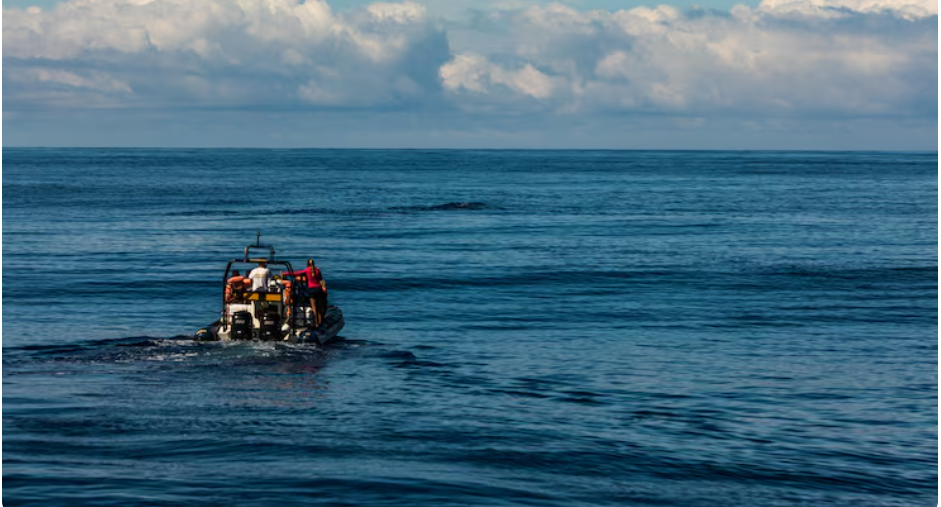
The Skidaway Institute of Oceanography

Local planners, some of whom had opposed updating flood maps and zoning codes, are now more inclined to sit down and examine the data after the 2024 storm season severely damaged portions of the Gulf Coast. The data has been there all along, so that change is significant. The conversation’s urgency has changed.

Although the idea of reducing flood risk along coastal built environments is not new, its effective local implementation necessitates site-specific data that most communities are unable to produce on their own. At this point, organizations like Skidaway become subtly crucial. Their monitoring networks offer the precise, up-to-date data on water behavior that floodplain managers genuinely require—not just general regional forecasts, but the kind of information that enables a county engineer to make decisions about drainage system redesign or berm placement.

Their contributions to the policy debate may have been underappreciated because they are not presented as political recommendations. Here, scientists typically provide data and let others make their own judgments. When the situation seems to demand urgency, that approach may feel annoyingly restrained.

The complexity of the Southern coastal challenge is truly remarkable. The Southeast coast is facing a different combination of pressures than some parts of the Pacific Northwest, where natural management opportunities are provided by dam removals and sediment transport. These pressures include heavy development along barrier islands, a sizable portion of the population living in low-lying areas, and a political culture that has historically been skeptical of land-use restrictions. Although the Skidaway researchers don’t directly address those arguments, their research on tidal flooding, marsh health, and sediment dynamics provides policymakers with the information they need to have open discussions about risk.

The speed at which that research will result in regional policy changes is still unknown. The economic pressure to continue developing near the water is real and will not go away, but southern coastal states move at their own pace on these issues. However, the science being produced on Skidaway Island is growing year after year, creating a body of evidence that gets more difficult to ignore with every storm season. Observing this development gives the impression that the institute is creating something significant, not only for Georgia but for all communities south of the Mason-Dixon Line attempting to deal with a shifting coastline.

Oceanography Skidaway
Share. Facebook Twitter Pinterest LinkedIn Telegram Reddit Email
Previous ArticleHow the Copernicus Ocean State Report Is Warning That Climate Change Has Now Reached Every Single Ocean Basin
Derrick Lester

    Derrick Lester is a professor and editor at indeep-project.org. His academic career has been molded by a single, enduring obsession: the sea and all life in it. Drawing from marine biology, oceanography, and the kind of hard-won field knowledge that only comes from spending significant time on and under the water, Derrick's writing has the depth of a scholar thanks to his years of research and teaching experience. His writing delves into the science of marine life with the inquisitiveness of someone who has never fully moved past the wonder of what exists beneath the surface. Derrick hopes to introduce readers to a world that encompasses over 70% of the planet and is, in many respects, still largely unexplored through his contributions to indeep-project.org.

    Related Posts

    The Secret “Surveillance Cover” Behind Modern Deep-Sea Mining Operations

    April 27, 2026

    The Ocean Floor Is Becoming a Dumping Ground — and Almost No One Is Watching

    April 27, 2026

    Inside Deep Sea ID: The Field Guide That Travels Where Wi-Fi Can’t Reach

    April 27, 2026

    World Register of Deep-Sea Species: The Quiet Project Mapping Earth’s Final Frontier

    April 27, 2026
    Add A Comment
    Leave A Reply Cancel Reply

    You must be logged in to post a comment.

    Don't Miss

    The Skidaway Institute of Oceanography Is Doing Research That Could Reshape Coastal Policy Across the South

    By Derrick LesterApril 27, 2026

    On Skidaway Island, which is located just southeast of Savannah, there is a section of…

    How the Copernicus Ocean State Report Is Warning That Climate Change Has Now Reached Every Single Ocean Basin

    April 27, 2026

    A 10,000-Foot Dive: The Undergrad Who Discovered a New Ecosystem From Her Dorm Room

    April 27, 2026

    The UN’s “Game-Changing” Ocean Treaty Is Here. Will the U.S. Actually Abide by It?

    April 27, 2026

    The Secret “Surveillance Cover” Behind Modern Deep-Sea Mining Operations

    April 27, 2026

    The El Niño Mystery: Why Oceanographers Admitted Their 2025 Models Were Completely Wrong

    April 27, 2026

    The Ocean Floor Is Becoming a Dumping Ground — and Almost No One Is Watching

    April 27, 2026
    About Us
    About Us

    Indeep-project.org is dedicated to disseminating information that is supported by data, open about its sources, and truthful about the limits of human knowledge.
    Peer-reviewed studies, official scientific publications, and the knowledge of contributors with firsthand knowledge of ecology, environmental policy, and marine science are all sources of information used by our editorial team. Content that expresses opinion is clearly marked as such, whether it comes from our own contributors or from outside sources.
    Important Information Opinion pieces, commentary, and third-party viewpoints on subjects like science, technology, finance, politics, and public policy are among the content published on indeep-project.org. Only educational and informational purposes are served by this content. It does not constitute expert scientific, financial, legal, or medical advice; rather, it reflects the opinions of the original authors.
    We strongly advise readers to seek qualified professional advice appropriate to their particular circumstances before acting on political, financial, or scientific information published on this platform. Decisions based on third-party opinion content published here are not endorsed, recommended, or liable for by indeep-project.org.

    Our Picks

    The UN’s “Game-Changing” Ocean Treaty Is Here. Will the U.S. Actually Abide by It?

    April 27, 2026

    The Secret “Surveillance Cover” Behind Modern Deep-Sea Mining Operations

    April 27, 2026

    The El Niño Mystery: Why Oceanographers Admitted Their 2025 Models Were Completely Wrong

    April 27, 2026

    The Ocean Floor Is Becoming a Dumping Ground — and Almost No One Is Watching

    April 27, 2026

    Inside Deep Sea ID: The Field Guide That Travels Where Wi-Fi Can’t Reach

    April 27, 2026

    Mining, Fishing, Genetic Gold: The Battle Brewing Beneath the Waves

    April 27, 2026
    • Home
    • Privacy Policy
    • Terms of Service
    • Disclaimer
    • About
    • Indeep
    • Marine Life
    • News
    © 2026 ThemeSphere. Designed by ThemeSphere.

    Type above and press Enter to search. Press Esc to cancel.