
Close Menu
Indeep ProjectIndeep Project
  • Home
  • Privacy Policy
  • Terms of Service
  • Disclaimer
  • About
  • Indeep
  • Marine Life
  • News

Subscribe to Updates

Get the latest creative news from FooBar about art, design and business.

What's Hot

China’s All-Weather Deep-Sea Megastructure Has the West on High Alert

April 28, 2026

The Race for Cobalt: Why Mining the Abyss Is More Lucrative Than Space Exploration

April 28, 2026

How Physical Oceanography Seminars at the Leibniz Institute Are Influencing Research Agendas Across the Atlantic

April 28, 2026
Facebook X (Twitter) Instagram
Indeep ProjectIndeep Project
SUBSCRIBE
  • Home
  • Privacy Policy
  • Terms of Service
  • Disclaimer
  • About
  • Indeep
  • Marine Life
  • News
Indeep ProjectIndeep Project
Home»Climate Change»Deep-Sea Larval Dispersal: The Hidden Highway Beneath Our Oceans
Climate Change

Deep-Sea Larval Dispersal: The Hidden Highway Beneath Our Oceans

Derrick LesterBy Derrick LesterApril 28, 2026No Comments4 Mins Read
Share
Facebook Twitter Reddit Telegram Pinterest Email

The idea that a creature the size of a grain of rice could determine the fate of an entire underwater ecosystem seems almost ridiculous. Nevertheless, it’s difficult to avoid feeling as though we’ve been ignoring these tiny travelers for decades when we see the most recent findings from the Atlantic and South West Pacific.

We still don’t fully understand how deep-sea larvae drift, sink, swim, and settle. Unbeknownst to the majority of us, their travels could be one of the most significant biological narratives currently unfolding on Earth.

FieldDetails
Research FocusDeep-sea larval dispersal and ecosystem connectivity
Lead InstitutionsUniversity College Dublin, Duke University, IMAR-Azores
Key ResearchersDonal Burns, Cindy Van Dover, Julia Sigwart, Jon Yearsley
Primary ToolsArgo float network, biophysical particle modelling, hydrodynamic simulations
Geographic ScopeNorth Atlantic Ocean, South West Pacific, Azores archipelago
Funding BodyInternational Climate Initiative (IKI), German Federal Ministry for the Environment
Affiliated ProgrammeGlobal Ocean Biodiversity Initiative (GOBI)
Target EcosystemsHydrothermal vents, sponge grounds, wood falls, seamounts
Conservation ApplicationMarine Protected Area network design
Year of Recent Findings2024

The deep sea was regarded as a sort of static museum for many years. Slow-moving, dark, and cold. Scientists were aware that species could be found there, either carpeting the slopes of seamounts or clinging to hydrothermal vents. They were unable to comprehend how these communities maintained their connections. Adult corals, tube worms, sponges, and chitons typically remain stationary. But their larvae don’t. In the hopes of landing somewhere friendly, they drift into ocean currents for days or even months at a time. It’s a risk. Most fail to make it.

Donal Burns, Cindy Van Dover, and Jon Yearsley’s work in the North Atlantic is altering scientists‘ perceptions of that risk. The team is assembling a rough but helpful picture of deep-sea currents using data from Argo probes, those self-governing floats that drift through the world’s oceans like silent sentinels.
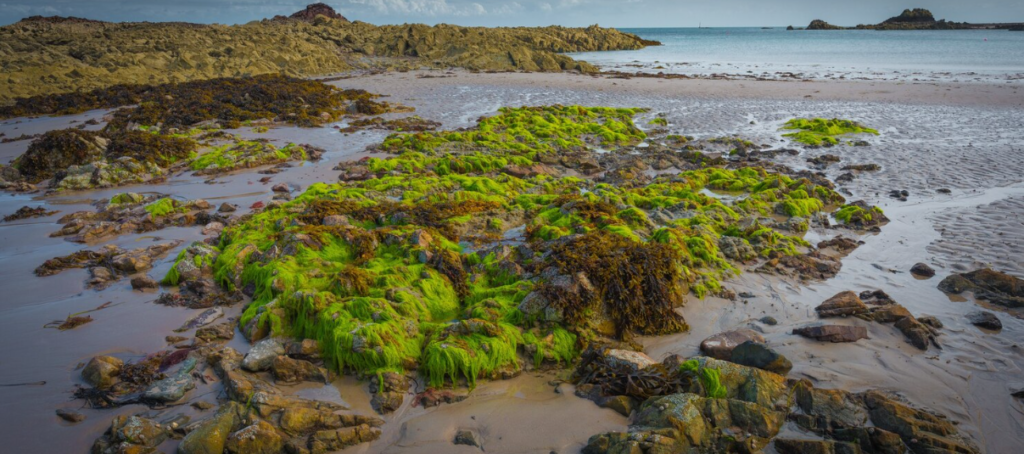
Deep-Sea Larval Dispersal

When you feed those currents into a biophysical model, you get something that resembles a map of potential larval migration routes. The simulations are not flawless. There’s still a lot of speculation. However, the patterns that show up are remarkable.

The role of vertical swimming caught researchers off guard the most. It turns out that deep-sea larvae can change their depth before permanently settling, sometimes by tens or hundreds of meters. Everything is altered by that tiny ability. A larva with the ability to rise or sink can end up in a completely different ecosystem even when horizontal currents are pushing much harder. The scientists involved believe that many of the current connectivity models could be rewritten by this one behavioral characteristic.

There are clear implications for conservation. According to biophysical models of Pheronema carpenteri sponge aggregations in the Azores, some islands function as hubs for larvae, while others seem to be almost isolated. When governments draw boundaries on maps and designate them as Marine Protected Areas, that kind of understanding is important. You may be guarding a dead end if you protect the incorrect patch. You can protect an entire network by protecting a stepping stone.

How much of this can be scaled up is still unknown. The majority of the less than 100 deep-sea species for which pelagic larval duration estimates have been published are echinoderms. There are huge gaps in the data. Predation, energy limits, mortality, and temperature sensitivity are all still poorly understood.

If there is such a thing as investors in marine science, they appear to think the field is on the verge of something. It’s difficult not to agree as you watch this develop. The deep sea has always seemed far away, almost legendary. However, whether or not we can eventually track the movements of the tiniest organisms that inhabit it may determine whether or not it survives.

Deep-Sea Dispersal
Share. Facebook Twitter Pinterest LinkedIn Telegram Reddit Email
Previous ArticleThe Skidaway Institute of Oceanography Is Doing Research That Could Reshape Coastal Policy Across the South
Next Article The Deep Sea Conservation Movement Is Running Out of Time
Derrick Lester

    Derrick Lester is a professor and editor at indeep-project.org. His academic career has been molded by a single, enduring obsession: the sea and all life in it. Drawing from marine biology, oceanography, and the kind of hard-won field knowledge that only comes from spending significant time on and under the water, Derrick's writing has the depth of a scholar thanks to his years of research and teaching experience. His writing delves into the science of marine life with the inquisitiveness of someone who has never fully moved past the wonder of what exists beneath the surface. Derrick hopes to introduce readers to a world that encompasses over 70% of the planet and is, in many respects, still largely unexplored through his contributions to indeep-project.org.

    Related Posts

    China’s All-Weather Deep-Sea Megastructure Has the West on High Alert

    April 28, 2026

    China’s AI Deep-Sea Research Tools Are Now Outpacing What American Universities Can Build

    April 28, 2026

    Scientists Dropped a Camera 9,100 Meters Into the Ocean Off Japan. The Footage Left Them Speechless.

    April 28, 2026

    The Mysterious Deep-Sea Habitats That Could Hold the Cure to Superbugs

    April 28, 2026

    When the Ocean Boils: The Shocking Reality of Florida’s 100-Degree Coastal Waters

    April 28, 2026

    The UN’s “Game-Changing” Ocean Treaty Is Here. Will the U.S. Actually Abide by It?

    April 27, 2026
    Add A Comment
    Leave A Reply Cancel Reply

    You must be logged in to post a comment.

    Don't Miss

    China’s All-Weather Deep-Sea Megastructure Has the West on High Alert

    By Derrick LesterApril 28, 2026

    A six-story steel platform in the middle of disputed waters, with no nation permitted to…

    The Race for Cobalt: Why Mining the Abyss Is More Lucrative Than Space Exploration

    April 28, 2026

    How Physical Oceanography Seminars at the Leibniz Institute Are Influencing Research Agendas Across the Atlantic

    April 28, 2026

    China’s AI Deep-Sea Research Tools Are Now Outpacing What American Universities Can Build

    April 28, 2026

    Scientists Dropped a Camera 9,100 Meters Into the Ocean Off Japan. The Footage Left Them Speechless.

    April 28, 2026

    The Mysterious Deep-Sea Habitats That Could Hold the Cure to Superbugs

    April 28, 2026

    How One University of Rhode Island Professor Is Changing What We Know About Deep-Sea Organisms

    April 28, 2026
    About Us
    About Us

    Indeep-project.org is dedicated to disseminating information that is supported by data, open about its sources, and truthful about the limits of human knowledge.
    Peer-reviewed studies, official scientific publications, and the knowledge of contributors with firsthand knowledge of ecology, environmental policy, and marine science are all sources of information used by our editorial team. Content that expresses opinion is clearly marked as such, whether it comes from our own contributors or from outside sources.
    Important Information Opinion pieces, commentary, and third-party viewpoints on subjects like science, technology, finance, politics, and public policy are among the content published on indeep-project.org. Only educational and informational purposes are served by this content. It does not constitute expert scientific, financial, legal, or medical advice; rather, it reflects the opinions of the original authors.
    We strongly advise readers to seek qualified professional advice appropriate to their particular circumstances before acting on political, financial, or scientific information published on this platform. Decisions based on third-party opinion content published here are not endorsed, recommended, or liable for by indeep-project.org.

    Our Picks

    China’s AI Deep-Sea Research Tools Are Now Outpacing What American Universities Can Build

    April 28, 2026

    Scientists Dropped a Camera 9,100 Meters Into the Ocean Off Japan. The Footage Left Them Speechless.

    April 28, 2026

    The Mysterious Deep-Sea Habitats That Could Hold the Cure to Superbugs

    April 28, 2026

    How One University of Rhode Island Professor Is Changing What We Know About Deep-Sea Organisms

    April 28, 2026

    The Oceanographic Sensor That Just Outsmarted Decades of Manual Deep-Sea Data Collection

    April 28, 2026

    When the Ocean Boils: The Shocking Reality of Florida’s 100-Degree Coastal Waters

    April 28, 2026
    • Home
    • Privacy Policy
    • Terms of Service
    • Disclaimer
    • About
    • Indeep
    • Marine Life
    • News
    © 2026 ThemeSphere. Designed by ThemeSphere.

    Type above and press Enter to search. Press Esc to cancel.