

Trillions of black, knobby lumps that appear almost embarrassingly ordinary sit somewhere three miles below the surface of the central Pacific, dispersed across an underwater plain bigger than most European nations. They look like charcoal that has been burned. Depending on who you ask, they are either the most environmentally friendly solution to climate change yet discovered or a slow-motion ecological error for which we will have to apologize for the rest of the century.
Cobalt is the metal that is most sought after, and the lumps are polymetallic nodules. It’s difficult to ignore how rapidly the topic has changed. Space was the source of the loudest pitch in the world of critical minerals five years ago. In Silicon Valley, asteroid mining decks were popular; the slides consistently featured a robotic claw cracking open a piece of rock against a pitch-black sky. Those decks seem a little out of date now. Instead of rising, the smart money—or at least the patient money—has drifted downward.
| Topic Briefing: The Cobalt Frontier | Key Information |
|---|---|
| Primary Mineral | Cobalt (Co), a silvery-grey transition metal used in lithium-ion batteries |
| Largest Producer (Land) | Democratic Republic of the Congo — roughly 69% of global supply |
| Deep-Sea Hotspot | Clarion-Clipperton Zone, 4.5 million sq km of Pacific seabed between Hawaii and Mexico |
| Estimated EV Potential | Enough nodule cobalt and nickel to power 4.8 billion electric vehicles |
| Regulatory Body | International Seabed Authority (ISA), Kingston, Jamaica |
| Key Private Player | The Metals Company (NASDAQ: TMC), led by Gerard Barron |
| Projected 2030 Deficit | Between 24,000 and 342,000 tonnes annually |
| U.S. Designation | “Critical mineral” under Executive Order 13,817 |
| Main Competing Frontier | Asteroid and lunar mining (AstroForge, OSIRIS-REx, defunct Planetary Resources) |
| Core Tension | Clean-energy demand vs. ocean biodiversity risk |
The arguments are convincing but unglamorous. By 2050, demand for cobalt could increase tenfold to twentyfold, according to bullish estimates, and quadruple according to the most cautious ones. The Democratic Republic of the Congo continues to provide nearly 70% of the current supply, which is almost entirely refined in China. Washington has been publicly uneasy about this arrangement for years. Although cobalt’s “critical” status was formally established in 2017 by Executive Order 13,817, the concern has only grown since then. The knot gets tighter with each electric car that comes off an assembly line in Detroit or Bavaria.
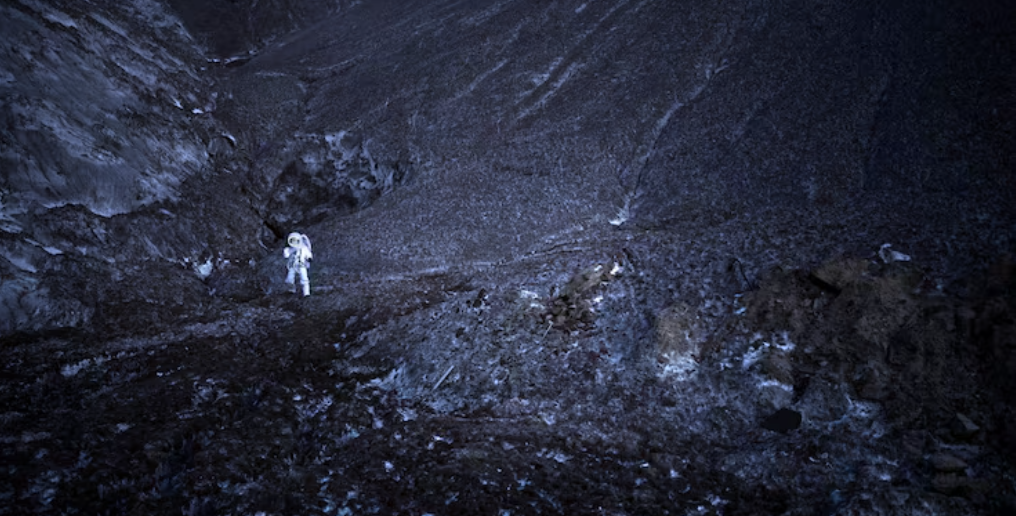
In contrast, space is still a lovely concept based on scant information. The OSIRIS-REx capsule is still being examined piece by piece, and AstroForge is launching missions to investigate the possibility of refining platinum-group elements from asteroid-like material. Without a doubt, useful work. However, research has subtly revealed that most metals are not more concentrated in space rocks than they are in Earth’s crust. Once the star of the asteroid rush, Planetary Resources has vanished. The people who founded it have moved on. Investors perceive space mining as a thirty-year wager dressed in a five-year suit.
Although the math is closer to the present tense, deep-sea mining is also not entirely certain. The Metals Company’s Australian owner, Gerard Barron, likes to refer to the nodules as “a battery in a rock,” and he compares the harvesting process to vacuuming golf balls off a putting green. The line is memorable—perhaps too memorable. When they hear it, conservationists recoil. The practice has been likened by Pippa Howard of Fauna and Flora International to turning coral reefs into cement, which is more difficult than the majority of press releases from Vancouver and Kingston.
This story is particularly challenging because both sides have a point. Approximately 25% of the world’s annual carbon emissions are absorbed by the oceans. No one can yet fully model the consequences of disturbing a biome the size of the Amazon, even if most people will never see it. However, the alternative—relying more on Congolese artisanal mines, where tunnel collapses and child labor are still stubbornly common—is a form of harm that we have already accepted by turning a blind eye.
At least commercially, investors seem to think the seabed will prevail this time. It is favored by the cost curve. Geographically, it is advantageous. It most likely benefits from geopolitics, as Washington is keen to lessen Beijing’s processing hegemony. No one at the International Seabed Authority can confidently respond to the question of whether biology can absorb that decision. The most peculiar aspect of witnessing this is the quiet that surrounds it. The public still imagines the future of mining as something occurring on an asteroid, while a trillion-dollar industry is being argued into existence beneath invisible water. Most likely, it won’t. For now, the future lies on the Pacific floor, damp and dark.
