

The Scripps Institution of Oceanography sits peacefully above the Pacific on most mornings in La Jolla. Its piers span the water, and its laboratories conduct experiments on deep-sea specimens and kelp embryos that most people would never consider. The San Diego Zoo Safari Park, which spans 900 acres of cactus scrub and biodiversity reserve, is located about 35 miles north, beyond the scrublands of Escondido and the dry heat of inland San Diego County. Two esteemed organizations with completely different daily tasks, ecosystems, and areas of focus. They could have been operating on different planets for the majority of their respective histories.
In April 2026, however, the two organizations announced a formal research partnership under the Agile Restoration & Conservation Hubs initiative (ARCH, for those who prefer acronyms). The partnership brings together the Zoo Wildlife Alliance’s fifty years of experience in biobanking and applied conservation with Scripps’s expertise in marine science, machine learning, and weather forecasting. The same issues have been identified over the course of more than 200 years of institutional history. Both the announcement’s ambition and the pairing’s seeming improbability on paper attracted attention. A zoo and a marine research facility. What precisely are they supposed to tell each other?
As it happens, quite a bit. The collaboration was a direct result of previous work between the two organizations, such as a project that produced viable larvae in a lab using frozen sperm from the critically endangered sunflower sea star. That kind of outcome tends to concentrate minds. If a sea star’s preserved genetic material can create new life, then what else can it do, for what other species, and on what scale? For decades, the San Diego Zoo Wildlife Alliance has been discreetly responding to a variation of that query. The largest and most varied cryobank for endangered species in the world is its Frozen Zoo, which was founded more than 50 years ago. A foal named Kurt and a second foal in 2023 were cloned from a Przewalski’s horse cell that had been stored since the 1980s, raising the prospect of reintroducing a species that had completely disappeared from the wild. The science has been validated. Now, the question is whether it applies to the ocean.
| Field | Details |
|---|---|
| Partnership Name | Agile Restoration & Conservation Hubs (ARCH) Initiative |
| Organizations | Scripps Institution of Oceanography (UC San Diego) + San Diego Zoo Wildlife Alliance (SDZWA) |
| Announced | April 7, 2026 |
| Combined Experience | 200+ years of scientific research and public outreach |
| Scripps Location | La Jolla, California (9500 Gilman Drive) |
| Zoo’s Biobank | Frozen Zoo — world’s largest and most diverse cryobank for endangered species; 50+ years old |
| Scripps Collections | Among the oldest and largest in the world — millions of marine specimens including vertebrates, zooplankton, molluscs, crustaceans |
| Digital Twin Subject | 900-acre Safari Park Biodiversity Reserve, Escondido, North County San Diego |
| First Marine Focus | Giant kelp (Macrocystis pyrifera) — critically declining along California coast |
| Prior Collaboration | Used frozen sunflower sea star sperm to produce larvae of critically endangered species |
| Historical Precedent | Frozen Zoo cell from a Przewalski’s horse (stored 1980s) used to clone foal named Kurt; second foal cloned 2023 |
| Key Leaders | Jack Gilbert (Scripps Deputy Director of Research); Stuart Sandin (Center for Marine Biodiversity and Conservation); Megan Owen (SDZWA VP of Conservation Science); Dr. Nadine Lamberski (SDZWA Chief Conservation Officer) |
| Real-World Problem Being Addressed | Spread of stinknet (globe chamomile) — invasive South African plant overtaking San Diego County native habitat and fueling brush fires |
| Public Presentation | Partnership discussed at 2026 SXSW panel: “Can Science Safeguard Earth’s Wildlife?” |
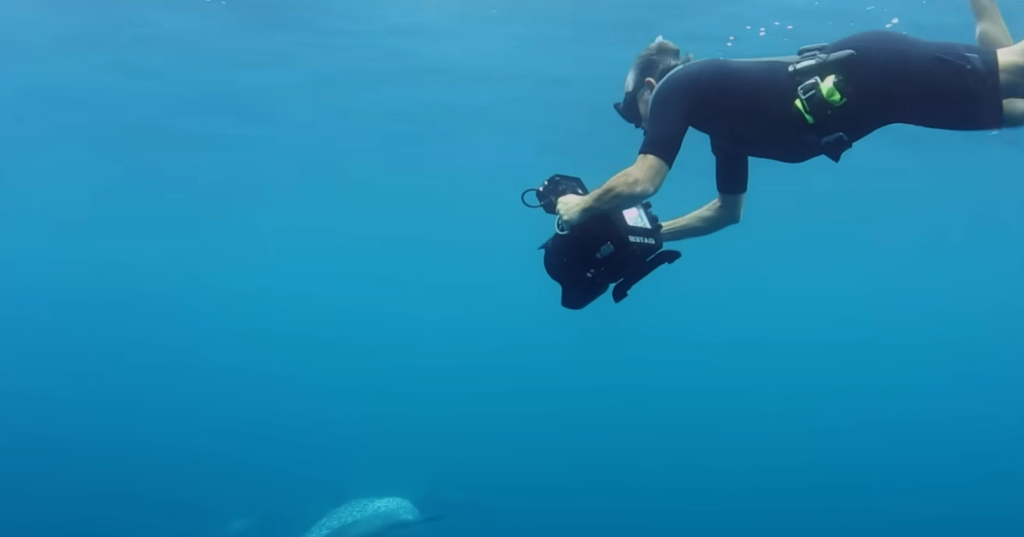
The Scripps Oceanographic Collections are among the oldest and largest in the world, containing millions of marine specimens, including vertebrates, zooplankton, mollusks, crustaceans, worms, and seaweeds. The sophisticated biobanking infrastructure that the Frozen Zoo represents is what they have never had. This collaboration aims to bridge that gap. Scripps researchers will receive training sessions and workshops from zoo staff on cryopreservation techniques, beginning with the endangered giant kelp from the waters off the coast of San Diego, where kelp forests have been disappearing at a rate that greatly concerns marine ecologists. Scientists at Scripps are already collecting and conserving genetic material and kelp embryos. The idea is to create a living genetic archive of the ocean that can be used for restoration projects as needed, much like a frozen aquarium.
The urgency that permeates all of the language used to describe this work is difficult to ignore. The Alliance’s chief conservation and wildlife health officer, Dr. Nadine Lamberski, put it succinctly: “The biodiversity loss that is currently taking place is happening at a speed and scale that makes it genuinely difficult to keep pace.” She stated that it will take a few years for irreversible damage to become the norm. Institutions don’t use that kind of language when they have more time.
The digital twin project is equally impressive in its own right. Scripps and zoo researchers are creating an AI-powered virtual replica of the ecosystem using data from trail cameras, acoustic recorders, environmental DNA sensors, and weather stations throughout the 900-acre Safari Park Biodiversity Reserve near Escondido. The replica is detailed enough to run simulations, forecast climate impacts, and identify levers for intervention. Stinknet, also known as globe chamomile, is an invasive plant from South Africa that has spread throughout San Diego County and into Arizona. It outcompetes native plants and dries into fuel for brush fires every summer.
This is the first concrete issue they are addressing with it. Before implementing intervention strategies on the ground, scientists will be able to test them and model how the plant spreads thanks to the digital twin. That’s a modest enough beginning, but the goal is much more ambitious: regional digital twins built on the same framework will eventually become global ones.
As this partnership develops, it’s worth considering the implications for the future of conservation science. It has always made some logistical sense to divide marine and terrestrial expertise into distinct fields, career paths, journals, and conferences. However, ecosystems don’t respect these limits. Cactus scrub and kelp forests are related issues. They have similar climates, coastlines, pressures, and, it seems, solutions. It remains to be seen if this specific collaboration can grow to the extent that the crisis demands. However, it is difficult to dispute the reasoning behind integrating Scripps’ knowledge of the ocean with the zoo’s expertise in preserving species in the most dire circumstances. The lab already has the frozen sea star larvae. We are gathering the kelp embryos. Real data powers the digital twin. According to Jack Gilbert, the task is to ensure that any lessons learned by one institution are adopted by the other, so that both are working toward a stronger future.
