
Close Menu
Indeep ProjectIndeep Project
  • Home
  • Privacy Policy
  • Terms of Service
  • Disclaimer
  • About
  • Indeep
  • Marine Life
  • News

Subscribe to Updates

Get the latest creative news from FooBar about art, design and business.

What's Hot

China’s All-Weather Deep-Sea Megastructure Has the West on High Alert

April 28, 2026

The Race for Cobalt: Why Mining the Abyss Is More Lucrative Than Space Exploration

April 28, 2026

How Physical Oceanography Seminars at the Leibniz Institute Are Influencing Research Agendas Across the Atlantic

April 28, 2026
Facebook X (Twitter) Instagram
Indeep ProjectIndeep Project
SUBSCRIBE
  • Home
  • Privacy Policy
  • Terms of Service
  • Disclaimer
  • About
  • Indeep
  • Marine Life
  • News
Indeep ProjectIndeep Project
Home»Indeep»The Mysterious Deep-Sea Habitats That Could Hold the Cure to Superbugs
Indeep

The Mysterious Deep-Sea Habitats That Could Hold the Cure to Superbugs

Derrick LesterBy Derrick LesterApril 28, 2026No Comments4 Mins Read
Share
Facebook Twitter Reddit Telegram Pinterest Email

There are bacteria doing things that no one in a pharmaceutical lab has ever seen before, somewhere around three kilometers below the Pacific’s surface in water so cold and dark that light has not touched it in millennia. They are under intense pressure to survive. They consume chemicals that leak out of seafloor fissures. And they are turning into the most subtly optimistic tale in contemporary medicine.

For many years, soil has been the source of nearly all antibiotics found on hospital shelves. Soil-dwelling Streptomyces, penicillium molds, and fermentation tanks were adjusted semi-synthetically until something beneficial appeared. To be honest, that well is empty.

Reference InformationDetails
TopicDeep-sea microbial habitats as a source of new antibiotics
Estimated marine natural products discovered (50 years)Over 30,000
Share isolated from deep-sea organismsAround 2%
Standard deep-sea depth definitionRoughly 1,000 metres or deeper
Pressure at the deepest trenchesAbove 1,000 atmospheres
Average temperature on the abyssal plainAbout 2 °C
Projected global deaths from resistant superbugs by 2050Up to 39 million
Untreatable bacterial infections by 2023 (WHO)1 in 6 common cases
Key microbial groups studiedPiezophilic bacteria, deep-sea fungi, Psychrobacter species
Sampling methodsROVs, submersibles, sediment coring

Once eliminated by a standard prescription, the bacteria now resist entire classes of medications. According to the most recent global report from the World Health Organization, one in six common bacterial infections may already be incurable by 2023. According to a Lancet estimate, the long-term human cost will be approximately 39 million lives by 2050. Until you sit with the numbers for a minute, they seem abstract. For this reason, a small but unyielding group of marine microbiologists continues to point downward, almost insistently.

It’s not just cold and dark in the deep sea. In terms of microbes, it is alien. Every ten meters, the pressure increases by one atmosphere. There is absolutely no light below 250 meters. There can be almost no oxygen left. The organisms that live there have altered their metabolism in ways that their land-dwelling cousins haven’t had to in order to survive any of this. They create molecules that no one has cataloged, which is an intriguing consequence for chemists. In the dry language of the literature, novel secondary metabolites. In the more truthful one, new weapons.
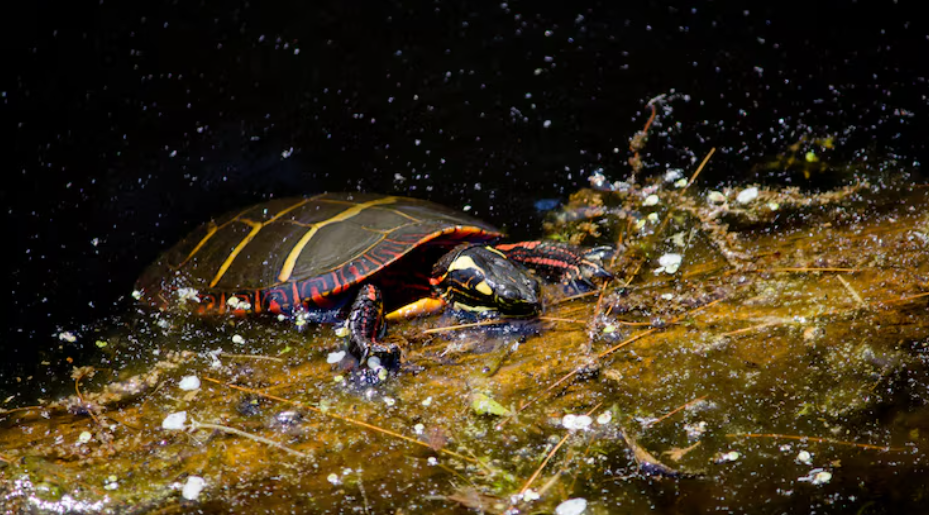
The Mysterious Deep-Sea Habitats

Researchers believe that this field has been waiting years for a breakthrough. Sample collection is now less of a pipe dream than it was in the 1990s thanks to ROVs and submersibles, but growing piezophiles—microbes that genuinely require that crushing pressure to grow—remains incredibly challenging. The conditions simply cannot be replicated in most labs. In a petri dish, the strains that do emerge alive frequently do not bloom. The most promising organisms are also the least cooperative, which is an unsettling reality in the field.

Nevertheless, there is a trickle of discoveries. Compounds extracted from deep-sea bacteria and fungi, especially those extracted from trench sediments and cold seeps, have demonstrated efficacy against pathogens that are resistant to frontline medications. Resistance genes that have evolved over geological time and have not been impacted by hospital pharmacies have been discovered through metagenomic surveys of trench waters. This suggests that these ecosystems contain an ancient archive of microbial chemistry that science is just now starting to decipher.

It’s difficult to ignore the irony. We might end up searching for our next round of survival in the same depths that humans have used as a landfill for trash, outdated weapons, and other items we’d prefer to forget.

It’s another matter entirely whether any of this ends up as a pill on a pharmacy counter. Drug development is unromantic, costly, and takes a long time. Despite the lengthy timelines and numerous failures, investors appear to think the upside is genuine. As we watch this develop, the truth is that we don’t yet know. The deep sea is no longer a source of curiosity, that much is certain. It’s beginning to resemble a library. And it will eventually be translated by someone.

Deep-Sea Habitats
Share. Facebook Twitter Pinterest LinkedIn Telegram Reddit Email
Previous ArticleHow One University of Rhode Island Professor Is Changing What We Know About Deep-Sea Organisms
Next Article Scientists Dropped a Camera 9,100 Meters Into the Ocean Off Japan. The Footage Left Them Speechless.
Derrick Lester

    Derrick Lester is a professor and editor at indeep-project.org. His academic career has been molded by a single, enduring obsession: the sea and all life in it. Drawing from marine biology, oceanography, and the kind of hard-won field knowledge that only comes from spending significant time on and under the water, Derrick's writing has the depth of a scholar thanks to his years of research and teaching experience. His writing delves into the science of marine life with the inquisitiveness of someone who has never fully moved past the wonder of what exists beneath the surface. Derrick hopes to introduce readers to a world that encompasses over 70% of the planet and is, in many respects, still largely unexplored through his contributions to indeep-project.org.

    Related Posts

    China’s All-Weather Deep-Sea Megastructure Has the West on High Alert

    April 28, 2026

    China’s AI Deep-Sea Research Tools Are Now Outpacing What American Universities Can Build

    April 28, 2026

    The Deep Sea Conservation Movement Is Running Out of Time

    April 28, 2026

    Deep-Sea Larval Dispersal: The Hidden Highway Beneath Our Oceans

    April 28, 2026

    The Skidaway Institute of Oceanography Is Doing Research That Could Reshape Coastal Policy Across the South

    April 27, 2026

    The Secret “Surveillance Cover” Behind Modern Deep-Sea Mining Operations

    April 27, 2026
    Add A Comment
    Leave A Reply Cancel Reply

    You must be logged in to post a comment.

    Don't Miss

    China’s All-Weather Deep-Sea Megastructure Has the West on High Alert

    By Derrick LesterApril 28, 2026

    A six-story steel platform in the middle of disputed waters, with no nation permitted to…

    The Race for Cobalt: Why Mining the Abyss Is More Lucrative Than Space Exploration

    April 28, 2026

    How Physical Oceanography Seminars at the Leibniz Institute Are Influencing Research Agendas Across the Atlantic

    April 28, 2026

    China’s AI Deep-Sea Research Tools Are Now Outpacing What American Universities Can Build

    April 28, 2026

    Scientists Dropped a Camera 9,100 Meters Into the Ocean Off Japan. The Footage Left Them Speechless.

    April 28, 2026

    The Mysterious Deep-Sea Habitats That Could Hold the Cure to Superbugs

    April 28, 2026

    How One University of Rhode Island Professor Is Changing What We Know About Deep-Sea Organisms

    April 28, 2026
    About Us
    About Us

    Indeep-project.org is dedicated to disseminating information that is supported by data, open about its sources, and truthful about the limits of human knowledge.
    Peer-reviewed studies, official scientific publications, and the knowledge of contributors with firsthand knowledge of ecology, environmental policy, and marine science are all sources of information used by our editorial team. Content that expresses opinion is clearly marked as such, whether it comes from our own contributors or from outside sources.
    Important Information Opinion pieces, commentary, and third-party viewpoints on subjects like science, technology, finance, politics, and public policy are among the content published on indeep-project.org. Only educational and informational purposes are served by this content. It does not constitute expert scientific, financial, legal, or medical advice; rather, it reflects the opinions of the original authors.
    We strongly advise readers to seek qualified professional advice appropriate to their particular circumstances before acting on political, financial, or scientific information published on this platform. Decisions based on third-party opinion content published here are not endorsed, recommended, or liable for by indeep-project.org.

    Our Picks

    China’s AI Deep-Sea Research Tools Are Now Outpacing What American Universities Can Build

    April 28, 2026

    Scientists Dropped a Camera 9,100 Meters Into the Ocean Off Japan. The Footage Left Them Speechless.

    April 28, 2026

    The Mysterious Deep-Sea Habitats That Could Hold the Cure to Superbugs

    April 28, 2026

    How One University of Rhode Island Professor Is Changing What We Know About Deep-Sea Organisms

    April 28, 2026

    The Oceanographic Sensor That Just Outsmarted Decades of Manual Deep-Sea Data Collection

    April 28, 2026

    When the Ocean Boils: The Shocking Reality of Florida’s 100-Degree Coastal Waters

    April 28, 2026
    • Home
    • Privacy Policy
    • Terms of Service
    • Disclaimer
    • About
    • Indeep
    • Marine Life
    • News
    © 2026 ThemeSphere. Designed by ThemeSphere.

    Type above and press Enter to search. Press Esc to cancel.