
Close Menu
Indeep ProjectIndeep Project
  • Home
  • Privacy Policy
  • Terms of Service
  • Disclaimer
  • About
  • Indeep
  • Marine Life
  • News
Indeep ProjectIndeep Project
SUBSCRIBE
  • Home
  • Privacy Policy
  • Terms of Service
  • Disclaimer
  • About
  • Indeep
  • Marine Life
  • News
Indeep ProjectIndeep Project
Home»Indeep»What NOAA’s Deep-Sea Coral Research Is Telling Us About the Ocean We Thought We Understood
Indeep

What NOAA’s Deep-Sea Coral Research Is Telling Us About the Ocean We Thought We Understood

Derrick LesterBy Derrick LesterMay 6, 2026No Comments4 Mins Read
Share
Facebook Twitter Reddit Telegram Pinterest Email

Standing in front of a wall-mounted screen in a NOAA operations support center, watching a remotely operated camera glide through complete darkness hundreds of meters below the ocean’s surface, and realizing that you’re looking at a habitat that has existed for centuries without anyone ever seeing it, is a subtly unsettling experience. For years, NOAA’s deep-sea coral researchers have had to deal with this reality: a vast, mostly invisible world that keeps coming to light in unexpected ways.

It’s hard to understand the numbers by themselves. In just two years, from 2018 to 2019, NOAA and its research partners identified the largest deep-sea coral reef system ever found along the U.S. Southeast coast, mapped about 55,000 square miles of seafloor that had never been surveyed in meaningful resolution, and described 21 previously unknown coral species.

CategoryDetails
OrganizationNational Oceanic and Atmospheric Administration (NOAA)
Program NameDeep Sea Coral Research and Technology Program
FoundedNOAA established 1970; Deep Sea Coral Program authorized 2000
HeadquartersSilver Spring, Maryland, USA
Primary Research VesselNOAA Ship Okeanos Explorer
New Species Described (2018–2019)21 new deep-sea coral species
Seafloor Mapped55,000 square miles of previously poorly understood seafloor
Notable DiscoveryMost expansive deep-sea coral reef area known off the U.S. Southeast coast
Coral LifespanUp to 100 years (Desmophyllum cristagalli)
Annual Growth RateApproximately 1 millimeter per year
Key Management Bodies InformedPacific, New England, and Gulf of Mexico Fishery Management Councils
Report PublishedReport to Congress, April 2021

In particular, that final point merits some attention. An entire reef system of that size was sitting there, unexplored, despite the United States having one of the world’s most comprehensive ocean monitoring programs for decades. It’s possible that we’ve been measuring the ocean in the same way that someone measures a house by simply going through the hallways.

The fact that deep-sea corals survive at all is what makes them truly unique and scientifically indispensable. Deep-sea corals do not receive sunlight, in contrast to the corals that most people picture when they think of the Great Barrier Reef. The metabolic heavy lifting is not carried out by photosynthetic algae that reside within them.
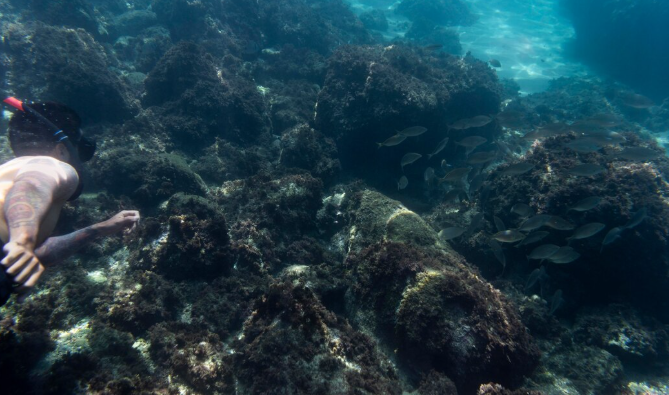
What NOAA's Deep-Sea Coral Research Is Telling Us About the Ocean We Thought We Understood
What NOAA’s Deep-Sea Coral Research Is Telling Us About the Ocean We Thought We Understood

Rather, they live on the slow, continuous drift of dead microscopic organisms that fall from the surface, which scientists sometimes refer to as marine snow. Only a small portion of that material is left by the time it reaches the deep ocean floor. And species like Desmophyllum cristagalli, which grow only a millimeter annually, are able to survive for up to a century from that limited supply. That is patience on a level that is difficult for the human mind to fully comprehend, not just survival.

These corals are extremely valuable as historical records because of their slow growth. As they develop, their skeletons serve as long-term environmental journals, recording chemical signatures from the surrounding water. By reading them, scientists can gain a thorough understanding of ocean chemistry, temperature, and circulation patterns spanning decades or more. It’s the type of data that can’t be created after the fact, and once a coral colony is destroyed by trawling or sediment disturbance, it can’t be recovered.

It seems that American fisheries management has been gradually but more urgently coming to terms with this reality. In recent years, NOAA’s coral data has been used by the Pacific, New England, and Gulf of Mexico Fishery Management Councils to develop new fishing regulations that selectively reopen less vulnerable zones while introducing protections for large seafloor areas. It’s still unclear if those protections are progressing fast enough to be significant. In ways that don’t wait for regulatory calendars, the health of the ocean has been declining.

In the end, NOAA’s deep-sea coral research is telling us more than just that there are more species than previously thought. It indicates that there are significant gaps in our mental model of the ocean, which is based on surface surveys, satellite imagery, and a few decades of selective sampling. Most of the planet’s surface is covered by the deep sea. The majority of it is still not mapped at a useful resolution. A version of Earth’s history that cannot be replicated in a lab is being recorded by ancient coral colonies that are growing one millimeter at a time somewhere in that darkness. It’s difficult not to feel like we’re just starting to realize how much we stand to lose.

NOAA's Deep-Sea Coral Research
Share. Facebook Twitter Pinterest LinkedIn Telegram Reddit Email
Previous ArticleThe Deep Ocean Had a Missing Link Nobody Could Find – Scientists at Scripps Say They’ve Found It.
Derrick Lester

    Derrick Lester is a professor and editor at indeep-project.org. His academic career has been molded by a single, enduring obsession: the sea and all life in it. Drawing from marine biology, oceanography, and the kind of hard-won field knowledge that only comes from spending significant time on and under the water, Derrick's writing has the depth of a scholar thanks to his years of research and teaching experience. His writing delves into the science of marine life with the inquisitiveness of someone who has never fully moved past the wonder of what exists beneath the surface. Derrick hopes to introduce readers to a world that encompasses over 70% of the planet and is, in many respects, still largely unexplored through his contributions to indeep-project.org.

    Related Posts

    The Deep Ocean Had a Missing Link Nobody Could Find – Scientists at Scripps Say They’ve Found It.

    May 6, 2026

    Japan’s Deep-Sea Probe Just Hit 8,015 Meters — Opening Research Frontiers That Didn’t Exist Last Year

    May 6, 2026

    Why We Need a Better Digital Twin of the Ocean to Prevent Future Tsunamis

    May 6, 2026

    The Shocking Finding From a Deep-Sea Expedition That Rewrote the Biology Textbooks Nobody Had Time to Update

    May 6, 2026

    The Golden Orb Mystery That Stumped Deep-Sea Researchers for Years Has Finally Been Solved

    May 5, 2026

    Scientists Are Discovering That Deep-Sea Ecosystems Are Far More Interconnected Than Any Model Predicted

    May 5, 2026
    Add A Comment
    Leave A Reply Cancel Reply

    You must be logged in to post a comment.

    Don't Miss

    What NOAA’s Deep-Sea Coral Research Is Telling Us About the Ocean We Thought We Understood

    By Derrick LesterMay 6, 2026

    Standing in front of a wall-mounted screen in a NOAA operations support center, watching a…

    The Deep Ocean Had a Missing Link Nobody Could Find – Scientists at Scripps Say They’ve Found It.

    May 6, 2026

    Japan’s Deep-Sea Probe Just Hit 8,015 Meters — Opening Research Frontiers That Didn’t Exist Last Year

    May 6, 2026

    The Hypoxic Dead Zones Spreading Rapidly Across the Deep Ocean

    May 6, 2026

    The Pacific Decadal Oscillation Is Shifting – What It Means for Global Weather

    May 6, 2026

    How Oceanography Is Adapting to the Age of Rapid Coastal Erosion

    May 6, 2026

    The Startups Trying to Convince Us That Sustainable Deep-Sea Mining Isn’t an Oxymoron

    May 6, 2026
    About Us
    About Us

    Indeep-project.org is dedicated to disseminating information that is supported by data, open about its sources, and truthful about the limits of human knowledge.
    Peer-reviewed studies, official scientific publications, and the knowledge of contributors with firsthand knowledge of ecology, environmental policy, and marine science are all sources of information used by our editorial team. Content that expresses opinion is clearly marked as such, whether it comes from our own contributors or from outside sources.
    Important Information Opinion pieces, commentary, and third-party viewpoints on subjects like science, technology, finance, politics, and public policy are among the content published on indeep-project.org. Only educational and informational purposes are served by this content. It does not constitute expert scientific, financial, legal, or medical advice; rather, it reflects the opinions of the original authors.
    We strongly advise readers to seek qualified professional advice appropriate to their particular circumstances before acting on political, financial, or scientific information published on this platform. Decisions based on third-party opinion content published here are not endorsed, recommended, or liable for by indeep-project.org.

    Our Picks

    The Hypoxic Dead Zones Spreading Rapidly Across the Deep Ocean

    May 6, 2026

    The Pacific Decadal Oscillation Is Shifting – What It Means for Global Weather

    May 6, 2026

    How Oceanography Is Adapting to the Age of Rapid Coastal Erosion

    May 6, 2026

    The Startups Trying to Convince Us That Sustainable Deep-Sea Mining Isn’t an Oxymoron

    May 6, 2026

    The Jellyfish Surge in the Bay of Bengal That Climate Scientists Are Linking to Deep Ocean Warming

    May 6, 2026

    Why We Need a Better Digital Twin of the Ocean to Prevent Future Tsunamis

    May 6, 2026
    • Home
    • Privacy Policy
    • Terms of Service
    • Disclaimer
    • About
    • Indeep
    • Marine Life
    • News
    © 2026 ThemeSphere. Designed by ThemeSphere.

    Type above and press Enter to search. Press Esc to cancel.