

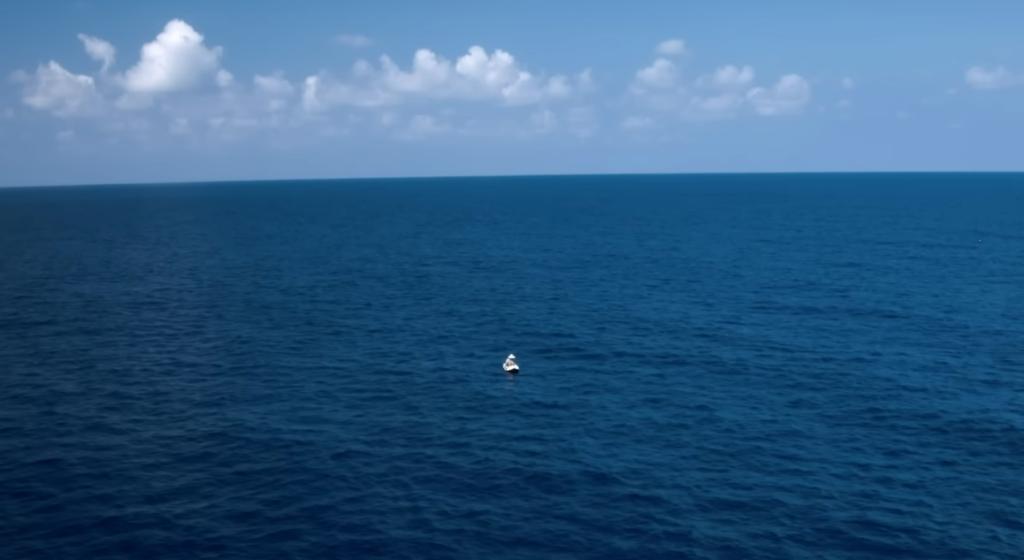
The image of a research vessel somewhere in the Pacific lowering a sealed sample tube into water that hasn’t seen sunlight in millennia and retrieving sediment that has lain undisturbed at the ocean’s bottom for thousands of years is subtly unsettling. It wasn’t just mud that emerged. A study that was published in the journal mBio claimed that it was something living. or something that, given the correct host, came to life.
106 deep-sea sediment samples from the Pacific, Atlantic, and Indian Oceans were gathered by researchers at the College of Life Sciences in Qingdao, China. The sediment came from hadal trenches, hydrothermal vents, cold seeps, and mid-ocean ridges and dates back thousands of years. Each sample’s viruses were purified before being injected into lab mice. The ancient viruses did more than just survive in nine of those samples. In addition to causing intestinal inflammation, liver damage, and irregular glucose metabolism, they multiplied in the gut and upset bacterial communities. Within days, two particular bacteriophages, designated DP105 and DP016, caused noticeable damage to colon tissue due to their extreme aggression.
It’s worth considering the true implications of that. These viruses are essentially frozen in biological time, having spent thousands of years in cold, pressurized, lightless sediment at the ocean’s bottom. They woke up and went to work when they were placed in a warm mammalian gut. The implication is difficult to ignore, even though the study’s authors were cautious in their wording—this is mouse data, not human data, and the leap from one to the other is not guaranteed. In ways that are directly related to mammalian health, bacteriophages—which infect bacteria rather than human cells—help shape gut microbiota, control immune responses, and affect inflammation. If you sufficiently disturb that ecosystem, the consequences aren’t hypothetical.
This research has special significance because of its timing. The pace of deep-sea mining and exploration has been quickening. Both the frequency and depth of scientific expeditions are increasing. Material is being extracted from the seafloor by resource exploitation operations at rates and volumes never seen before. Every sample that emerges from the abyss contains biological material, and according to the authors, the biosecurity risks associated with that material had not been thoroughly investigated prior to this study. In hindsight, that gap seems to have been overlooked because no one bothered to check.
The story is further complicated by additional research that was released earlier this month by the Max Planck Institute for Biology in Tübingen. Researchers studying the brown alga Ectocarpus, which is frequently used in multicellular biology studies, found that the genome of the organism contains whole, intact sequences of giant viruses that are dormant inside the host’s chromosomes. These are not remnants of the genome. Using CRISPR editing, researchers were able to verify that the integrated viral sequences are fully functional and capable of generating infectious particles under the correct circumstances, such as a particular cell type or temperature. In essence, the virus has concealed itself within the host’s germline, waiting to be passed down from parent to child over many generations. “It hides inside the host, gets passed on to every offspring, and then selectively wakes up at just the right moment,” the study’s director, Susana Coelho, stated.
When combined, these two lines of inquiry present a picture that is more intricate and worrisome than either study would indicate on its own. One demonstrates how ancient viruses can survive in sediment, resurrect in the stomachs of mammals, and cause quantifiable physical harm. In the other, enormous viruses are shown to silently embed themselves in the genomes of multicellular hosts, pass on through generations of inheritance, and then reactivate under certain circumstances. The deep sea is involved in both. Both entail biological patience that functions on timescales that humans aren’t designed to understand intuitively, as well as dormancy and revival.
The similarities to how the scientific community viewed zoonotic spillover prior to 2020 are difficult to ignore. In general, it was assumed that the risk was sufficiently understood, that the realistic threat landscape was covered by known vectors, known species, and known environments. That image did not include the seafloor. In most biosecurity frameworks, it still isn’t. It’s genuinely unclear at this point whether that changes fast enough to matter. It is evident that the ocean floor is not the inert, sterile archive that was thought to exist. It’s biological. It is outdated. And we’re reaching into it more and more.
