

The twilight zone of the ocean has a subtle unnerving quality. The layer between 200 and 1,000 meters below the surface is where sunlight fades into something more akin to a permanent grey dusk, rather than the striking darkness of the very deep. This area, known as the mesopelagic zone, has more living biomass than any other place in the ocean, as scientists have long known. They were unable to determine why big predators continued to appear there. Built for speed and surface hunting, great sharks were spending hours in this chilly, dark hallway. The total didn’t add up.
The answer, according to researchers at the Woods Hole Oceanographic Institution, is a fish that most people are unaware of. The bigscale pomfret, a deep-bodied, mid-sized species that resembles a hastily designed fish, seems to be the link between the two major food worlds of the ocean. These fish sink into the mesopelagic zone during the day. They rise to the surface to feed at night. Millions of them make this daily vertical commute, which efficiently transports energy up and down the water column in a manner that nothing else can match.
| Key Information: Deep Ocean Missing Link Discovery | Values |
|---|---|
| Research Institution | Woods Hole Oceanographic Institution (WHOI), Massachusetts |
| Published In | Marine Ecology Progress Series |
| Discovery Year | 2025 |
| Key Species Identified | Bigscale Pomfret (Taractichthys longipinnis) |
| Ocean Zone Studied | Mesopelagic Zone — 200 to 1,000 meters deep |
| Method Used | Satellite-based tracking tags attached to live fish |
| Deep Ocean Coverage of Earth | 66% of Earth’s surface is deep ocean (below 200 meters) |
| Amount Visually Explored | Less than 0.001% of the deep seafloor ever imaged |
| Area Observed (Total) | Roughly the size of Rhode Island |
| Related Study Location | Clarion-Clipperton Zone — 4,000 meters deep, between Hawaiʻi and Mexico |
| New Species Found | Over 500 potential new species identified in separate 2026 study |
| Total Specimens Cataloged | 4,350 wildlife specimens from the seabed |
| Threat Identified | Deep-sea metal mining; 37% animal population decline near operations |
| Minerals at Stake | Nickel, cobalt — used in EV battery manufacturing |
It’s the kind of discovery that, once you hear it, seems almost disappointingly straightforward. There is, of course, a connector species. Naturally, it’s not a monster from a nightmare, but rather something commonplace. However, the tracking was the problem, not the idea. Pomfret on a large scale are infamously difficult to study. They don’t come to the surface easily. They don’t congregate where people usually look. It took years of work and a lot of luck to fit them with satellite tags and actually recover useful data.
The finding highlights how little we’ve been working with, which makes it more intriguing and somewhat humbling. Less than 0.001% of the deep seafloor has been visually observed by humans, according to a 2025 study published in Science Advances. Out of a zone that encompasses two-thirds of the planet, that is an area about the size of Rhode Island. The scientists who came up with that figure weren’t being overly dramatic. If anything, it seems like they were being cautious about how shocking it truly is.
Timing is also important. Separately, a study conducted in February 2026 discovered more than 500 potential new species on the seafloor of the Clarion-Clipperton Zone, a region of the ocean between Mexico and Hawaii that is also home to enormous reserves of nickel and cobalt, two minerals that the green energy sector desperately needs for electric vehicle batteries. Animal populations in the vicinity of ongoing mining operations have already decreased by 37%, according to research. Even before it is properly introduced, the ecosystem is being disrupted.
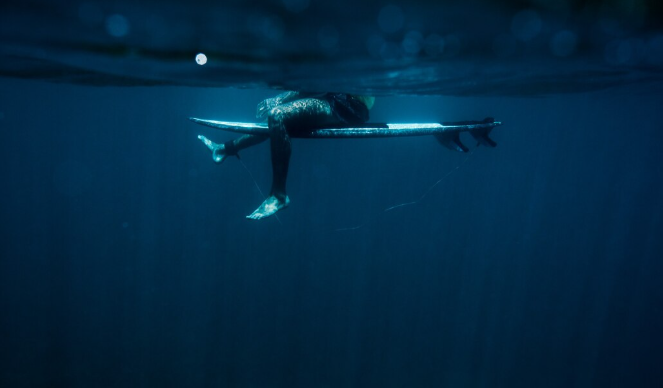
Observing all of this, one gets the impression that science is competing with something it can hardly see. The discovery of the pomfret is significant not only because it closes a gap in a food web diagram but also because it implies that the mesopelagic zone is far more fragile and organized than previously thought.
You might be moving pieces in a system you don’t fully understand if you alter the movement patterns of a single mid-sized fish through factors like warming water, changing ocean clarity, or industrial noise. The pomfret were down there, and the sharks knew it. The rest of us simply needed some time to catch on.
