

Before the larvae at an oyster hatchery on Washington State’s Willapa Bay to survive, the water that enters from the Pacific must be carefully controlled. Since hatchery operators first began losing batches of seed oysters to water that was just too corrosive to allow their shells to form, this has been the case for more than ten years. Small enterprises find it difficult to absorb the cost and operational complexity of the solution, which includes monitoring the chemistry of incoming water, buffering it as needed, and timing intakes to avoid the most corrosive upwelled water. The hatcheries that were the first to figure it out continued to operate. Some didn’t.
Since the industrial revolution started releasing CO2 into the atmosphere, ocean acidification has been accelerating. The ocean absorbs around 25% of this carbon and turns it into carbonic acid. Given that pH is a logarithmic scale, the worldwide ocean’s pH has decreased by roughly 0.1 units since pre-industrial times. This may seem insignificant, but it actually indicates a 30% rise in hydrogen ion concentration. Oysters, clams, mussels, sea urchins, and some corals are among the creatures most quickly impacted because they use calcium carbonate to form their shells or skeletons. The calcium carbonate that makes up those shells starts to dissolve rather than form when the water gets more acidic. The issue in the Willapa Bay hatchery is not unique to the area. It’s a sneak peek at larger-scale developments.
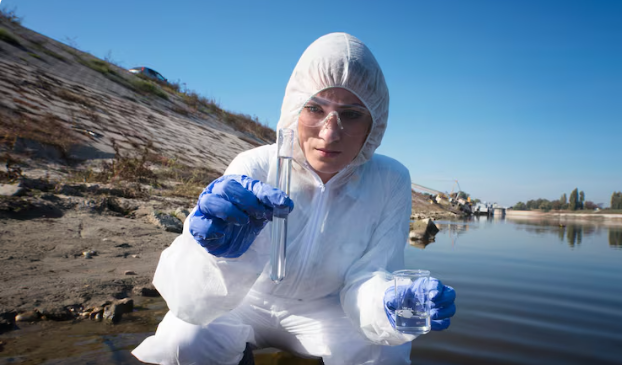
The Coastal Communities Ocean Acidification Act and the COAST Research Act are two proposals that have drawn sponsors from both parties and have been the foundation of the legislative response for a number of years. There is genuine bipartisan support, and its foundation is economic rather than philosophical. These legislation are being pushed by senators and congressmen from states that rely heavily on fishing, where the relationship between ocean chemistry and livelihoods is tangible.
It is possible for a Republican senator from Alaska and a Democratic senator from Maine to concur that acidification poses a threat to the shellfish sector without reaching a consensus on climate policy as a whole. In contrast to emissions reduction, which is both a political calculation and a real deficit that needs to be filled regardless of what occurs on the emissions side, the legislation is cautious to prioritize monitoring, economic vulnerability assessment, and scientific coordination.
Fundamentally, what the bills are requesting is more data and improved coordination of the existing data. Although NOAA has been conducting monitoring programs for ocean acidification for many years, there is unequal coverage and inconsistent integration with state, municipal, and tribal monitoring systems. Instead of building parallel datasets that don’t interface well, the Ocean Information Exchange, the data-sharing platform that the legislation would enable, aims to close this gap by establishing a common framework for regional research to connect and build upon one another. It sounds bureaucratically boring to integrate local fishing communities, state environmental departments, federal agencies, and tribal countries into the same information ecosystem. In actuality, it’s the difference between learning about acidification events after the damage has already occurred and having the information required to respond to them.
The legislative framework’s incorporation of indigenous knowledge is a detail that merits greater consideration than it usually gets. For generations, tribal tribes in Alaska and the Pacific Coast have been gathering shellfish and keeping an eye on coastal ecosystems. They frequently keep observational records and ecological information that predates any scientific monitoring program. The law requiring federal agencies to incorporate that information into their evaluations is not symbolic; rather, it acknowledges that without the longest observational baseline available, which in many coastal areas belongs to indigenous communities rather than federal agencies, the scientific picture of acidification is incomplete.
It is actually unclear if this legislation will pass in any given legislative session. Although bipartisan coastal legislation has a respectable track record in Congress—it typically withstands shifts in the majority in ways that more controversial environmental bills do not—the legislative calendar is packed, and ocean acidification vies for floor time with issues that face greater public pressure right now. The bills are backed by the shellfish industry. They are supported by tribal fishery groups. They are backed by regional fishing associations. They don’t have the kind of widespread national visibility that allows constituents to put pressure on lawmakers from inland states who set committee schedules.
