

Chimneys of white carbonate and calcium erupt from the seafloor in the Lost City Hydrothermal Field, which rises from the Mid-Atlantic Ridge at a depth of around 750 meters, resembling the remnants of an old structure. They are actively forming, accumulated over thousands of years by alkaline fluids seeping from the rock below; they are not ruins. The fluids have temperatures between 40 to 90 degrees Celsius, which is warm by mid-ocean norms. When the site was first described in 2000, researchers instantly recognized that the fluids contained substantial amounts of hydrogen gas. Not incidental hydrogen, not trapped hydrogen. For longer than human civilization has been, hydrogen has been continuously created by the reaction of saltwater with the rocks in the mantle below.
This process, known as serpentinization, has been taking place on Earth since the planet’s waters first appeared. Water combines with minerals like olivine when it seeps through fissures in iron and magnesium-rich rocks, the ultramafic rocks of the oceanic mantle. This reaction releases heat and creates a number of chemical byproducts, including hydrogen gas. Once the proper rock types are accessible to water, the reaction is exothermic and essentially self-sustaining. Although volcanic systems speed things up, volcanic heat is not necessary. Sunlight or any other external energy source is not necessary. It is a geological process that produces a fuel that releases only water vapor when burned.
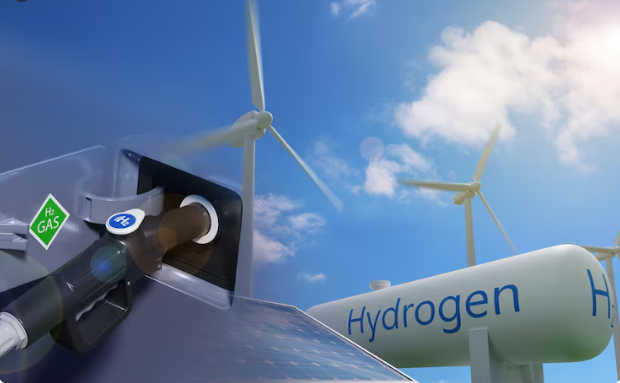
Once you grasp the chemistry, the significance of clean energy becomes clear. The lightest element is hydrogen, which may be burned in air or run through a fuel cell to produce heat or electricity with only water as an exhaust. No sulfur compounds, carbon dioxide, or particles. The issue with hydrogen as a fuel has never been that it is ineffective. The challenge has been to produce it without either using more energy than it contains or generating a lot of carbon throughout the process.
Although genuinely clean hydrogen can be produced by electrolysis using renewable electricity, commercial uses are currently limited due to the high cost of $4 to $8 per kilogram. The goal of the U.S. Department of Energy’s Hydrogen Shot program is $1 per kilogram by 2030, which would significantly alter the economics. To get there, manufacturing must be scaled up, electrolyzer technology must be improved, and the cost of renewable electricity must be reduced concurrently.
Serpentinization provides a model rather than a straight replacement for electrolysis. Without the need for outside energy, the geological process transforms the chemical energy contained in rocks that contain iron into hydrogen. For years, vent chemistry researchers have been wondering if it is possible to mimic the reaction circumstances in industrial or laboratory settings in a way that may someday produce hydrogen without the costly electrolyzer infrastructure. When compared to commercial chemical processes, the temperatures required for serpentinization are quite low. We know a lot about the mineralogy. Natural systems aren’t rate-optimized, which contributes to the slow reaction kinetics that occur in rock fissures over geological timeframes. The same chemical may be run much more quickly in engineered systems with finely ground reactive rock material and ideal temperature and pressure conditions.
The discovery of the Kunlun Hydrothermal Field in the western Pacific, which was made public in 2025, significantly increased our knowledge of the amount of hydrogen produced globally by geological processes. An estimated 4.8 × 10¹¹ moles of hydrogen are produced annually in the field, which covers about 11 square kilometers of seafloor close to the Mussau Trench. Researchers concluded that this amount represents around 5% of the projected global undersea abiotic hydrogen output from a single system. The result implies that geological hydrogen generation is more widely dispersed and important overall than previous models had predicted.
Researchers find it challenging to overlook the relationship to astrobiology, which adds another layer that isn’t typically highlighted in energy talks. Data from the Cassini mission on Saturn’s moon Enceladus revealed indications of serpentinization—hydrogen-rich plumes escaping into space through surface fissures—occurring in the moon’s subterranean ocean. An ocean world in our solar system seems to be using the same chemistry that may have been one of the first energy sources for life on early Earth. This has no direct bearing on the clean energy calculation, but it does indicate that serpentinization is a tremendously durable and broad geological process, which is important for figuring out how much hydrogen it might actually produce under circumstances that we can investigate and possibly duplicate.
It is really unclear if geological hydrogen will make a significant contribution to the clean energy transition on any near-term timetable. The depth, pressure, and diffuse nature of the resource provide significant technical obstacles for direct extraction from seafloor hydrothermal vents. Using vent chemistry as a model for designed processes in the lab is likely the most manageable route. Although it is still in its early phases, that research is underway. Without human intervention, this process has been occurring on the ocean floor for hundreds of millions of years. We’re still figuring out whether we can learn enough from it to create anything beneficial.
