

Images from a crewed submersible that had recently spent time close to the Galapagos Rift at a depth of around 2,500 meters were sent to a team of oceanographers on board a research ship in the eastern Pacific in June 1977. As was customary for abyssal exploration at the time, the scientists on the surface anticipated seeing a cold, black, and essentially featureless bottom. Instead, they observed hydrothermal vents around by dense populations of clams, tube worms, and other species that, according to their biological framework, shouldn’t have existed. Not only did the discovery add a species to the list. The laws governing where life can exist and what it needs to live have to be rewritten. When they noticed something unexpected on a seafloor that no one has previously fully characterized, the scientists who made it were in the vehicle, present at the place, and able to quickly reroute the sampling technique.
This is the case for human presence in deep-sea exploration in its most tangible form. It is not the philosophical argument about human curiosity or the motivational argument about manned exploration, but rather the particular operational argument that certain discoveries necessitate the kind of adaptive in-the-moment judgment that remote systems haven’t fully replicated. The vent site may have been documented by a ROV that followed a pre-programmed survey track. It is more difficult to determine if the mission plan would have captured what made it scientifically significant.
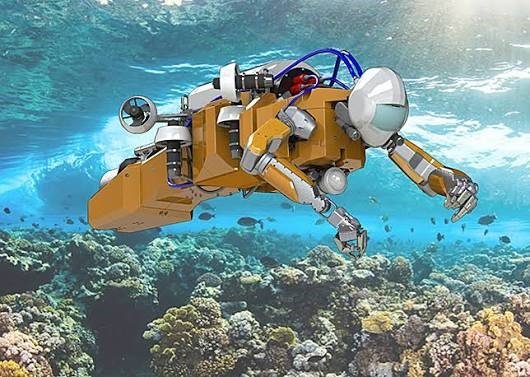
In comparison to 1977, the case for robotics is much stronger in 2026. Remotely operated vehicles, such as MBARI’s ROV Doc Ricketts and WHOI’s ROV Jason, have advanced sensor suites, can be controlled by researchers viewing live feeds from a warm ship cabin instead of a small titanium sphere at 600 atmospheres of pressure, and can remain on-site for much longer than a crewed vehicle that must surface for crew rest and battery recharging. No crewed submersible fleet could match the scale at which autonomous underwater vehicles, such as MBARI’s long-range AUV, can conduct preprogrammed survey missions spanning hundreds of kilometers over weeks, gathering temperature, salinity, oxygen, and acoustic data. These systems provide very high-quality data. Compared to comparable crewed operations, the cost per scientific observation is far lower.
The June 2023 Titan implosion brought a layer to this discussion that wasn’t previously as prominent. At about 3,800 meters on the way to the Titanic wreck, OceanGate’s carbon-fiber submersible catastrophically broke under pressure, killing five crew. The accident sparked an immediate and severe debate in the oceanographic community regarding what certification requirements for crewed deep-sea vehicles actually need to be met, as well as the risk assessment of placing humans in submersibles at extremely low depths. The most scientifically successful crewed deep-sea vehicle in history, Woods Hole’s HOV Alvin, is certified using recognized naval design and materials engineering standards, but OceanGate’s vehicle was not. The distinction is quite important. However, the incident served as a reminder to all those in this industry that crewed deep-sea vehicles had narrow engineering margins.
In all honesty, the answer to the question of whether humans have a future in deep-sea research is definitely yes, but it will be far more selective than it was twenty years ago. Robots are responsible for routine survey work, which includes covering wide regions, gathering systematic data, and performing the kind of monitoring that calls for regularity and size. Compared to crewed vehicles, AUVs and ROVs perform that task more effectively, affordably, and safely, and the difference is growing as technology advances. Crewed submersibles still provide the benefit of being present at a particular, fascinating location when the scientific goal necessitates human judgment in real time. visiting a recently found hydrothermal region to assess its contents and develop a sampling plan. navigating unforeseen equipment interactions in challenging terrain. Making the crucial split-second choices when something unexpected appears in the camera feed and it’s unclear how to react.
Although it doesn’t show up in the scientific cost-benefit analysis, crewed exploration has a public involvement component that is important to how the field is supported. More people became interested in deep-sea science as a result of James Cameron’s solo dive to Challenger Deep in 2012 than most ROV surveys could hope to, and the field benefited from this attention. It would be difficult to make the case that human presence should be preserved only for its inspiring value when there are actual safety issues. The claim is that, when used properly and rigorously, the combination of scientific value and public involvement that crewed exploration offers under carefully selected conditions still justifies the danger and expenditure.
It is evident that the question is now more akin to “human when, robot otherwise?” rather than “human or robot?” While the workhorse of ordinary exploration gradually moves toward autonomous and remotely operated technologies, the oceanographic community appears to be generally settling on that framing, with crewed submersibles like HOV Alvin continuing to operate for specific research missions. This separation of tasks makes sense. There is space for both because the ocean is big and uncharted enough.
