

Fishermen on the docks close to Newport, Oregon, continue to discuss the strange summer beaches. Thousands of pink, finger-shaped creatures were washed up, glossy and translucent in the sunlight, with a subtle cucumber-salt scent. They had no name among the locals. Researchers did. The sudden, overwhelming presence of pyrosomes along the Pacific coast in 2017 and 2018 proved to be more than just a curiosity. The ocean had been silently issuing this warning for years.
What scientists were starting to suspect has now been clarified by a recent study that was published in Nature Communications. Off the West Coast, marine heatwaves do more than simply warm the water. The entire food web is being rewired, and not in the ways that anyone had anticipated. The study is the first to examine how these heat events affect the entire northern California Current ecosystem, from microscopic prey to the largest predators. It was headed by Dylan Gomes while he was a postdoctoral scholar at Oregon State University’s Marine Mammal Institute.
In the researchers’ interviews, the word “alarming” keeps coming up. When describing what the modeling revealed, Joshua Stewart, the assistant professor who co-authored the paper, used it without hesitation. Reading his remarks gives the impression that the team anticipated disruption. They were unprepared for a dead end. The gelatinous zooplankton known as pyrosomes, which bloom in warmer waters, seem to absorb massive amounts of energy from the environment. After that, that energy just stops, according to Stewart. Pyrosomes are actually consumed by nothing. Instead of being a link in the chain, they are a sink.
That particular detail is more important than it may seem. Chinook salmon, humpback whales, and commercial fleets operating out of ports in Washington, Oregon, and California are all fed by the northern California Current, which has long been one of the world’s most productive marine zones. The effects rise slowly and unevenly when energy vanishes at the system’s base. Fish at the top of the food chain might have less to eat. Marine mammals may face additional challenges due to the shifting distribution of their prey. Recovery efforts for endangered species, which are already precarious, become more difficult to maintain.
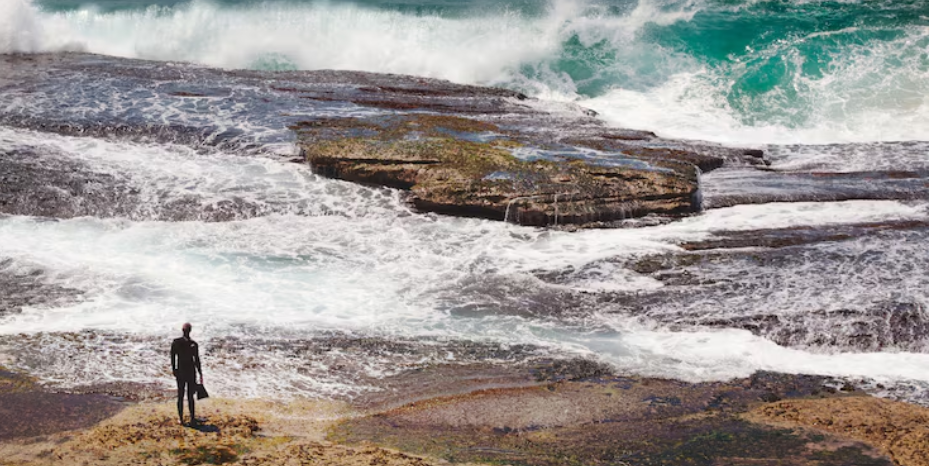
The study made extensive use of data collected following “the blob,” the notorious heatwave that paralyzed the northeast Pacific in 2013–2014. Years later, scientists tried to figure out what it had done. Gomes compared the functioning of the food web before and after the event by incorporating a large portion of that data into an updated end-to-end ecosystem model. Predictions aligned with certain patterns. Their boom wasn’t totally unexpected because pyrosomes do well in warm water. The team was taken aback by how counterintuitive the wider cascade proved to be. Gomes pointed out that single-species studies almost intentionally overlook the larger picture.
This story also has some odd winners. Following these heat waves, Pacific jack mackerel populations have increased, but commercial fisheries haven’t really changed to capture them. It poses a subtle question about adaptation—that is, how slowly human industries change while the ocean changes quickly. It’s difficult to ignore how frequently the data points in the same direction: the system is evolving, and the commercial, political, and scientific responses are still catching up.
Nearly every ocean basin has seen an increase in the frequency and intensity of marine heatwaves. It is genuinely unclear if the Pacific recovers in between events or if each one further erodes what made it productive. It’s hard to get rid of the impression that the coast everyone believes to be familiar is changing as you watch the research land in this manner, with measured language and hints of unease. slowly. Then all at once.
