

The ocean floor is dotted with items that appear to be potatoes from a distance on the abyssal plain between Hawaii and Mexico. This area of the Pacific is so far away that it receives only the tiniest trickle of biological material sinking from the surface waters four to six kilometers above. As the water above them cycles through ice ages, interglacial periods, and the entire industrial history of human civilization, these polymetallic nodules—accretions of manganese and iron oxides—form around a piece of shell or shark tooth over millions of years.
They grow at a rate of a few millimeters per million years. There are an estimated 21 billion tons of these nodules in the Clarion-Clipperton Zone. The contents of them have been mapped by the U.S. Geological Survey. Its findings are influencing choices at the national industrial policy level, and the competition to reach the nodules first has progressed from the conceptual to the operational stage more quickly than the regulatory frameworks intended to control it.
This competition is driven by a real demand for essential minerals and rare earth elements. Over 85% of the world’s rare earth processing capacity and about 60% of the world’s rare earth mining are controlled by China. These figures have been included in supply chain and defense risk assessments for more than ten years, and they have been handled more urgently as the US-China relationship has become more complex.
Electric vehicle batteries, wind turbine parts, defense electronics, and the semiconductor supply chain all depend on the elements found in Pacific seafloor deposits, which include cobalt, nickel, manganese, copper, and the rarer earths embedded in cobalt-rich crusts. Zones such as the Prime Crust Zone are thought to contain about 7.5 billion dry tons of cobalt-rich crusts, according to USGS estimations.
Pilot extraction has already been implemented by businesses with leases in the Clarion-Clipperton Zone. Large-scale tests have been carried out in the CCZ by the publicly traded and aggressively positioned Metals Company. The industrial machinery is operating ahead of the rule-making process.
Perhaps the most technologically sophisticated government-backed extraction project now underway is Japan’s initiative at Minamitorishima Island. The island, a secluded Pacific atoll located more than 1,900 kilometers southeast of Tokyo, is situated above sediment layers that are rich in what scientists have dubbed “magic mud”—rare earth-bearing material deposited at a depth of almost 6 kilometers, with concentrations of yttrium and other essential elements that greatly surpass those found in commercially mined terrestrial deposits.
With government funding specifically targeted at lowering the nation’s reliance on Chinese rare earth supplies, Japan has started harvesting and testing this silt. Tokyo is taking the issue of supply chain security seriously, as seen by the program’s rapid progression from survey to continuous extraction to feasibility testing.
International law experts and conservation biologists have been particularly concerned about the regulatory environment. The regulations that commercial extraction would have to abide by are still being drafted by the International Seabed Authority, a UN-affiliated organization that oversees mineral extraction in international waters. The rules have not yet been finalized. Meanwhile, pilot extractions are taking place.
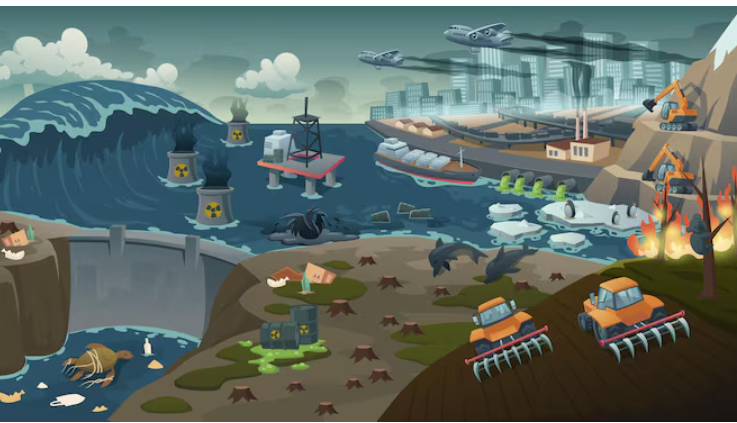
The environmental risks are specific and well-documented: the machinery used to collect nodules produces sediment plumes that can stretch hundreds of kilometers from the extraction site, suffocating organisms that inhabit the abyssal plain’s low-energy environment and that required the same millions of years to establish themselves as the nodules. When recovery timelines are modeled at all, they are expressed in centuries.
It’s still unclear if the ISA’s final regulatory framework will be robust enough to mandate the kind of environmental assessment that this extraction’s scale warrants, or if the pressure from geopolitics and the economy to act swiftly will result in standards that are calibrated to allow rather than restrict.
There’s a sense that the deep-sea mining era started not with a formal starting gun but rather with a decision by multiple parties that the regulatory gap was an opportunity rather than a barrier, as they watch the Clarion-Clipperton Zone develop into a site of active industrial operations while the rules are still being written in conference rooms in Kingston, Jamaica, where the ISA is headquartered.
The minerals are authentic. There is a genuine need. The debate over what happens to the ocean floor between those two truths is still ongoing, albeit much more slowly than the extraction.
