

When you read a study that claims something irreversible has already occurred, you feel a certain kind of dread. Not “may happen by 2050.” Not “could happen.” Already occurred. According to recent research from the University of Edinburgh, which monitored chemical changes in Arctic waters over a 20-year period, the ocean ecosystem seems to have reached a tipping point sometime around 2009. Silently. without any headlines. The majority of people on the planet were viewing something else.
The offender isn’t as dramatic as we’ve come to anticipate from stories about climate change. No one catastrophic incident. No obvious flood or fire wall. Since sea ice started to drastically retreat, a nutrient called nitrate has been draining away from Arctic seawater at an accelerated rate. At the base of the food chain, nitrate feeds the plankton that feeds the fish that feed the seabirds, the marine mammals, and eventually the millions of people whose livelihoods depend on commercial fishing in the North Atlantic and Bering Sea. Everything above it sways when it disappears.
Because the mechanics are counterintuitive, it is worthwhile to comprehend them. For many years, scientists actually anticipated that Arctic plankton would benefit from less sea ice because more open water means more sunlight, and photosynthesis is fueled by sunlight. It made sense. Instead, the researchers found that the sunlight reaching those enormous, recently exposed shallow shelves is doing something harmful after going through more than 20 years of sampling data from Fram Strait, the main passage where Arctic waters empty into the Atlantic. It is speeding up a process known as benthic denitrification, which completely removes nitrate from the water by turning it into nitrogen gas. In essence, the ocean is losing its own fertility.
According to the data, the change became evident starting in 2009. Since then, the amount of nitrate in waters leaving the Arctic has been steadily declining. Though it’s difficult to ignore the connection to sea ice loss, it’s possible that some of this was already happening earlier, unseen beneath the ice. The Arctic Ocean ecosystem has reached a tipping point, according to Professor Raja Ganeshram, who has led this research for twenty years. Not going near one. passed.
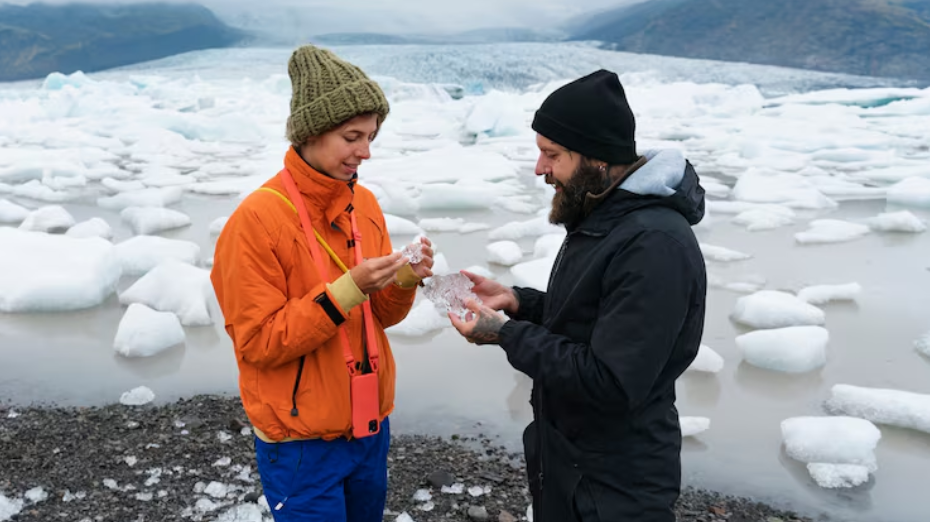
In practical terms, this means that smaller plankton species—organisms that carry less energy up the food chain—will become more prevalent. The fish receive less food. Birds, mammals, and eventually fishing fleets are all dependent on fewer fish. According to NOAA estimates, in 2023 alone, U.S. fisheries generated $319 billion in sales impacts and 2.1 million jobs. The waters of Alaska are crucial to that figure. It’s difficult to look at those numbers without feeling a little uneasy about what might happen if the pyramid’s base keeps getting smaller.
Another issue that receives insufficient attention is the carbon question. In addition to being food, plankton also act as carbon sinks. Through photosynthesis, they absorb carbon dioxide from the atmosphere, which they then transfer to the ocean floor upon death. Less carbon is absorbed when there is less plankton. It’s possible that the Arctic, which is already warming at a rate about four times faster than the rest of the world, is losing one of its natural defenses against warming. The loop constricts itself.
Researchers are cautious to note that more research is required to determine how these changes in the Arctic affect broader marine populations and the North Atlantic. Honest science, that is. However, there’s a feeling that the timeline might not provide the luxury of waiting for certainty. More than ten years ago, something changed in those chilly, dark waters, and it has been moving steadily ever since. Whether the food chain is being upset isn’t really the question at hand. It’s how far the disturbance spreads before anyone is genuinely prepared for it.
