

A tiny poisonous snail is going about its ancient business somewhere beneath the coastal waters off Florida, at depths most people will never see and few researchers have thoroughly investigated. It shoots barbed hooks into fish, releases clouds of paralyzing chemistry into cold, dark water, and apparently produces molecules that pharmaceutical scientists are now frantically trying to obtain. The organism is the Asprella lineage of cone snails, and the substances concealed within its venom gland have emerged as one of the more genuinely surprising tales in modern drug research.
It’s important to consider how uncommon this circumstance is. For hundreds of millions of years, cone snails have been quietly creating toxins that interact with biological systems in ways that humans have only recently begun to comprehend. Cone snail venom contains a substance similar to somatostatin, a human hormone that controls everything from growth to digestion, according to research from the University of Utah. The structure of that substance, known as Consomatin Ro1, actually mimics that of octreotide, a pharmaceutical drug analog that required significant effort from human chemists to create. It seems that nature arrived first.
Because so little is known about Asprella snails, they are currently the subject of special attention. Field collection is truly challenging because these snails prefer depths of 200 to 800 feet, unlike the shallow-water species that scientists have studied for decades. It is more difficult for scientists to obtain specimens and even more difficult to extract significant amounts of venom. The venom is like a natural library, according to Helena Safavi-Hemami, whose lab has spent years dissecting the biochemistry of cone snail toxins. Determining what’s in it is the difficult part.
What’s coming out of that library is remarkable. Cone snail venom has already produced one FDA-approved medication, Prialt, in addition to the somatostatin analog, and studies on insulin analogs made from the snails have created genuine opportunities for quicker-acting diabetes treatments. The reasoning behind this keeps coming to light. Fish-hunting cone snails have developed toxins that interact with the same receptor systems found in human biology. Over millions of years, evolution refined these molecules with the very specific goal of overwhelming a vertebrate nervous system as effectively as possible. It turns out to have unexpected medical relevance.
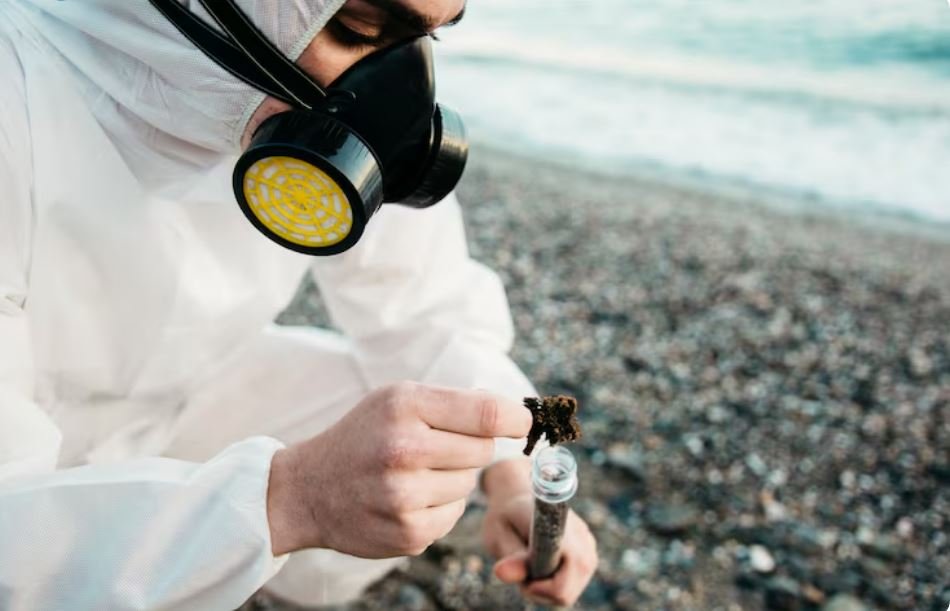
Chemists at Florida State University have been working in parallel, creating complex molecules from bacteria found inside Pacific sea sponges. Once these molecules were replicated in the lab, they demonstrated the capacity to inhibit proteasomes, cellular waste-management systems that are essential for the survival of some cancers. Here, the synthesis problem is crucial. Natural collection is costly, time-consuming, and environmentally problematic. There is a limit to the amount of useful compound that can be extracted from a sea sponge that a scuba diver collects off the coast of Indonesia and freezes on the spot. This ceiling is completely removed by creating the molecule from scratch in a lab using materials that are readily available. As researchers move closer to synthesis, it’s possible that the same reasoning will increasingly apply to cone snail compounds.
Observing all of this, it seems as though the ocean has been conducting significant pharmaceutical research for a very long time, and scientists are only now starting to properly interpret the findings. The bacteria that inhabit venom systems themselves seem to produce bioactive molecules, and their resistance mechanisms to antimicrobial peptides may provide distinct leads for drug development, according to research on the venom microbiome. Although it’s still unclear how far that specific thread will go, the researchers working on it appear cautiously motivated by what they’re discovering.
The contrast between how bizarre the source material sounds and how rigorously credible the science is becoming is what keeps this story moving forward. It’s difficult not to find it truly amazing that a poisonous snail lurks in the murky water off the coast of Florida, producing a compound that structurally resembles a pharmaceutical created by humans. Helena Safavi put it simply: we could look at what nature has already figured out or devote a great deal of effort to creating hormone-based medications. It turns out that the ocean floor has been conducting independent research for a considerable amount of time.
