

There is a specific type of rage that results from being disregarded rather than just being angry. On December 14, 2023, you witnessed Native Hawaiians paddling through open water in traditional outrigger canoes to confront one of the biggest deep-sea mining vessels on the planet. Hidden Gem was the name of the ship. In the context, the name seemed almost cruel.
It was thought that the ship, which was run by the maritime company Allseas and operated by the Canadian company The Metals Company, was transporting over 3,000 tons of polymetallic nodules that had been extracted from the ocean floor southeast of Hawaii. Some scientists have described these nodules as potentially radioactive. It was the kind of industrial operation that usually takes place in the background, somewhere between quiet corporate ambition and legal ambiguity. This time, however, people arrived in canoes carrying banners that said “A’ole Deep Sea Mining.” Not in this place.
Although the imagery was striking, it wasn’t the only thing that made the protest memorable. It was based on the assertion that Native Hawaiian communities, whose identity is inextricably linked to these waters, had never been properly consulted prior to decisions of this magnitude regarding the ocean surrounding their islands. In the words of Solomon “Uncle Sol” Pili Kahoʻohalahala, a Native Hawaiian elder who serves on the Papahānaumokuākea Marine National Monument Advisory Council. He claimed that Native Hawaiian voices were essentially excluded from international decision-making at the time of the overthrow of the Hawaiian Kingdom, and that this exclusion has never really been reversed. He believes that one of its most recent effects is deep-sea mining.
The International Seabed Authority, the regulatory body in charge of all of this, has already awarded 31 exploration contracts encompassing a seabed area four times the size of Germany. The Clarion-Clipperton Zone, a section of the ocean floor between Hawaii and Mexico, is home to seventeen of those contracts. As a result, Pacific Island communities, and Native Hawaiians in particular, are directly under the influence of an industry that is still, in many ways, creating its own regulations. These communities might not have been considered when the ISA’s framework was created. It hasn’t felt like that at all.
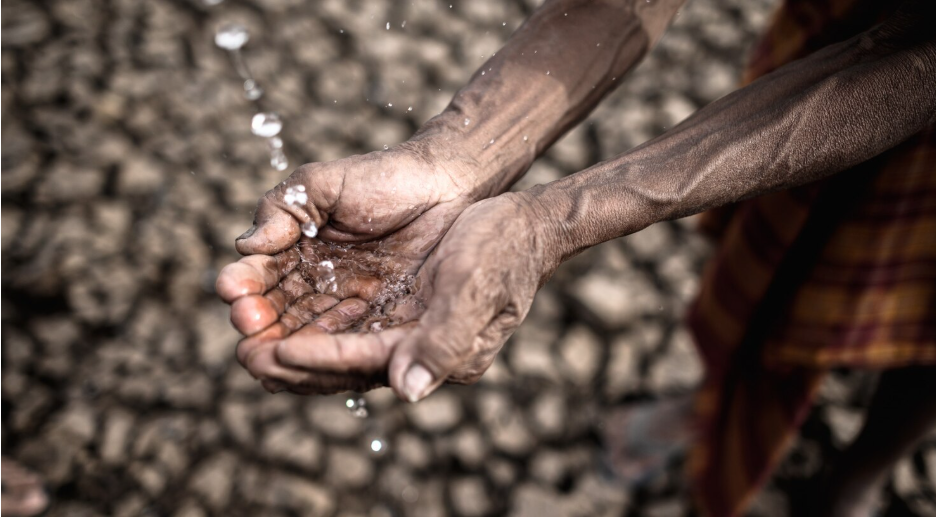
Concerns about the potential effects of commercial deep-sea mining on the ocean have been voiced by scientists. Ecosystems that took millions of years to form are destroyed by strip mining the seafloor. Tuna populations, which provide food for entire communities throughout the Pacific, may be disrupted by the sediment plumes from extraction that drift upward through the water column. Researchers are still trying to model how carbon cycles could be disrupted. Reading the literature gives the impression that the scientific community is truly concerned, even though the alarm hasn’t quite reached the boardrooms.
Nevertheless, the Metals Company persisted, attempting to compel governments to authorize commercial mining by July 2023 through a legal mechanism connected to the tiny Pacific nation of Nauru. That strategy didn’t work. In fact, 24 nations, hundreds of scientists, significant financial institutions, and automakers who have made the decision that they do not want battery supply chains connected to the ocean floor have joined the opposition. Josh Green, the governor of Hawaii, signed a law prohibiting seabed mining in all state marine waters in July 2024. Although activists are cautious not to view a state law as the end of the story when international waters are still involved, it was a tangible victory.
It’s difficult to ignore the fact that, when all of this is happening, the communities with the greatest stakes are usually the last to be consulted, if at all. A petition signed by more than 1,000 members of 56 Indigenous groups was delivered to the ISA by Kahoʻohalahala. Additionally, he wrote to the executives of the participating companies directly. “Deep sea mining is not welcomed in Hawai’i,” he said. That’s as direct as it gets.
Hawaiian culture views the ocean as a resource that should not be exploited. It is the form of the god Kanaloa, a place of origin, and a living body. That is a framework for understanding responsibility toward the natural world that predates the existence of the corporations currently circling these waters; it is not a rhetorical device. It is genuinely unclear whether that framework will have any real weight in international regulatory halls. However, those canoes off Honolulu indicated that it won’t be quietly given up either way.
