

A line in a new report from the Ocean Panel will stop you in your tracks if you read it slowly enough. It says that ocean-based climate solutions could help cut down on emissions around the world by up to 35% by 2050. 35% of the people. That’s not a mistake with the rounding. That’s not a note at the end. That’s about a third of the work that needs to be done to turn Earth from a habitable planet to something much less forgiving. It’s out there, covering 70% of the planet’s surface, mostly unfunded and unused.
The idea of “ecological debt” has been around for a while, but it still doesn’t get as much attention as it should. Rich countries have been using up natural resources and dumping pollution into shared systems like the atmosphere, the ocean, and the soil for generations, and the countries and communities least responsible for this are now paying the price. This is an uncomfortable idea that makes people avoid it. In his writing about the subject, Andrew Simms made this point very clearly. What strikes you is how much better it reads now than it must have when it was first published.
It’s hard to say enough about how important the ocean is to this story. It takes in almost a quarter of the carbon dioxide that people make every year. It controls the weather. It gives more than a billion people food. Any reasonable person would say it is in a lot of trouble. These predictions about rising acidity, warming waters, and reef systems collapsing are no longer just guesses. Those are the rules. For years, fishermen in the Indo-Pacific have said that the seasons are off, the water looks different, and the fish are moving. That’s not a metaphor. People who live their lives reading the sea would say that.
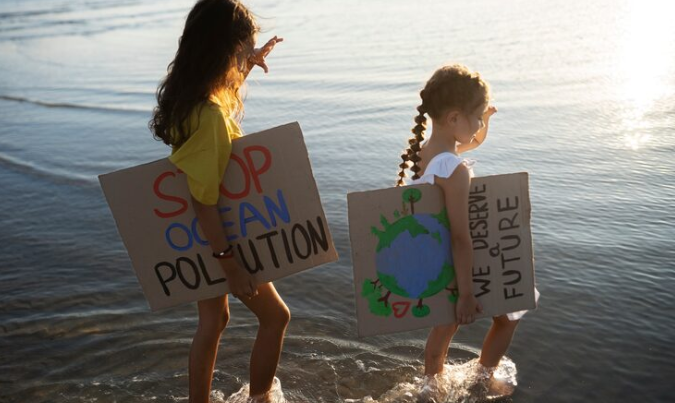
What’s changed in the last few years—and this feels really important—is how scientists and policymakers think about the ocean’s role. The language used to be mostly about keeping people safe and limiting damage. These days, something new has shown up. People are starting to see the ocean as a source of solutions, not just a place where bad ideas go to die. Offshore wind farms, low-emission shipping routes, restoring marine habitats, and long-term aquaculture all show a different way of living with the sea. It’s still not clear if that shift will happen quickly enough.
The UN Decade of Ocean Science, which is being run by UNESCO until 2030, is one of the biggest international science projects going on right now. It’s possible that it will lead to the coordinated building of knowledge that takes a generation normally. It’s also possible that it will get lost in the busy work of international obligations that sound important in press releases but are less important in real life. The history of these kinds of frameworks is, to be honest, mixed.
It seems like this decade has a different feel to it, though. It is a big ask for the Ocean Panel to ask countries to manage sustainably all of the ocean areas that are under their control. Politicians don’t always have the will to do it when they say they will. But the science behind that kind of government is stronger than it has ever been. Every day, observations are made of the ocean from 84 countries, and nearly 200,000 marine species have been recorded. This means that early warning systems and environmental monitoring tools are getting better. There is everything in place for serious action to happen. The question is whether the action will happen.
Ecological debt doesn’t let you get out of being late. The biosphere is ready now, not when more promises are made. In particular, the ocean is reaching a point where actions that are put off start to add up in ways that are harder to undo than to stop. In the middle of all of this is some uncomfortable math. The next ten years will change more than just ocean policy. What kind of planetary inheritance the next generations get will depend a lot on them, and the ledger is not in good shape right now.
