

Around 3,600 meters below the surface of the Southern Ocean, in conditions that would kill a person in minutes, there lives a small sphere-shaped animal that is covered in hooks. It’s not like its cousins in that it filters water. It looks for food. Recently, scientists got video of this thing from the ocean and gave it the name “death ball” sponge. That name is so scary that it’s hard to stay focused on the video.
The find is part of a bigger haul from two trips earlier this year by researchers from The Nippon Foundation-Nekton Ocean Census, who worked on the R/V Falkor, the Schmidt Ocean Institute’s research ship. A remotely controlled vehicle named SuBastian was used. It was a camera-and-claw system that went down to the ocean floor and came back with almost 2,000 specimens from 14 different animal groups. As a result, 30 species have been confirmed as being new to science. That’s only about 30% of the samples that have been collected so far.
The death ball sponge, whose scientific name is Chondrocladia sp. nov., changes what most people think sponges are. Most people think of sea sponges as passive, almost plant-like, because they just sit there and filter nutrients from the water that flows by. That’s not what this one does. Its round body is covered with tiny hooks that grab any small organisms that come close enough. Even for scientists who study animals most people never think about, the shape, the mechanism, and the depth are all a little surprising.
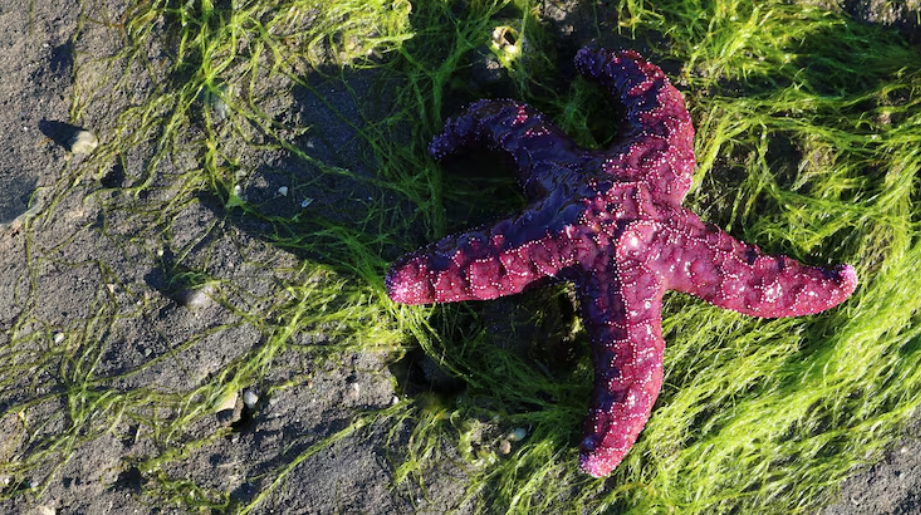
The team also found iridescent scale worms that sparkle in the dark, new sea stars with spiny shapes, crustaceans that have adapted to living on volcanic seafloors, and a species of “zombie worms” that use acid secretions and bacterial partnerships to eat through the bones of dead whales. They’re not really zombies, but the name fits once you know what they do. The group saw some of these worms eating bones from seals.
It gets harder to ignore the bigger picture that’s taking shape here. The Southern Ocean, which is the huge body of cold water that surrounds Antarctica, is still one of the least studied places on Earth. It’s expensive, hard to get there, and the weather doesn’t care about your plans. Because of this, science has mostly avoided it. The number of species found on this one trip gives you an idea of how much our avoidance has hurt our ability to understand.
There may be hundreds of species in the Southern Ocean that have never been photographed, named, or even seen for a short time. Over the next ten years, the research team wants to find and catalog 10,000 new species. This will be their long-term goal. That’s a big goal, but it doesn’t seem impossible after seeing what just one expedition (with only 30% of its samples processed) has found.
The first confirmed video of a juvenile colossal squid ever recorded is a moment from the expedition that stands out on its own. This is one of those animals that most people have only imagined because so few people have ever seen one. Marine scientists look forward to years to finally getting video footage of a young animal in its natural habitat.
All together, this expedition doesn’t amount to a big breakthrough in the usual sense. There isn’t a single cure or a paradigm shift that will be announced at a press conference. It’s not that loud, and it might mean more. It’s a reminder that the ocean floor is still mostly unknown to us, that animals with hooks and acid-producing mouths evolved there without realizing that they were unknown to us, and that science is still just beginning to learn about what lives under the water that covers most of the Earth.
