

When you drive along the Louisiana Gulf Coast on a summer afternoon, you pass an environment that was once much larger than it is now, past the marinas, fish camps, and rusted signs advertising shrimp boats for charter. The vast, fertile, esthetically nondescript but biologically significant wetlands that originally stretched miles inland from the shoreline have been disappearing for decades. The marshes have been simultaneously being eaten away by subsidence, sea level rise, and the channelization of the Mississippi River, which used to replenish them with sediment. The remaining material holds, absorbs, and filters less than it did during the height of the shrimp industry. The fisherman take note. In their own way, the fish also notice.
Although most people outside of environmental science are not familiar with the term “coastal buffer,” the idea is very straightforward. Salt marshes, mangrove forests, seagrass meadows, shallow continental shelves with oyster reefs, and tidal flats are examples of the transitional zone that lies between the land and the open ocean. Historically, this zone has absorbed the worst of what runs off the land before it reaches the deeper sea. In the context of engineering, these ecosystems are not passive filters. They are biologically active systems that support massive densities of marine species, absorb nitrogen and phosphorus through plant growth, trap sediment and associated pollutants, and buffer temperature extremes through thermal mass and shading. They are essentially the ocean’s defense mechanism against the threats that civilization poses. And they are collapsing because to the combined strain of heat, pollution, and development along several coastlines.
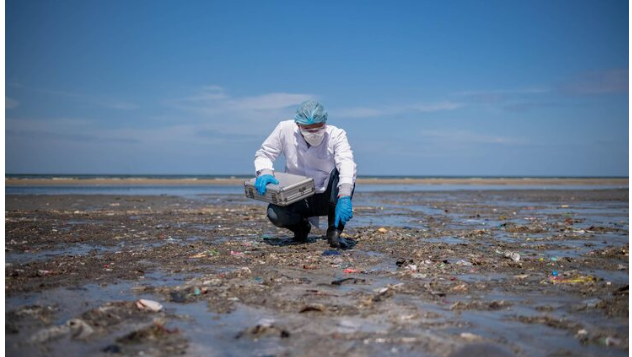
Even a healthy coastal buffer system functioning at its maximum historical capacity would be overwhelmed by the nutrient loading issue alone. Every year, hundreds of millions of tons of synthetic fertilizer are applied by American farmers throughout the Midwest corn belt. A significant portion of that nitrogen and phosphorus travels with rainfall into drainage ditches, streams, and finally rivers that convey it to the shore rather than remaining in the soil or being absorbed by crops. The coastal region near the mouth of the Mississippi River must handle the pollution load that has been accumulating for decades. The marshes that used to aid in that processing have shrunk. The overabundance of nutrients has led to an increase in algal blooms. A clear indicator of how badly the filtration system has deteriorated is the dead zone that appears in the Gulf of Mexico every summer.
The aspect of this that receives insufficient ongoing attention in relation to its ecological relevance is wetland loss. Since 1970, the area of wetlands worldwide has decreased by about 35%, with coastal wetlands suffering disproportionate losses due to development pressure, agricultural drainage, and upstream effects on sediment delivery that deprive coastal marshes of the material necessary to keep up with sea level rise.
In low-lying places where hydrological management has failed, commercial shrimp aquaculture, coastal building, and saltwater intrusion have diminished mangrove forests, among of the planet’s most productive and protective coastal ecosystems. The coastal zone’s ability to absorb and filter the heat and pollution it was previously controlling is diminished by each hectare of lost marsh.
The structural integrity of the coastal zone itself is directly threatened by the layer that ocean acidification creates. In order to create and preserve their calcium carbonate shells and skeletons, the species that create and preserve the physical substrate of coastal ecosystems—such as oysters, mussels, corals, barnacles, and calcareous algae—need sufficient carbonate ion availability. As CO2 absorption increases, the chemistry of coastal waters changes, making construction more energy-intensive and the resulting structures weaker. In many coastal areas, the density and coverage of oyster reefs, which historically offered massive water filtration (one oyster could filter up to 50 gallons of water per day), are decreasing, eliminating an additional layer of the buffer system.
All of these convergent failures become most apparent and pose the greatest direct threat to human economic interests during the spread of the toxic algal bloom. The frequency, geographic range, length, and toxin production of blooms have all increased as coastal nutrients have grown and thermal conditions have become more suitable for bloom-forming species. However, blooms are not new; they are a natural aspect of coastal ecology. When bloom toxins make harvesting dangerous, shellfish enterprises are shut down for weeks or months. Tourism is impacted by beach closures due to cyanobacteria blooms in locations far inland from the usual dead zone discussions. Photographs of fish fatalities caused by abrupt hypoxic events appear on news websites for a short time before the story continues.
