

You can see what dredging machinery and years of massive clam harvesting have left behind at low tide on Scarborough Shoal, when the water lowers sufficiently to reveal the upper borders of what was once a reef shelf. The coral formations that make the Spratly and Paracel archipelagos one of the world’s most biodiverse reef systems—equivalent to the Amazon basin in terms of species density in terms of ecological richness—remain in much reduced form throughout a sizable portion of the South China Sea. Meters of sand blasted up from the nearby reef cover the seafloor beneath China’s man-made islands in the Spratly Islands. The reef was literally eaten by the development that produced those islands. What was once a biological structure is now used as building material.
There is no figurative relationship between this environmental degradation and the naval stalemate that currently defines the geopolitical South China Sea. It is accelerating, running in both directions, and causative. The nations whose populations rely on those fish are fighting more fiercely for what is left as the region’s fish stocks have declined to fractions of their historical biomass—UN FAO estimates for major species suggest declines of between 70 and 95 percent from historical baselines in the most heavily fished areas. For vague reasons of territorial pride, the Philippines, Vietnam, Malaysia, and Indonesia are refusing to send coast guard ships to contested reefs. They are sending them because the fish are found on the remaining reefs, and their scarcity is making access to them a concern for both food security and the economy.
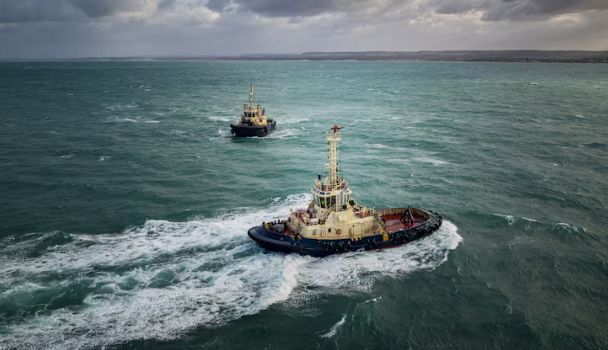
The situation is complicated by China’s marine militia in ways that render the conventional diplomatic toolset insufficient. The militia is made up of ostensibly civilian fishing vessels that are coordinated centrally, present in large numbers at disputed reefs, resupplied and maintained at a cost structure that no commercial fishing operation could sustain, and capable of overpowering smaller claimant states’ coast guard vessels by sheer presence rather than direct military conflict.
When more than 200 militia ships anchored in formation at Whitsun Reef in 2021, Manila reacted strongly, and Washington paid close attention. The strategy is intended to accomplish the geographical goals that would result from official military action while remaining below the threshold of such action. Additionally, it puts a great deal of fishing strain on the reef systems that are least equipped to withstand further harvesting pressure.
This dynamic is further complicated by environmental lawfare. Under the pretense of conservation, China has imposed unilateral seasonal fishing prohibitions over vast portions of the South China Sea, but these prohibitions apply to waters over which it has no legal authority. While Chinese vessels continue to operate, the bans, which are enforced by the presence of the coast guard, essentially bar Filipino and Vietnamese fishermen from traditional fishing sites.
Similar actions are taken by unilateral “nature reserve” designations at contentious features, which assert ecological stewardship over regions while obstructing competing access and engaging in or approving actions that endanger the ecosystems the designations are meant to save. China’s nine-dash line claims under international law were declared unlawful by the Permanent Court of Arbitration in a 2016 verdict. The international community lacks an enforcement mechanism, China disregards the ruling, and the practice persists.
The operational manifestation of this resource pressure translated into direct confrontation is exemplified by the water cannon and laser incidents at Second Thomas Shoal, where Chinese coast guard vessels have repeatedly blocked Philippine supply missions to a purposefully grounded naval vessel using force short of weapons fire. The Philippines has created an evidence record meant for global audiences by documenting and publishing the episodes with unprecedented transparency. Every incident is a gray-zone interaction that doesn’t qualify as armed warfare. When taken as a whole, they show a persistent effort to prevent access to a disputed feature that is located above fishing grounds whose depletion is the primary cause of the access issue. This feature is located within the Philippines’ UNCLOS-defined exclusive economic zone.
A geopolitical strategy that is hard to distinguish from the ecological one is reflected in the U.S. military presence, which is sustained through frequent Freedom of Navigation Operations and growing interaction with Philippine defense forces. Approximately one-third of the world’s maritime traffic is carried by the South China Sea. In the past, hundreds of millions of people in Southeast Asia were fed by its fisheries.
The states with the weakest military positions in comparison to China are the ones whose populations are most directly affected by the collapse of those fisheries due to the combined effects of destructive harvesting methods, coral bleaching caused by climate change, and overfishing driven by resource competition. Stability is not being produced by the ecological catastrophe. It is creating desperation, and in a highly contested maritime area, desperation leads to confrontations that increasingly resemble an unnamed conflict.
