

When a tracked vehicle travels across the abyssal plain during a deep-sea mining operation in the Clarion-Clipperton Zone, the surrounding seafloor vanishes into a haze. Sediment that has accumulated over millions of years, layer by layer, gets disturbed by the machinery; this is a material archive of geological time that hasn’t been touched since before any extant creature evolved. The cloud does not remain at the bottom. As the car passes by and the suction systems pick up nodules, fine particles are agitated into suspension and start to drift. They are picked up by ocean currents. And what was once a limited disturbance at the seafloor transforms into a plume that moves through the water column horizontally, sometimes for hundreds of kilometers before the particles settle once more.
What those particles carry and what they come across along the way is what makes this environmentally significant rather than just esthetically unsettling. Because the amounts of copper, zinc, lead, and other heavy metals in deep-sea sediment bonded to polymetallic nodules are higher than in typical seawater, the nodules are being mined. Fine material from this silt reaches an ecosystem that is not designed to handle this type of chemical input when it becomes suspended in the water column and drifts into the mesopelagic zone, which is the ocean layer between 200 and 1,000 meters deep and is frequently referred to as the twilight zone.
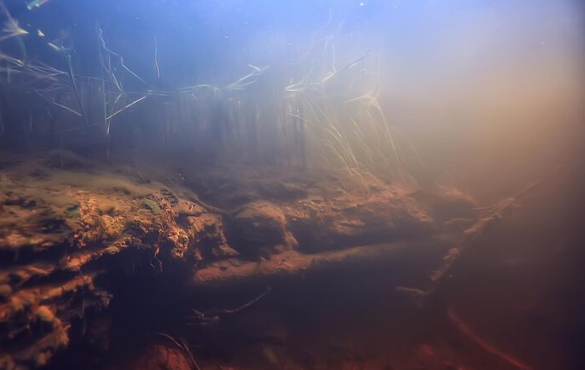
Marine biologists have begun drawing an instructive analogy: beneficial atmospheric dust is the reverse of deep-sea mining plumes. Iron-rich particles from Saharan dust storms that make it to the Atlantic enrich surface phytoplankton, truly feeding the base of the marine food system. In the chemical context of the midwater zone, deep-sea plumes convey material that is essentially junk—particles that organisms in the twilight zone may consume or be exposed to that carry hazardous metal loads and offer little sustenance. More than half of the zooplankton exposed to sediment plumes from test mining operations either perish or lose nutritional value in ways that impact the animals that consume them, according to research.
The biology of the ocean does not revolve around the twilight zone. It is the site of maximum productivity for the biological pump, which is the process by which organic carbon generated in the sunlit surface zone sinks to depth and is sequestered. Significant amounts of carbon migrate downward mostly through the daily vertical migration of zooplankton between the mesopelagic and the surface. Their dead carcasses and fecal pellets transport carbon downhill, where it remains out of the atmosphere for thousands or millennia. They eat at the surface, metabolize, and excrete at depth. The biological pump is weakened if exposure to plumes destroys or damages sizable numbers of these species over wide areas of the ocean. Carbon doesn’t travel as far down. The ocean’s ability to absorb CO2 from the atmosphere decreases.
The effects of the food chain also extend beyond the twilight zone. Numerous commercially significant fish species, including those that sustain significant worldwide fisheries, feed in or pass through the mesopelagic. The productivity of the mesopelagic zone affects seabirds that dive there. A healthy twilight zone environment is essential for whales that consume mesopelagic animals, such as sperm whales, which hunt by diving to incredibly deep depths. Mining plumes that cover a sizable portion of the Clarion-Clipperton Zone would cause a persistent disruption of twilight zone productivity, which would spread upward through food webs whose full reach is still being determined by researchers.
When discussing the future implications of commercial-scale mining, marine scientists are especially concerned about the regulatory void surrounding plume impacts. The cumulative consequences of numerous concurrent mining activities creating overlapping plumes throughout the Clarion-Clipperton Zone have not been estimated at the scale that commercial activity would produce, and the ISA’s environmental criteria for mining operations are either in draft or fragmentary form. Measurable plumes have been produced by individual test operations. The combined impact of dozens of concurrent commercial operations—plumes that travel hundreds of kilometers each, overlap in the midwater zone, and expose zooplankton communities over thousands of square kilometers—represents a situation for which scientific knowledge and monitoring infrastructure are still insufficient to make reliable predictions.
