

Powered almost completely by sunshine, a yellow torpedo-shaped drone about the size of a kayak is cruising the Pacific Ocean. Not a crew. There isn’t a support vessel following it. Only the car, the sea, and any sensors it has been instructed to carry—listening, measuring, observing, and perhaps sending a brief burst of encrypted data to a satellite before going silent once more. It has been out there for several weeks. It may remain out there for several more months.
One of the more subtly significant technological innovations to emerge from San Diego in recent years is Seasats‘ Lightfish. With the support of defense investors Shield Capital and L3Harris, the company has developed an autonomous surface vehicle that can travel 8,000 nautical miles and run for up to six months without surfacing in the conventional sense. This is because the vehicle primarily operates at the surface and continuously draws energy from solar panels covering its upper hull. It traveled more than 7,500 miles on its own across the Pacific Ocean from San Diego to Japan. The Navy set a speed record by deploying a Lightfish on a transatlantic voyage in September 2025. These are no longer demonstrations. They are track records of operations.
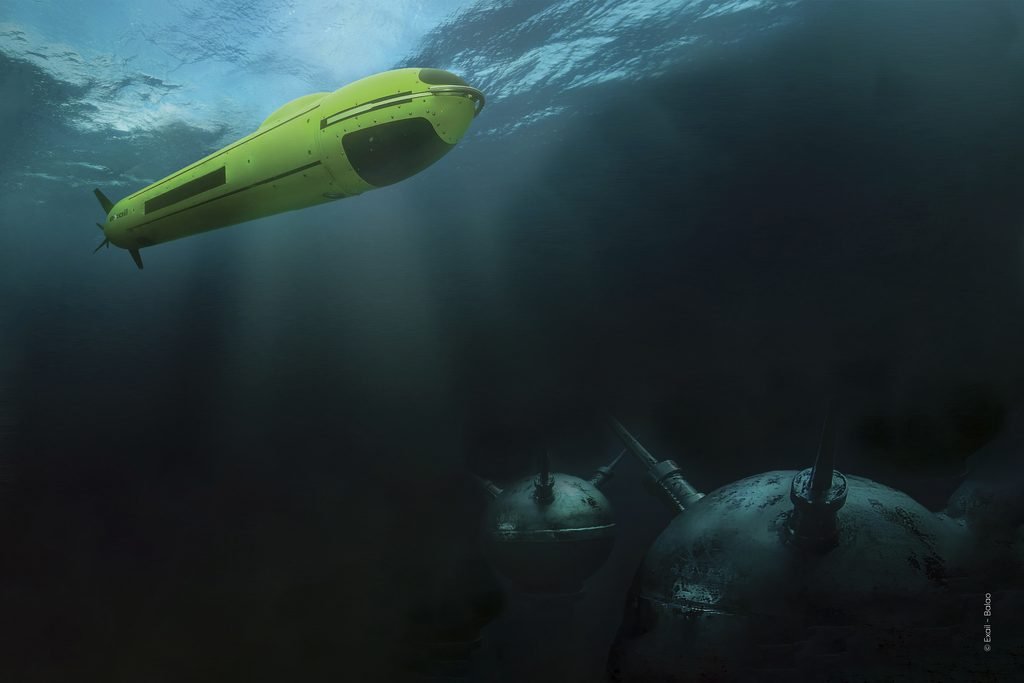
The explanation for the endurance is more intriguing than it may seem. Conventional autonomous underwater vehicles are powered by batteries that run out in a matter of days. By collecting energy from the surroundings instead of storing a limited amount of it, lightfish completely avoid that restriction. Lithium-ion batteries are trickle-charged by solar panels during the day. In order to minimize power consumption during forward motion, the hull is designed to present minimum drag at the surface or partially submerged.
Instead of keeping a continuous connection, onboard computers use a low-power design, processing data locally and sending in brief, effective bursts. The vehicle may carry oceanographic sensors for one trip and hydrophones for acoustic monitoring for another because the payload bays are modular and can be switched out in a matter of minutes. The end product is a platform that is truly versatile without being a sacrifice.
In a tangible way, the Navy has taken note. In 2025, Seasats was awarded a $89 million SBIR Phase III contract related to Marine Corps autonomous surface vehicle programs. In early 2026, Seasats was awarded a $24 million APFIT contract. These are significant commitments for a very tiny San Diego business, indicating that the technology has progressed beyond the “promising prototype” stage and is now something the military is genuinely considering. A simple operating rationale has been identified by CEO Mike Flanigan: For a fraction of the price of crewed ships or even huge unmanned vessels, lightfish vehicles provide commanders with continuous multi-month sensor coverage over vast ocean areas.
With its HORUS and HERMES vehicles, another San Diego-based startup, SubSeaSail, is taking a similar but different approach. These autonomous, semi-submersible boats are made to function at the surface during calm weather and plunge beneath the impact of waves during storms, which SubSeaSail bluntly characterizes as a “anvil,” with waves acting like hammers. Ducking during inclement weather, as opposed to enduring it, significantly increases mission life and lowers the danger of loss.
In September 2024, the company entered into an agreement with the Defense Innovation Unit to shift HORUS to contract manufacture, with a target of 50 vehicles per month by mid-2026. Although it’s still unclear if that production ramp will happen on time, the DoD is genuinely interested.
