

Deep-sea oceanography requires a certain type of patience, not the kind that comes from waiting for results, but the kind that comes from acknowledging that you just can’t know what you’re looking at until you’ve looked at enough of it. Unlike a single voyage, a ship that has been at sea for months without coming back to port gains continuity. The seasonal swings, the gradual temperature changes at depth, the motions of species that follow cycles measured in months rather than hours. A quick research cruise captures a moment. A lengthy journey captures a tale.
With NOAA Ship Okeanos Explorer and E/V Nautilus conducting lengthy operations in the Central and Western Pacific, the 2026 Pacific season has been one of the most ambitious in recent memory for American oceanographic research. The operational geography alone is astounding: Wake Island is located in the middle of 407,241 square kilometers of seafloor that was virtually unmapped prior to this year’s surveys.
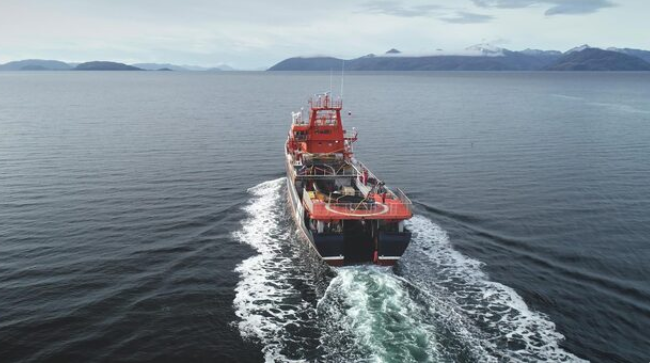
Marine experts understood very little about that area, which is larger than Japan and under U.S. sovereignty. It had been briefly visited. However, the deep bottom underneath it had not been consistently scanned at the resolution that is now achievable with contemporary multibeam sonar technology.
High-continuity surveying alters the baseline’s quality. For example, temperature, chemistry, and the biological activity of creatures that inhabit the midwater column between the surface and the floor all affect deep-ocean carbon absorption, which is not a constant figure. Two moments are measured via a survey that takes samples in December and again in March.
A process is being measured by a ship that continues to operate during a seasonal shift. In climate research, where the deep ocean’s function in absorbing heat and carbon from the atmosphere is still poorly understood and where the models used to forecast future warming contain actual uncertainty in their deep-ocean parameters, this distinction is crucial.
Anyone who hasn’t spent time aboard a research vessel tends to underestimate the technical difficulty of keeping one at sea for extended periods of time. Sonar systems are delicate; temperature fluctuations, biofouling on the hull, and normal mechanical wear all have an impact on data quality in ways that technicians typically see during dry-dock inspections.
Without access to a maintenance facility, managing it at sea necessitates both redundant equipment and the kind of crew expertise that doesn’t appear in any publications but makes the difference between a dataset that can withstand scrutiny and one that can’t. Within 120 days after the conclusion of an expedition, all acquired data must be provided to public archives in accordance with the Okeanos Explorer’s data quality protocols. This requirement maintains the study transparent and available in ways that privately held material is rarely.
As part of NOAA’s endeavor to replace an outdated fleet that has been carrying out this work with ships whose design predates much of the equipment now essential to the role, the new NOAAS Oceanographer was commissioned in early 2025 and is homeported in Honolulu. A survey season’s practical capacity is altered by a 74-meter hull with contemporary acoustic equipment that can accommodate 28 scientists. Increasingly, continuous runs with new workers rotating on and off via port visits as the vessel continues to survey can tackle tasks that formerly required numerous legs with crew rotations and data handoffs.
As the data from the 2026 season accumulates, such as the new seamount profiles, the species documentation from previously unseen habitats, and the water column chemistry readings from the Cook Islands deep, it seems that marine science is finally addressing topics that have been neglected due to a lack of funding, ship time, and political will to allocate resources to areas that don’t make headlines. There is no press office in the ocean. It contains information that is gradually building up in archives that the majority of people will never access and that describes a world that the majority of people will never experience.
