

On a May morning this year, drive west out of Scottsbluff, and the fields speak for themselves. In certain areas, the wind has been bending the ground and removing the topsoil from the windward side of fields, making the surface too cloddy in some places and too powdery in others to plant a planter. The soil is pale and dry. In his thirty years of farming, James Maser, who has been cultivating this land for twenty-nine years, has never had to turn on his irrigation pivots before June 20th. He had to pre-irrigate this spring in order to sufficiently break up the clods to allow for planting. He claimed that there were still fields with dust sweeping across the surface and water hitting them.
According to the National Integrated Drought Information System, this year is the second driest in 132 years of recorded history. Scotts Bluff County is experiencing exceptional to extreme drought, one of the most severe classifications on the national drought monitor. Maser explained the gap in words that are simpler to comprehend than percentage points: in an area that receives fifteen inches of rainfall annually on a good year, the region is running sixteen to twenty inches below normal. “We’re looking at a year and a half, we’re missing a year and a half of rain,” he stated. Compared to a percentage, such framing lands differently. In a county that depends on fifteen inches of rain, there has been no rain for a year and a half.
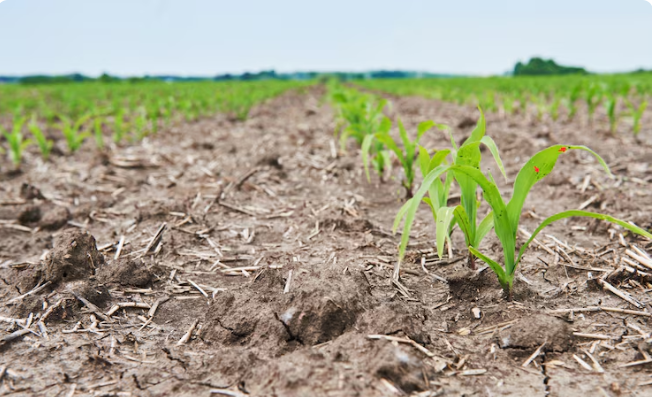
Everything is made worse by the snowpack problem. Snowpack in the mountains of Wyoming and Colorado feeds the North Platte River system, which supplies the irrigation infrastructure that farmers in western Nebraska rely on. This spring, the Upper Platte snowpack was only 37% of typical, according to the Farmers Irrigation District. Simply put, the water that ought to have been building up throughout the winter did not. It arrived later and in lower amounts, and by the time irrigation season began, there was less of it in the system than at nearly any other time in recent memory.
This year’s watering schedule has created further limitations. The window is only 25 days, and farmers in the region won’t be able to start irrigation until July 1, which is later than usual. To put it simply, Maser calculated that a crop need at least sixty inches of water to grow, and an average year requires eighty inches. “Twenty-five days starting in July when it’s 95 degrees isn’t going to do us any good,” he stated. He is aware that the math is flawed. He really wants to know if the corn will be able to come out of the ground before the irrigation window opens.
The wells are perhaps the most striking feature in all of this. The first reports of air being drawn from wells in Scotts Bluff County appeared by the middle of May. In terrible years, wells drawing air is a late-summer phenomenon that could appear in July or August if the weather is exceptionally bad. This year, it occurred on unplanted fields. Ben Rand, a crop insurance agent who has been managing agricultural policies since 2014, stated that prior to this season, he had never handled a prevent plant claim on irrigated acres. He is now.
According to Maser, the local agriculture industry is already feeling the repercussions. The volume of corn seed is being returned. There are no acres to treat, thus chemicals are not being bought. Orders and planting intentions are vanishing along with the input providers that cater to this area of Nebraska. “When you see thousands of acres of corn seed get returned, hundreds of thousands of acres of chemicals not being purchased,” he stated, “it makes people scratch their head.” He admitted that it’s a tiny portion of the national corn picture, but people tend to pay attention to minor, concentrated breakdowns.
Maser intends to plant about half of what he typically would unless it rains before the irrigation window opens, and he is not hopeful. It was dubbed Dust Bowl 2.0 by him. Farmers in this region of the nation don’t take comparisons like that lightly.
