

The ocean floor resembles a golf driving range somewhere between California and Hawaii, thousands of meters below the surface where sunlight has never reached. If the golf balls happened to contain nickel, cobalt, manganese, and copper in amounts that could alter global supply chains, that is. These are tiny, dark, potato-shaped polymetallic nodules that have been gradually building up on the seafloor for tens of millions of years. Additionally, they are currently at the epicenter of one of the decade’s most significant and underreported geopolitical struggles.
The area in question is known as the Clarion-Clipperton Zone, or CCZ. It is a remote Pacific seafloor band that is about the size of the continental United States and runs between Mexico and Hawaii. The seabed there is thought to contain more nickel and cobalt than all known land-based reserves put together, according to estimates from the U.S. Geological Survey. It’s not a small footnote. These minerals are specifically used in modern defense technologies, renewable energy systems, and batteries for electric vehicles. These are the same minerals that China currently controls in terms of supply and processing.
For years, Gerard Barron, the Australian CEO of The Metals Company, a Vancouver-based company, has been interested in this area. He talks about the nodules with an enthusiasm that is typically reserved for those who have recently made a discovery that they can’t stop thinking about. He told reporters, “They literally sit there like golf balls on a driving range,” making the case that removing them from the seafloor is far less harmful than traditional land mining, which destroys communities, destroys landscapes, and produces massive amounts of waste. Since going public in 2021, his company has been actively pursuing regulatory approval, and it seems that the Trump administration is paying attention.
The Metals Company had a significant opening thanks to an executive order that supported deep-sea mining as a calculated countermeasure to China’s mineral dominance. Barron put it this way: just as shale made America energy-independent, this resource could make it mineral-independent. It’s a strong argument, particularly at a time when discussions about rare earth dependencies have gained legitimacy in the context of national security. It is another matter entirely whether the comparison remains valid under close examination.
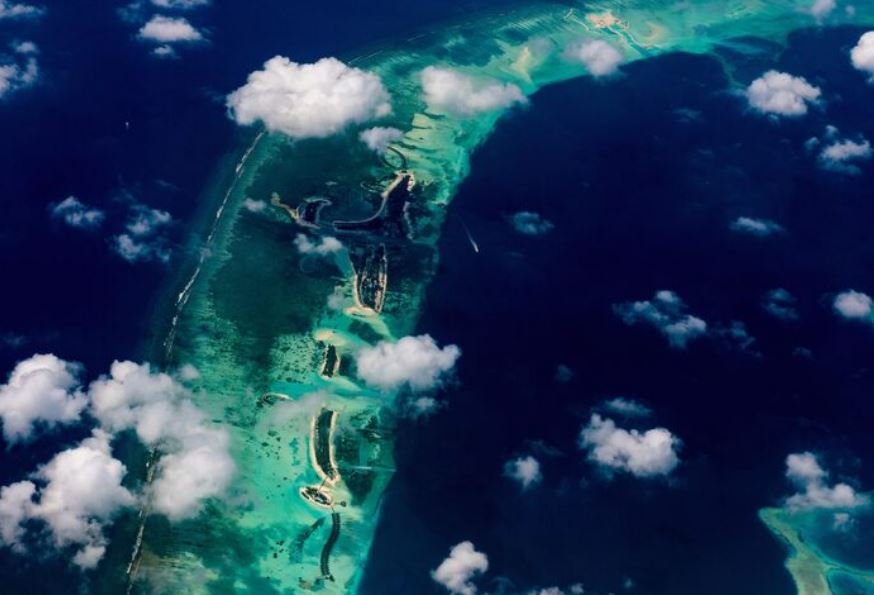
It’s difficult to ignore the familiar enthusiasm for this type of extraction—the same assurance that has accompanied every frontier resource rush, from lithium brine to shale, before the full costs are revealed. Instead of being reflexive, scientists researching the CCZ are cautious in a way that feels earned. Even 26 years after the nodule field was disturbed in a 1989 simulation, the biodiversity in the impacted area had not recovered. In ways that are still not fully understood, the benthic ecosystem—the organisms that live on and slightly above the seafloor—seems particularly delicate. Filter-feeding organisms may be suffocated over great distances by sediment plumes from mining equipment that could extend hundreds of kilometers.
In these discussions, the carbon question is another issue that seldom receives enough attention. It is believed that over geological time, large amounts of carbon that have gradually descended from the ocean’s surface—dead matter, whale excrement, and microscopic organisms—are trapped in deep-sea sediments. Researchers are still at odds over how much and how quickly that stored carbon might be released if those sediments are disturbed. It’s one of many unknowns that seem awkward to hurry past.
The legal aspect, which could be the most complicated of all, comes next. The International Seabed Authority, a UN agency, is theoretically in charge of international waters, which include the CCZ. The majority of nations contend that no one country has the authority to unilaterally approve extraction there. A number of Pacific Island countries with cultural and economic ties to these waters have already expressed their disapproval of decisions being made without their input, and the United States moving forward in any case would be a serious diplomatic blow.
Naturally, the nodules themselves don’t care about any of this. They are home to distinct microbial communities that are found nowhere else on Earth, and they have been sitting there for millions of years, forming at a rate of a few millimeters per million years.
The decisions that are currently being made in UN conference rooms, executive orders, and regulatory offices by individuals who are primarily considering supply chains and strategic competition will determine whether they stay there. With careful oversight and real environmental protections, mining may be done responsibly. It’s also possible that the safeguards become secondary and the calculation shifts once the first commercial vessel deploys. These things usually proceed in this manner. The battle for these rocks is just getting started, and it deserves far more attention than most people are currently giving it.
