
Close Menu
Indeep ProjectIndeep Project
  • Home
  • Privacy Policy
  • Terms of Service
  • Disclaimer
  • About
  • Indeep
  • Marine Life
  • News

Subscribe to Updates

Get the latest creative news from FooBar about art, design and business.

What's Hot

The Skidaway Institute of Oceanography Is Doing Research That Could Reshape Coastal Policy Across the South

April 27, 2026

How the Copernicus Ocean State Report Is Warning That Climate Change Has Now Reached Every Single Ocean Basin

April 27, 2026

A 10,000-Foot Dive: The Undergrad Who Discovered a New Ecosystem From Her Dorm Room

April 27, 2026
Facebook X (Twitter) Instagram
Indeep ProjectIndeep Project
SUBSCRIBE
  • Home
  • Privacy Policy
  • Terms of Service
  • Disclaimer
  • About
  • Indeep
  • Marine Life
  • News
Indeep ProjectIndeep Project
Home»Indeep»World Register of Deep-Sea Species: The Quiet Project Mapping Earth’s Final Frontier
Indeep

World Register of Deep-Sea Species: The Quiet Project Mapping Earth’s Final Frontier

Derrick LesterBy Derrick LesterApril 27, 2026No Comments4 Mins Read
Share
Facebook Twitter Reddit Telegram Pinterest Email

A small group of marine biologists has been working on a project that hardly anyone discusses for more than ten years, somewhere in a quiet corner of the internet. They are giving things names. cataloging them. constructing, relentlessly and slowly, a record of the creatures that inhabit the areas of the ocean that virtually no human will ever travel to.

Launched in December 2012 as a subset of the broader World Register of Marine Species, the project is known as the World Register of Deep-Sea Species, or WoRDSS for short. It doesn’t appear glitzy. To be honest, it appears to be a spreadsheet that has learned to breathe.

FieldDetails
Project NameWorld Register of Deep-Sea Species (WoRDSS)
LaunchedDecember 2012
Parent DatabaseWorld Register of Marine Species (WoRMS)
Founding BodyInternational Network for Scientific Investigation of Deep-sea Ecosystems (INDEEP)
TypeThematic Species Database (TSD)
Depth Criterion for InclusionSample depth greater than 500 meters, pelagic and benthic
Species CataloguedMore than 25,000
Image LibraryOver 350 high-resolution specimen images
Companion AppDeep-Sea ID (offline access)
Initial Data SourceOcean Biodiversity Information System (OBIS)
AccessOpen-access
CoverageBathyal, abyssal, and hadal zones

However, after just ten minutes on the site, something changes. You get the impression that you are witnessing the methodical, slow construction of a type of library—the kind of work that never makes headlines. The goal of the project, which originated from INDEEP, the International Network for Scientific Investigation of Deep-sea Ecosystems, was straightforward in theory but nearly impossible in reality: create an extensive database of all known deep-sea species. Connect it to WoRMS again. Include pictures. Include taxonomic references. Continue.

The WoRDSS team is the first to acknowledge that the definition of “deep-sea” itself is ambiguous. The line was drawn at the continental shelf break, approximately 200 meters away, according to older textbooks. It is reduced to 800 in more recent schemes.
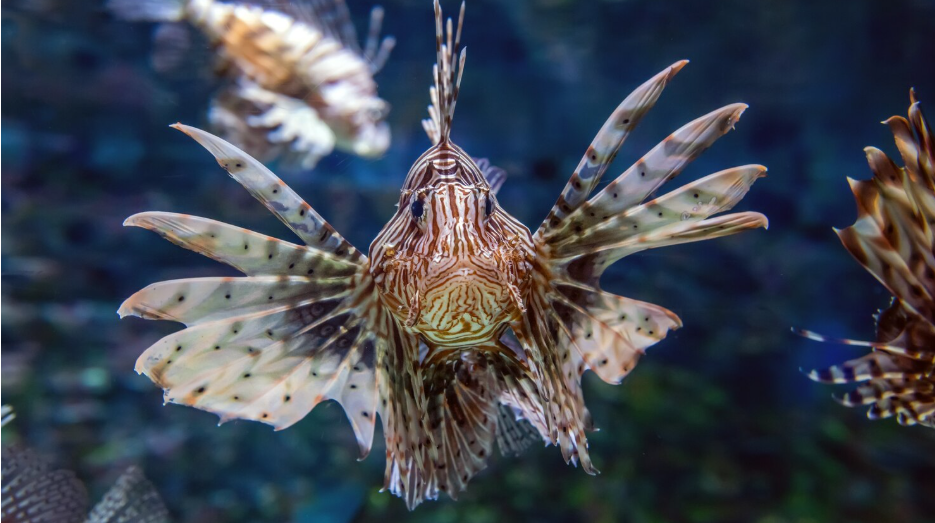
World Register of Deep-Sea Species

The working threshold for WoRDSS was determined to be 500 meters, a depth at which seasonal temperature variations diminish and sunlight essentially disappears. It’s a practical decision rather than an ideal one. On the website, they say so. A scientific project that freely acknowledges that its boundaries are negotiable is refreshing.

The scope of what is included is greater than you might anticipate. Even if a species spends the majority of its life in shallower waters, it can still be granted a spot if it is occasionally recorded below 500 meters. The logic is ecological. For anyone attempting to comprehend the system, creatures that drift between zones continue to influence what occurs down there and are still drawn up in deep-sea samples. It’s the kind of information that shows how WoRDSS’s creators truly think—less like legislators and more like field biologists who understand that the ocean defies neat classifications.

The actual data is derived from a series of sources that have been layered over many years. The Ocean Biodiversity Information System, or OBIS, provided the initial contexts. Contributions from individual scientists, organizations, and expedition teams began to come in after that. lists of species. photos of the specimens. Some identification guides are obscure monographs that don’t appear anywhere else on the internet. In a field that frequently overlooks it, each contribution is acknowledged in the context source field, which feels like a modest, intentional act of respect.

The team also developed a companion app called Deep-Sea ID to function in tandem with the database. It contains a collection of more than 350 high-resolution photos and offline data on over 25,000 deep-sea species. It is difficult to overestimate the practical value of that for a researcher on a ship, far from any dependable signal. Observing the existence of such a tool makes you realize how much contemporary science still relies on quiet infrastructure created by individuals who will never be well-known for it.

Scrolling through page after page of taxonomic entries makes it difficult to ignore how odd and depressing the entire process is. No one has ever seen the majority of these animals. Some are based on a single specimen that was collected, photographed, and then cataloged. Completeness is not guaranteed by WoRDSS. All it says is that it will keep adding. This seems like the ideal goal for a place we don’t fully comprehend.

Deep-Sea Species
Share. Facebook Twitter Pinterest LinkedIn Telegram Reddit Email
Next Article Small Islands, Big Stakes: A Caribbean Gamble on Ocean Wealth
Derrick Lester

    Derrick Lester is a professor and editor at indeep-project.org. His academic career has been molded by a single, enduring obsession: the sea and all life in it. Drawing from marine biology, oceanography, and the kind of hard-won field knowledge that only comes from spending significant time on and under the water, Derrick's writing has the depth of a scholar thanks to his years of research and teaching experience. His writing delves into the science of marine life with the inquisitiveness of someone who has never fully moved past the wonder of what exists beneath the surface. Derrick hopes to introduce readers to a world that encompasses over 70% of the planet and is, in many respects, still largely unexplored through his contributions to indeep-project.org.

    Related Posts

    The Skidaway Institute of Oceanography Is Doing Research That Could Reshape Coastal Policy Across the South

    April 27, 2026

    The Secret “Surveillance Cover” Behind Modern Deep-Sea Mining Operations

    April 27, 2026

    The Ocean Floor Is Becoming a Dumping Ground — and Almost No One Is Watching

    April 27, 2026

    Inside Deep Sea ID: The Field Guide That Travels Where Wi-Fi Can’t Reach

    April 27, 2026
    Add A Comment
    Leave A Reply Cancel Reply

    You must be logged in to post a comment.

    Don't Miss

    The Skidaway Institute of Oceanography Is Doing Research That Could Reshape Coastal Policy Across the South

    By Derrick LesterApril 27, 2026

    On Skidaway Island, which is located just southeast of Savannah, there is a section of…

    How the Copernicus Ocean State Report Is Warning That Climate Change Has Now Reached Every Single Ocean Basin

    April 27, 2026

    A 10,000-Foot Dive: The Undergrad Who Discovered a New Ecosystem From Her Dorm Room

    April 27, 2026

    The UN’s “Game-Changing” Ocean Treaty Is Here. Will the U.S. Actually Abide by It?

    April 27, 2026

    The Secret “Surveillance Cover” Behind Modern Deep-Sea Mining Operations

    April 27, 2026

    The El Niño Mystery: Why Oceanographers Admitted Their 2025 Models Were Completely Wrong

    April 27, 2026

    The Ocean Floor Is Becoming a Dumping Ground — and Almost No One Is Watching

    April 27, 2026
    About Us
    About Us

    Indeep-project.org is dedicated to disseminating information that is supported by data, open about its sources, and truthful about the limits of human knowledge.
    Peer-reviewed studies, official scientific publications, and the knowledge of contributors with firsthand knowledge of ecology, environmental policy, and marine science are all sources of information used by our editorial team. Content that expresses opinion is clearly marked as such, whether it comes from our own contributors or from outside sources.
    Important Information Opinion pieces, commentary, and third-party viewpoints on subjects like science, technology, finance, politics, and public policy are among the content published on indeep-project.org. Only educational and informational purposes are served by this content. It does not constitute expert scientific, financial, legal, or medical advice; rather, it reflects the opinions of the original authors.
    We strongly advise readers to seek qualified professional advice appropriate to their particular circumstances before acting on political, financial, or scientific information published on this platform. Decisions based on third-party opinion content published here are not endorsed, recommended, or liable for by indeep-project.org.

    Our Picks

    The UN’s “Game-Changing” Ocean Treaty Is Here. Will the U.S. Actually Abide by It?

    April 27, 2026

    The Secret “Surveillance Cover” Behind Modern Deep-Sea Mining Operations

    April 27, 2026

    The El Niño Mystery: Why Oceanographers Admitted Their 2025 Models Were Completely Wrong

    April 27, 2026

    The Ocean Floor Is Becoming a Dumping Ground — and Almost No One Is Watching

    April 27, 2026

    Inside Deep Sea ID: The Field Guide That Travels Where Wi-Fi Can’t Reach

    April 27, 2026

    Mining, Fishing, Genetic Gold: The Battle Brewing Beneath the Waves

    April 27, 2026
    • Home
    • Privacy Policy
    • Terms of Service
    • Disclaimer
    • About
    • Indeep
    • Marine Life
    • News
    © 2026 ThemeSphere. Designed by ThemeSphere.

    Type above and press Enter to search. Press Esc to cancel.