

Close Menu
Indeep ProjectIndeep Project
  • Home
  • Privacy Policy
  • Terms of Service
  • Disclaimer
  • About
  • Indeep
  • Marine Life
  • News

Subscribe to Updates

Get the latest creative news from FooBar about art, design and business.

What's Hot

The Skidaway Institute of Oceanography Is Doing Research That Could Reshape Coastal Policy Across the South

April 27, 2026

How the Copernicus Ocean State Report Is Warning That Climate Change Has Now Reached Every Single Ocean Basin

April 27, 2026

A 10,000-Foot Dive: The Undergrad Who Discovered a New Ecosystem From Her Dorm Room

April 27, 2026
Facebook X (Twitter) Instagram
Indeep ProjectIndeep Project
SUBSCRIBE
  • Home
  • Privacy Policy
  • Terms of Service
  • Disclaimer
  • About
  • Indeep
  • Marine Life
  • News
Indeep ProjectIndeep Project
Home»Indeep»Inside Deep Sea ID: The Field Guide That Travels Where Wi-Fi Can’t Reach
Indeep

Inside Deep Sea ID: The Field Guide That Travels Where Wi-Fi Can’t Reach

Derrick LesterBy Derrick LesterApril 27, 2026No Comments4 Mins Read
Share
Facebook Twitter Reddit Telegram Pinterest Email

The idea that a museum in South Kensington, which is more well-known for its Victorian arches and dinosaur skeletons, would one day decide to create a phone app for those who research the deepest, darkest regions of the ocean is subtly lovely. Deep Sea ID isn’t very eye-catching. It makes no effort to be. However, once you realize what it does, it begins to seem like one of those little, practical inventions that ought to have been around years ago.

The World Register of Deep-Sea Species, a taxonomic database that was introduced in December 2012 as part of a larger scientific endeavor to map what lives down there, is paired with the app. The relationship between WoRDSS and the broader World Register of Marine Species is genuinely collaborative rather than performative. Editors correct mistakes, add images, and update entries. It’s the kind of meticulous, slow work that seldom makes headlines.

App NameDeep Sea ID
Developed ByNatural History Museum (London), National Oceanography Centre, World Register of Marine Species
Linked DatabaseWorld Register of Deep-Sea Species (WoRDSS)
Launch of WoRDSSDecember 2012
Species CoveredMore than 25,000
High-Resolution ImagesOver 350
Initial FundingINDEEP (International Network for Scientific Investigation of Deep-sea Ecosystems)
DownloadsMore than 30,000
Depth Criterion for InclusionSamples recorded below 500m
Access TypeOffline, free
Primary AudienceResearchers, contractors, educators, science communicators

The offline component is what makes Deep Sea ID intriguing. The sensation of having a dying signal and a sample tray full of unknowns after a connection drops somewhere beyond the continental shelf is familiar to anyone who has worked on a research vessel. A marine biologist crouched over a microscope in a rolling ship’s lab doesn’t need to wait for a satellite link to identify an intriguing-looking polychaete worm because the app stores everything locally, including over 25,000 species and over 350 high-resolution photos.

The pictures themselves are powerful and occasionally unnerving. The so-called Yeti crab, Kiwa hirsuta, has peculiarly furry claws. David Shale took a picture of Atolla wyvillei, a deep-sea jellyfish that glows in a way that almost seems staged.
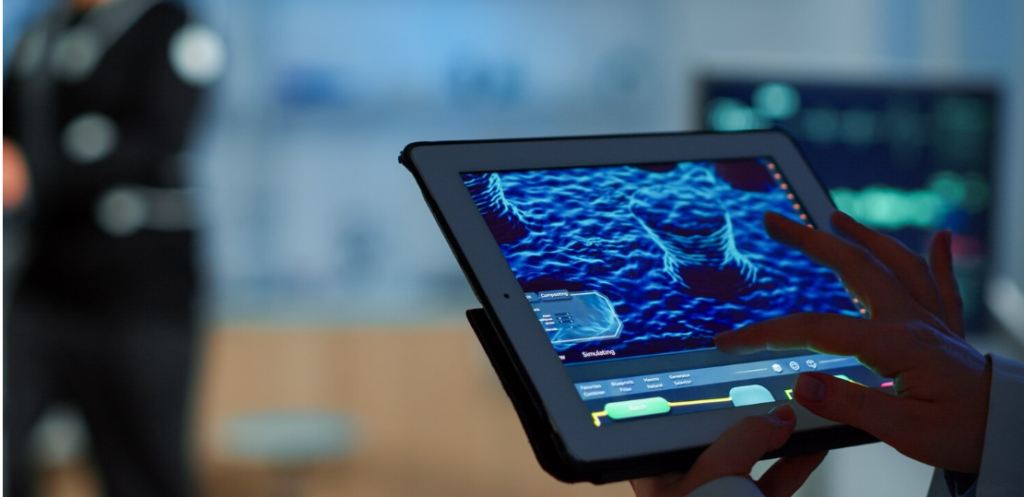
Inside Deep Sea ID
Inside Deep Sea ID

You begin to realize how little we truly know about the creatures that coexist with us on this planet as you scroll through these specimens. It’s difficult to avoid experiencing a slight sense of humility.

The definition of “deep sea” is not as clear-cut as you might think. The boundary was traditionally defined by the continental shelf break at about 200 meters, but more recent classifications push that line lower. In part, WoRDSS uses 500 meters as its working threshold because that is the depth at which seasonal temperature variations diminish and sunlight virtually disappears. Ecological overlap is important because some of the species in the database aren’t strictly deep-sea natives; they just happen to wander down occasionally.

When you consider it, it makes sense that Deep Sea ID was the first app created by the Science Group of the Natural History Museum. Specimens were placed behind glass in museums for decades. They are now putting them in their pockets. With over 30,000 downloads, the app isn’t viral by app store standards, but it’s a respectable footprint for a tool targeted at graduate students, taxonomists, and the occasional very enthusiastic teacher.

As this kind of project develops, it seems that scientific software doesn’t always need to pursue scale. Sometimes the only objective is to make a challenging task marginally easier for those performing it. With that idea in mind, INDEEP provided funding for the initial iOS version, and the collaboration between the museum, the National Oceanography Centre, and the WoRMS team kept the project grounded.

The extent to which the general public will embrace something this specialized is still unknown. Most likely not at all. However, that might not be relevant. In a sense, Deep Sea ID is the most honest form of science communication because it is available to those who need it.

Deep Sea Sea ID
Share. Facebook Twitter Pinterest LinkedIn Telegram Reddit Email
Previous ArticleMining, Fishing, Genetic Gold: The Battle Brewing Beneath the Waves
Next Article The Ocean Floor Is Becoming a Dumping Ground — and Almost No One Is Watching
Derrick Lester

    Derrick Lester is a professor and editor at indeep-project.org. His academic career has been molded by a single, enduring obsession: the sea and all life in it. Drawing from marine biology, oceanography, and the kind of hard-won field knowledge that only comes from spending significant time on and under the water, Derrick's writing has the depth of a scholar thanks to his years of research and teaching experience. His writing delves into the science of marine life with the inquisitiveness of someone who has never fully moved past the wonder of what exists beneath the surface. Derrick hopes to introduce readers to a world that encompasses over 70% of the planet and is, in many respects, still largely unexplored through his contributions to indeep-project.org.

    Related Posts

    The Skidaway Institute of Oceanography Is Doing Research That Could Reshape Coastal Policy Across the South

    April 27, 2026

    The Secret “Surveillance Cover” Behind Modern Deep-Sea Mining Operations

    April 27, 2026

    The Ocean Floor Is Becoming a Dumping Ground — and Almost No One Is Watching

    April 27, 2026

    World Register of Deep-Sea Species: The Quiet Project Mapping Earth’s Final Frontier

    April 27, 2026
    Add A Comment
    Leave A Reply Cancel Reply

    You must be logged in to post a comment.

    Don't Miss

    The Skidaway Institute of Oceanography Is Doing Research That Could Reshape Coastal Policy Across the South

    By Derrick LesterApril 27, 2026

    On Skidaway Island, which is located just southeast of Savannah, there is a section of…

    How the Copernicus Ocean State Report Is Warning That Climate Change Has Now Reached Every Single Ocean Basin

    April 27, 2026

    A 10,000-Foot Dive: The Undergrad Who Discovered a New Ecosystem From Her Dorm Room

    April 27, 2026

    The UN’s “Game-Changing” Ocean Treaty Is Here. Will the U.S. Actually Abide by It?

    April 27, 2026

    The Secret “Surveillance Cover” Behind Modern Deep-Sea Mining Operations

    April 27, 2026

    The El Niño Mystery: Why Oceanographers Admitted Their 2025 Models Were Completely Wrong

    April 27, 2026

    The Ocean Floor Is Becoming a Dumping Ground — and Almost No One Is Watching

    April 27, 2026
    About Us
    About Us

    Indeep-project.org is dedicated to disseminating information that is supported by data, open about its sources, and truthful about the limits of human knowledge.
    Peer-reviewed studies, official scientific publications, and the knowledge of contributors with firsthand knowledge of ecology, environmental policy, and marine science are all sources of information used by our editorial team. Content that expresses opinion is clearly marked as such, whether it comes from our own contributors or from outside sources.
    Important Information Opinion pieces, commentary, and third-party viewpoints on subjects like science, technology, finance, politics, and public policy are among the content published on indeep-project.org. Only educational and informational purposes are served by this content. It does not constitute expert scientific, financial, legal, or medical advice; rather, it reflects the opinions of the original authors.
    We strongly advise readers to seek qualified professional advice appropriate to their particular circumstances before acting on political, financial, or scientific information published on this platform. Decisions based on third-party opinion content published here are not endorsed, recommended, or liable for by indeep-project.org.

    Our Picks

    The UN’s “Game-Changing” Ocean Treaty Is Here. Will the U.S. Actually Abide by It?

    April 27, 2026

    The Secret “Surveillance Cover” Behind Modern Deep-Sea Mining Operations

    April 27, 2026

    The El Niño Mystery: Why Oceanographers Admitted Their 2025 Models Were Completely Wrong

    April 27, 2026

    The Ocean Floor Is Becoming a Dumping Ground — and Almost No One Is Watching

    April 27, 2026

    Inside Deep Sea ID: The Field Guide That Travels Where Wi-Fi Can’t Reach

    April 27, 2026

    Mining, Fishing, Genetic Gold: The Battle Brewing Beneath the Waves

    April 27, 2026
    • Home
    • Privacy Policy
    • Terms of Service
    • Disclaimer
    • About
    • Indeep
    • Marine Life
    • News
    © 2026 ThemeSphere. Designed by ThemeSphere.

    Type above and press Enter to search. Press Esc to cancel.