
Close Menu
Indeep ProjectIndeep Project
  • Home
  • Privacy Policy
  • Terms of Service
  • Disclaimer
  • About
  • Indeep
  • Marine Life
  • News

Subscribe to Updates

Get the latest creative news from FooBar about art, design and business.

What's Hot

The Skidaway Institute of Oceanography Is Doing Research That Could Reshape Coastal Policy Across the South

April 27, 2026

How the Copernicus Ocean State Report Is Warning That Climate Change Has Now Reached Every Single Ocean Basin

April 27, 2026

A 10,000-Foot Dive: The Undergrad Who Discovered a New Ecosystem From Her Dorm Room

April 27, 2026
Facebook X (Twitter) Instagram
Indeep ProjectIndeep Project
SUBSCRIBE
  • Home
  • Privacy Policy
  • Terms of Service
  • Disclaimer
  • About
  • Indeep
  • Marine Life
  • News
Indeep ProjectIndeep Project
Home»Climate Change»The UN’s “Game-Changing” Ocean Treaty Is Here. Will the U.S. Actually Abide by It?
Climate Change

The UN’s “Game-Changing” Ocean Treaty Is Here. Will the U.S. Actually Abide by It?

Derrick LesterBy Derrick LesterApril 27, 2026No Comments4 Mins Read
Share
Facebook Twitter Reddit Telegram Pinterest Email

A treaty that most Americans have never heard of quietly became international law on the morning of January 17, somewhere off the coast of New York, when a UN flag was raised on time. Nearly two-thirds of the world’s oceans are currently governed by the High Seas Treaty, an ambitious treaty with an awkward name. It was completed by sixty nations. Not one of them was the United States, which made a big deal out of signing the agreement back in September 2023.

At the joyous press conferences, no one wanted to focus on the difference between signing and ratification. This type of information is incorporated into a footnote. However, it’s important and worth pausing to consider.

FieldDetails
Treaty NameAgreement on Marine Biological Diversity of Areas Beyond National Jurisdiction (BBNJ)
Common NameHigh Seas Treaty
AdoptedJune 19, 2023
Entered Into ForceJanuary 17, 2026
Ratifications Needed60 countries
CoverageRoughly two-thirds of the world’s ocean area
Governing BodyUN Division for Ocean Affairs and the Law of the Sea (interim)
Key PillarsMarine genetic resources, MPAs, environmental impact assessments, capacity-building
Linked GoalsSDG 14, 30×30 target under Kunming-Montreal Framework
U.S. StatusSigned (Sept 2023), not ratified
First COPWithin 12 months of entry into force
Long-Term AimProtect 30% of oceans by 2030

The United States has a lengthy, almost theatrical history of contributing to the drafting of historic ocean agreements before abandoning them in the Senate. This treaty is based on the original 1982 Law of the Sea Convention, which has been pending ratification for more than 40 years. Both parties’ presidents have supported it. It hasn’t passed yet. Speaking with those who are interested in ocean policy gives the impression that this is simply how Washington handles the ocean. At the negotiating table, loudly. At home, quietly, sometimes uncomfortably.

The actual treaty is truly ambitious. For the first time, it permits the establishment of marine protected areas in international waters, which are areas of the sea that are not owned by anyone and were previously largely unregulated. Environmental impact assessments are necessary prior to large-scale industrial operations or deep-sea mining.
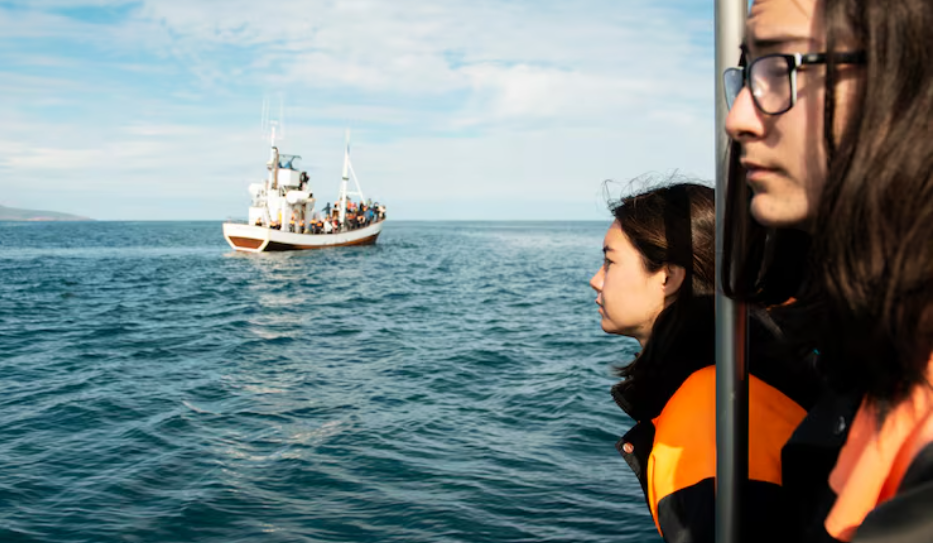
The UN’s "Game-Changing" Ocean
The UN’s “Game-Changing” Ocean

It promises that the genetic resources discovered in the abyss — the strange microbes, the bioluminescent oddities that pharmaceutical companies have been quietly patenting for years — will be shared more equitably with developing nations. Approximately 1% of the high seas are currently under protection. One percent. The treaty’s supporters want that figure pushed to thirty by 2030. It’s a goal that will require a great deal of collaboration and funding. Neither is assured.

It’s difficult to ignore the peculiar political geometry when observing this from a distance. China gave its approval. The EU did. Among the first were small island nations that stood to lose the most as the seas warmed. Meanwhile, the U.S. delegation has shown support without making a commitment—a well-known tactic. Sixty-seven votes are now needed for the Senate to ratify any treaty, a requirement that feels almost geologically remote in the current environment.

The fishing sector is worried. Defense officials are worried. Mining interests are undoubtedly concerned, especially those who are interested in polymetallic nodules in the Clarion-Clipperton Zone. These criticisms are not brand-new. Since the end of the Cold War, they have been recycled through all significant ocean agreements.

However, something has changed. Capital cities have been shaken by the International Court of Justice’s recent advisory ruling that climate inaction may be illegal under international law. The topic of reparations is now being discussed. According to the ICJ, licensing fossil fuels may be a wrongdoing. The legal terrain is shifting. It may be more difficult for nations that believed they could watch from the sidelines to maintain that stance.

The High Seas Treaty is now enforceable for those who selected it, regardless of whether the United States ratifies it within the next year, ten years, or never. When American ships operate in international waters, they will come across regulations that were developed by the nations that carried out the work. That’s the uncomfortable reality that no one has yet to publicly acknowledge. In international law, influence usually goes to those who show up. This is what the ocean has been waiting for for twenty years. I think it can wait a bit longer for Washington. But not indefinitely.

Ocean UN
Share. Facebook Twitter Pinterest LinkedIn Telegram Reddit Email
Previous ArticleThe Secret “Surveillance Cover” Behind Modern Deep-Sea Mining Operations
Next Article A 10,000-Foot Dive: The Undergrad Who Discovered a New Ecosystem From Her Dorm Room
Derrick Lester

    Derrick Lester is a professor and editor at indeep-project.org. His academic career has been molded by a single, enduring obsession: the sea and all life in it. Drawing from marine biology, oceanography, and the kind of hard-won field knowledge that only comes from spending significant time on and under the water, Derrick's writing has the depth of a scholar thanks to his years of research and teaching experience. His writing delves into the science of marine life with the inquisitiveness of someone who has never fully moved past the wonder of what exists beneath the surface. Derrick hopes to introduce readers to a world that encompasses over 70% of the planet and is, in many respects, still largely unexplored through his contributions to indeep-project.org.

    Add A Comment
    Leave A Reply Cancel Reply

    You must be logged in to post a comment.

    Don't Miss

    The Skidaway Institute of Oceanography Is Doing Research That Could Reshape Coastal Policy Across the South

    By Derrick LesterApril 27, 2026

    On Skidaway Island, which is located just southeast of Savannah, there is a section of…

    How the Copernicus Ocean State Report Is Warning That Climate Change Has Now Reached Every Single Ocean Basin

    April 27, 2026

    A 10,000-Foot Dive: The Undergrad Who Discovered a New Ecosystem From Her Dorm Room

    April 27, 2026

    The UN’s “Game-Changing” Ocean Treaty Is Here. Will the U.S. Actually Abide by It?

    April 27, 2026

    The Secret “Surveillance Cover” Behind Modern Deep-Sea Mining Operations

    April 27, 2026

    The El Niño Mystery: Why Oceanographers Admitted Their 2025 Models Were Completely Wrong

    April 27, 2026

    The Ocean Floor Is Becoming a Dumping Ground — and Almost No One Is Watching

    April 27, 2026
    About Us
    About Us

    Indeep-project.org is dedicated to disseminating information that is supported by data, open about its sources, and truthful about the limits of human knowledge.
    Peer-reviewed studies, official scientific publications, and the knowledge of contributors with firsthand knowledge of ecology, environmental policy, and marine science are all sources of information used by our editorial team. Content that expresses opinion is clearly marked as such, whether it comes from our own contributors or from outside sources.
    Important Information Opinion pieces, commentary, and third-party viewpoints on subjects like science, technology, finance, politics, and public policy are among the content published on indeep-project.org. Only educational and informational purposes are served by this content. It does not constitute expert scientific, financial, legal, or medical advice; rather, it reflects the opinions of the original authors.
    We strongly advise readers to seek qualified professional advice appropriate to their particular circumstances before acting on political, financial, or scientific information published on this platform. Decisions based on third-party opinion content published here are not endorsed, recommended, or liable for by indeep-project.org.

    Our Picks

    The UN’s “Game-Changing” Ocean Treaty Is Here. Will the U.S. Actually Abide by It?

    April 27, 2026

    The Secret “Surveillance Cover” Behind Modern Deep-Sea Mining Operations

    April 27, 2026

    The El Niño Mystery: Why Oceanographers Admitted Their 2025 Models Were Completely Wrong

    April 27, 2026

    The Ocean Floor Is Becoming a Dumping Ground — and Almost No One Is Watching

    April 27, 2026

    Inside Deep Sea ID: The Field Guide That Travels Where Wi-Fi Can’t Reach

    April 27, 2026

    Mining, Fishing, Genetic Gold: The Battle Brewing Beneath the Waves

    April 27, 2026
    • Home
    • Privacy Policy
    • Terms of Service
    • Disclaimer
    • About
    • Indeep
    • Marine Life
    • News
    © 2026 ThemeSphere. Designed by ThemeSphere.

    Type above and press Enter to search. Press Esc to cancel.