
Close Menu
Indeep ProjectIndeep Project
  • Home
  • Privacy Policy
  • Terms of Service
  • Disclaimer
  • About
  • Indeep
  • Marine Life
  • News

Subscribe to Updates

Get the latest creative news from FooBar about art, design and business.

What's Hot

The Skidaway Institute of Oceanography Is Doing Research That Could Reshape Coastal Policy Across the South

April 27, 2026

How the Copernicus Ocean State Report Is Warning That Climate Change Has Now Reached Every Single Ocean Basin

April 27, 2026

A 10,000-Foot Dive: The Undergrad Who Discovered a New Ecosystem From Her Dorm Room

April 27, 2026
Facebook X (Twitter) Instagram
Indeep ProjectIndeep Project
SUBSCRIBE
  • Home
  • Privacy Policy
  • Terms of Service
  • Disclaimer
  • About
  • Indeep
  • Marine Life
  • News
Indeep ProjectIndeep Project
Home»Marine Life»Small Islands, Big Stakes: A Caribbean Gamble on Ocean Wealth
Marine Life

Small Islands, Big Stakes: A Caribbean Gamble on Ocean Wealth

Derrick LesterBy Derrick LesterApril 27, 2026No Comments4 Mins Read
Share
Facebook Twitter Reddit Telegram Pinterest Email

The sound of the high seas has always been reminiscent of an old novel. Whales, pirates, and sailors who vanished. However, the romance quickly fades when you sit with the numbers for a short while. Almost two-thirds of the ocean on Earth is located outside national borders.

No coast guard, no flag, no explicit regulations. That size was viewed as a kind of permission slip for decades. Go fishing there. That’s mine. There, dump. Not many people inquired about the price.

SubjectHigh Seas Treaty (BBNJ Agreement) – Caribbean Ratification Outlook
Treaty AdoptedMarch 2023 by the United Nations General Assembly
Focus RegionAntigua and Barbuda, Jamaica, Trinidad and Tobago
Coverage AreaRoughly two-thirds of the planet’s ocean surface
Key MechanismMarine Protected Areas, EIAs, and benefit-sharing of marine genetic resources
Capacity-Building ValueEstimated US $10.3 million in projected cash support
Ratifications So Far50 countries (60 needed for entry into force)
Linked Global Target30×30 — protecting 30% of the ocean by 2030
Governing Body ReferenceUNCLOS, 1982
Major ThreatsOverfishing, deep-sea mining, plastic pollution, climate change
OutlookCautiously optimistic, politically uneven

Though slowly, that attitude is changing, and the most intriguing change isn’t coming from the typical maritime powers. It originates from countries like Trinidad and Tobago, Jamaica, and Antigua and Barbuda. A new economic and legal analysis of the implications of ratifying the High Seas Treaty for those three nations comes to the quietly audacious conclusion that there is a limited window of opportunity to claim the gains, which are real and early. Policymakers in the Caribbean, at least those who are willing to be honest, believe that delaying action now would be costly.

The connection between the ocean and economy is real when you stroll along the docks in Port of Spain on a muggy afternoon. Container ships sitting past the breakwater, children selling shaved ice to tourists, and fishermen cleaning the day’s catch. Despite their best efforts, small island developing states are unable to keep their futures apart from the sea.
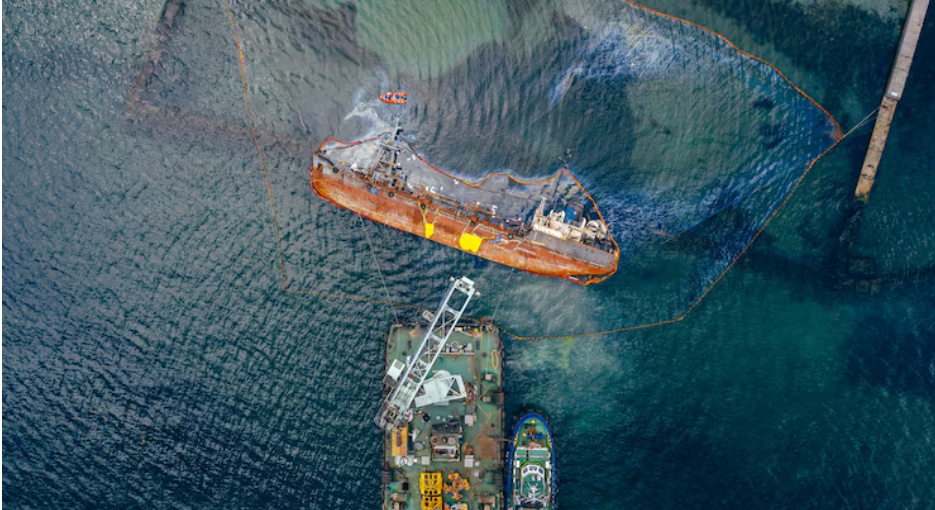
Small Islands, Big Stakes

Therefore, the calculation isn’t too difficult when a treaty offers improved access to marine genetic resources, funding for capacity-building, and a seat at the table where deep-sea regulations are drafted. International diplomacy has a way of hiding clear decisions, which is why it appears complicated.

The treaty’s actual provisions are more specific than what the standard UN language implies. Marine protected areas in waters that are not owned by any one country. Before a mining rig is dragged across an unmapped seamount, environmental impact assessments are conducted.

No one has yet developed a benefit-sharing scheme for the odd microorganisms that scientists continue to extract from hydrothermal vents, some of which may find their way into cancer medications. Perhaps a string of DNA from an unidentified organism is the most valuable item in the high seas, rather than tuna or cobalt.

Naturally, the paperwork is not keeping up with the threats. High seas fishing is still dominated by industrial fleets, primarily from wealthy countries. According to a 2018 study published in Science Advances, a large portion of this fishing would not even be profitable without state subsidies.

The more recent concern is deep-sea mining, where businesses are interested in polymetallic nodules for the same metals that drive wind turbines and electric cars—an irony that no one seems willing to publicly discuss. Despite growing calls for a moratorium at the recent UN Ocean Conference in Nice, dredges continue to be designed.

Plastic still finds its way into gyres the size of tiny nations. The water itself is losing oxygen, warming, and becoming more acidic. As this develops, it’s difficult to ignore how much of the discussion still views the open ocean as somewhere else, a problem to be solved later, and a location primarily inhabited by documentaries.

For the treaty to become operative, sixty ratifications are required. There are fifty people in. Due in part to the fact that moral authority on ocean issues typically comes from those who stand to lose the most if things go wrong, the Caribbean push may be more significant than its size suggests. It remains to be seen if the larger powers will follow with actual funds and enforcement. Signing a treaty is simple, but funding it is more difficult. However, something has changed. The world is at least acting as though everyone owns the high seas for the first time. Although it’s a beginning, pretending isn’t protection.

Big Stakes Small Islands
Share. Facebook Twitter Pinterest LinkedIn Telegram Reddit Email
Previous ArticleWorld Register of Deep-Sea Species: The Quiet Project Mapping Earth’s Final Frontier
Next Article Mining, Fishing, Genetic Gold: The Battle Brewing Beneath the Waves
Derrick Lester

    Derrick Lester is a professor and editor at indeep-project.org. His academic career has been molded by a single, enduring obsession: the sea and all life in it. Drawing from marine biology, oceanography, and the kind of hard-won field knowledge that only comes from spending significant time on and under the water, Derrick's writing has the depth of a scholar thanks to his years of research and teaching experience. His writing delves into the science of marine life with the inquisitiveness of someone who has never fully moved past the wonder of what exists beneath the surface. Derrick hopes to introduce readers to a world that encompasses over 70% of the planet and is, in many respects, still largely unexplored through his contributions to indeep-project.org.

    Related Posts

    How the Copernicus Ocean State Report Is Warning That Climate Change Has Now Reached Every Single Ocean Basin

    April 27, 2026

    The El Niño Mystery: Why Oceanographers Admitted Their 2025 Models Were Completely Wrong

    April 27, 2026

    Mining, Fishing, Genetic Gold: The Battle Brewing Beneath the Waves

    April 27, 2026
    Add A Comment
    Leave A Reply Cancel Reply

    You must be logged in to post a comment.

    Don't Miss

    The Skidaway Institute of Oceanography Is Doing Research That Could Reshape Coastal Policy Across the South

    By Derrick LesterApril 27, 2026

    On Skidaway Island, which is located just southeast of Savannah, there is a section of…

    How the Copernicus Ocean State Report Is Warning That Climate Change Has Now Reached Every Single Ocean Basin

    April 27, 2026

    A 10,000-Foot Dive: The Undergrad Who Discovered a New Ecosystem From Her Dorm Room

    April 27, 2026

    The UN’s “Game-Changing” Ocean Treaty Is Here. Will the U.S. Actually Abide by It?

    April 27, 2026

    The Secret “Surveillance Cover” Behind Modern Deep-Sea Mining Operations

    April 27, 2026

    The El Niño Mystery: Why Oceanographers Admitted Their 2025 Models Were Completely Wrong

    April 27, 2026

    The Ocean Floor Is Becoming a Dumping Ground — and Almost No One Is Watching

    April 27, 2026
    About Us
    About Us

    Indeep-project.org is dedicated to disseminating information that is supported by data, open about its sources, and truthful about the limits of human knowledge.
    Peer-reviewed studies, official scientific publications, and the knowledge of contributors with firsthand knowledge of ecology, environmental policy, and marine science are all sources of information used by our editorial team. Content that expresses opinion is clearly marked as such, whether it comes from our own contributors or from outside sources.
    Important Information Opinion pieces, commentary, and third-party viewpoints on subjects like science, technology, finance, politics, and public policy are among the content published on indeep-project.org. Only educational and informational purposes are served by this content. It does not constitute expert scientific, financial, legal, or medical advice; rather, it reflects the opinions of the original authors.
    We strongly advise readers to seek qualified professional advice appropriate to their particular circumstances before acting on political, financial, or scientific information published on this platform. Decisions based on third-party opinion content published here are not endorsed, recommended, or liable for by indeep-project.org.

    Our Picks

    The UN’s “Game-Changing” Ocean Treaty Is Here. Will the U.S. Actually Abide by It?

    April 27, 2026

    The Secret “Surveillance Cover” Behind Modern Deep-Sea Mining Operations

    April 27, 2026

    The El Niño Mystery: Why Oceanographers Admitted Their 2025 Models Were Completely Wrong

    April 27, 2026

    The Ocean Floor Is Becoming a Dumping Ground — and Almost No One Is Watching

    April 27, 2026

    Inside Deep Sea ID: The Field Guide That Travels Where Wi-Fi Can’t Reach

    April 27, 2026

    Mining, Fishing, Genetic Gold: The Battle Brewing Beneath the Waves

    April 27, 2026
    • Home
    • Privacy Policy
    • Terms of Service
    • Disclaimer
    • About
    • Indeep
    • Marine Life
    • News
    © 2026 ThemeSphere. Designed by ThemeSphere.

    Type above and press Enter to search. Press Esc to cancel.