
Close Menu
Indeep ProjectIndeep Project
  • Home
  • Privacy Policy
  • Terms of Service
  • Disclaimer
  • About
  • Indeep
  • Marine Life
  • News

Subscribe to Updates

Get the latest creative news from FooBar about art, design and business.

What's Hot

The Skidaway Institute of Oceanography Is Doing Research That Could Reshape Coastal Policy Across the South

April 27, 2026

How the Copernicus Ocean State Report Is Warning That Climate Change Has Now Reached Every Single Ocean Basin

April 27, 2026

A 10,000-Foot Dive: The Undergrad Who Discovered a New Ecosystem From Her Dorm Room

April 27, 2026
Facebook X (Twitter) Instagram
Indeep ProjectIndeep Project
SUBSCRIBE
  • Home
  • Privacy Policy
  • Terms of Service
  • Disclaimer
  • About
  • Indeep
  • Marine Life
  • News
Indeep ProjectIndeep Project
Home»Marine Life»Mining, Fishing, Genetic Gold: The Battle Brewing Beneath the Waves
Marine Life

Mining, Fishing, Genetic Gold: The Battle Brewing Beneath the Waves

Derrick LesterBy Derrick LesterApril 27, 2026No Comments4 Mins Read
Share
Facebook Twitter Reddit Telegram Pinterest Email

Building a constituency for the deep ocean is an odd endeavor. The majority of people won’t ever see it. No school field trips to a hydrothermal vent, no postcards from 4,000 meters below the surface.

However, decisions regarding its future are being made in secret somewhere in that dark column of water, which is cold, pressurized, and biologically richer than anyone could have predicted forty years ago. mining licenses. fishing limits. rights to genetic prospecting. People who have rarely visited the deep are gradually dividing it.

Profile: Deep Ocean Stewardship Initiative (DOSI)Details
Organization TypeGlobal network of deep-sea experts
Year Founded2013
Focus AreasScience, policy, law, economics of the deep ocean
Working GroupsMinerals, Oil & Gas, Fisheries, Climate Change, Genetic Resources, Tailings, New Technologies, Capacity Development, Communication
Key EngagementBBNJ Agreement negotiations, UN Ocean Decade, World Ocean Assessment
ReachMore than 2,000 members across 100+ countries
Notable ProgramsMulti-stakeholder workshops, briefings, surveys, assessments
Featured ExpertsChristine Gaebel (BBNJ Working Group Co-Lead), Marina Garwood (Science Policy Advisor)
Affiliated BodiesInternational Seabed Authority, UN Regular Process
MissionEcosystem-based management of deep-ocean resource use

The Deep Ocean Stewardship Initiative aims to bridge that gap. The word “network,” which DOSI uses to describe itself, is doing a lot of work. It’s not exactly a campaign group. Additionally, it is not an academic department. A few thousand researchers, attorneys, economists, and technologists dispersed across continents have come to the looser, more porous conclusion that the deep sea should have a cohesive voice in the formulation of policy. It remains to be seen if that voice is being heard.

You can understand how unglamorous this work is by listening to Christine Gaebel and Marina Garwood, two of the DOSI working group leaders. Gaebel is a co-leader of the BBNJ effort, which is a protracted and difficult UN negotiation concerning biodiversity in waters that are not under the jurisdiction of any one nation.
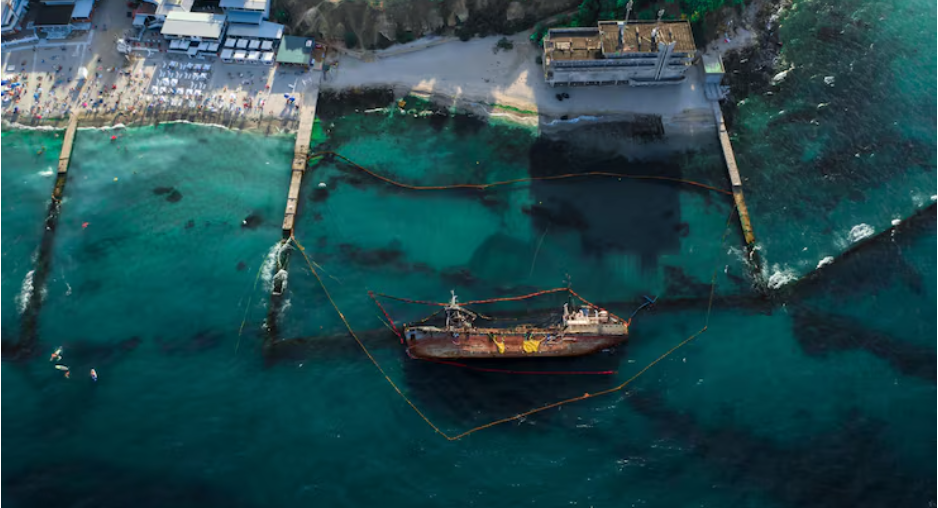
Mining, Fishing, Genetic Gold

As one of the few individuals who speaks both ecologist and diplomatese fluently, Garwood manages the coordination of science and policy and attends international gatherings. They don’t romanticize the work either. When you listen to them, you get the impression that they’ve spent a lot of time in conference rooms with fluorescent lighting, debating commas for whole afternoons.

What’s intriguing is the guidance they offer aspiring younger researchers. Gaebel returns to the word “realistic” repeatedly. She advises against entering a UN session and demanding a complete ban on fishing because coastal communities depend on that water, and proposals that disregard them typically fail in committee. For her part, Garwood discusses three pillars: the environment, economics, and people. If you don’t balance them, your science will fail. It sounds clear. It isn’t. Many deep-sea advocates still don’t know what is politically feasible when they get to the negotiating table.

This entire arrangement has a feeling that is both modern and traditional. The International Union for Conservation of Nature has been attempting to turn science into law for decades, which is why it is so old. The deep ocean is one of the last places on Earth where the rules have truly not been established, which makes it new. Dumping mine tailings into bathyal slopes, extracting genetic material from microbes that no one has cataloged, and mining the seafloor for cobalt and nickel are real, not hypothetical, debates. Furthermore, the commercial appetite frequently outpaces the science by years.

DOSI’s wager is that, with patience, interdisciplinary work can influence results before the worst choices are made. Gaebel and Garwood acknowledge that the field still thinks too much in silos. Specialization is rewarded in academia. Generalists who can simultaneously think about five different disciplines are rewarded by policy. It’s more difficult than people think to close that gap.

It’s difficult to ignore how much of this is the result of tenacious, modest perseverance. No press conferences. No viral marketing. Just researchers repeatedly attending meetings that the majority of the public will never learn about, arguing for a location that no one can see.

Fishing Genetic Gold Mining
Share. Facebook Twitter Pinterest LinkedIn Telegram Reddit Email
Previous ArticleSmall Islands, Big Stakes: A Caribbean Gamble on Ocean Wealth
Next Article Inside Deep Sea ID: The Field Guide That Travels Where Wi-Fi Can’t Reach
Derrick Lester

    Derrick Lester is a professor and editor at indeep-project.org. His academic career has been molded by a single, enduring obsession: the sea and all life in it. Drawing from marine biology, oceanography, and the kind of hard-won field knowledge that only comes from spending significant time on and under the water, Derrick's writing has the depth of a scholar thanks to his years of research and teaching experience. His writing delves into the science of marine life with the inquisitiveness of someone who has never fully moved past the wonder of what exists beneath the surface. Derrick hopes to introduce readers to a world that encompasses over 70% of the planet and is, in many respects, still largely unexplored through his contributions to indeep-project.org.

    Related Posts

    How the Copernicus Ocean State Report Is Warning That Climate Change Has Now Reached Every Single Ocean Basin

    April 27, 2026

    The El Niño Mystery: Why Oceanographers Admitted Their 2025 Models Were Completely Wrong

    April 27, 2026

    Small Islands, Big Stakes: A Caribbean Gamble on Ocean Wealth

    April 27, 2026
    Add A Comment
    Leave A Reply Cancel Reply

    You must be logged in to post a comment.

    Don't Miss

    The Skidaway Institute of Oceanography Is Doing Research That Could Reshape Coastal Policy Across the South

    By Derrick LesterApril 27, 2026

    On Skidaway Island, which is located just southeast of Savannah, there is a section of…

    How the Copernicus Ocean State Report Is Warning That Climate Change Has Now Reached Every Single Ocean Basin

    April 27, 2026

    A 10,000-Foot Dive: The Undergrad Who Discovered a New Ecosystem From Her Dorm Room

    April 27, 2026

    The UN’s “Game-Changing” Ocean Treaty Is Here. Will the U.S. Actually Abide by It?

    April 27, 2026

    The Secret “Surveillance Cover” Behind Modern Deep-Sea Mining Operations

    April 27, 2026

    The El Niño Mystery: Why Oceanographers Admitted Their 2025 Models Were Completely Wrong

    April 27, 2026

    The Ocean Floor Is Becoming a Dumping Ground — and Almost No One Is Watching

    April 27, 2026
    About Us
    About Us

    Indeep-project.org is dedicated to disseminating information that is supported by data, open about its sources, and truthful about the limits of human knowledge.
    Peer-reviewed studies, official scientific publications, and the knowledge of contributors with firsthand knowledge of ecology, environmental policy, and marine science are all sources of information used by our editorial team. Content that expresses opinion is clearly marked as such, whether it comes from our own contributors or from outside sources.
    Important Information Opinion pieces, commentary, and third-party viewpoints on subjects like science, technology, finance, politics, and public policy are among the content published on indeep-project.org. Only educational and informational purposes are served by this content. It does not constitute expert scientific, financial, legal, or medical advice; rather, it reflects the opinions of the original authors.
    We strongly advise readers to seek qualified professional advice appropriate to their particular circumstances before acting on political, financial, or scientific information published on this platform. Decisions based on third-party opinion content published here are not endorsed, recommended, or liable for by indeep-project.org.

    Our Picks

    The UN’s “Game-Changing” Ocean Treaty Is Here. Will the U.S. Actually Abide by It?

    April 27, 2026

    The Secret “Surveillance Cover” Behind Modern Deep-Sea Mining Operations

    April 27, 2026

    The El Niño Mystery: Why Oceanographers Admitted Their 2025 Models Were Completely Wrong

    April 27, 2026

    The Ocean Floor Is Becoming a Dumping Ground — and Almost No One Is Watching

    April 27, 2026

    Inside Deep Sea ID: The Field Guide That Travels Where Wi-Fi Can’t Reach

    April 27, 2026

    Mining, Fishing, Genetic Gold: The Battle Brewing Beneath the Waves

    April 27, 2026
    • Home
    • Privacy Policy
    • Terms of Service
    • Disclaimer
    • About
    • Indeep
    • Marine Life
    • News
    © 2026 ThemeSphere. Designed by ThemeSphere.

    Type above and press Enter to search. Press Esc to cancel.