
Close Menu
Indeep ProjectIndeep Project
  • Home
  • Privacy Policy
  • Terms of Service
  • Disclaimer
  • About
  • Indeep
  • Marine Life
  • News

Subscribe to Updates

Get the latest creative news from FooBar about art, design and business.

What's Hot

The Skidaway Institute of Oceanography Is Doing Research That Could Reshape Coastal Policy Across the South

April 27, 2026

How the Copernicus Ocean State Report Is Warning That Climate Change Has Now Reached Every Single Ocean Basin

April 27, 2026

A 10,000-Foot Dive: The Undergrad Who Discovered a New Ecosystem From Her Dorm Room

April 27, 2026
Facebook X (Twitter) Instagram
Indeep ProjectIndeep Project
SUBSCRIBE
  • Home
  • Privacy Policy
  • Terms of Service
  • Disclaimer
  • About
  • Indeep
  • Marine Life
  • News
Indeep ProjectIndeep Project
Home»Indeep»The Ocean Floor Is Becoming a Dumping Ground — and Almost No One Is Watching
Indeep

The Ocean Floor Is Becoming a Dumping Ground — and Almost No One Is Watching

Derrick LesterBy Derrick LesterApril 27, 2026No Comments4 Mins Read
Share
Facebook Twitter Reddit Telegram Pinterest Email

A practice that virtually no one is aware of but that subtly modifies the seafloor across continents has an odd quality. Deep-sea tailings disposal, or DSTD as it is known in the industry, is one of those industrial processes that is primarily hidden from view. This is due in part to the fact that it takes place under hundreds of meters of seawater and, to put it mildly, the regulatory environment surrounding it is, to put it mildly, inconsistent.

Each nation must set its own boundaries because pipeline discharges from coastal mines are not covered by the main international marine pollution treaties. Although some of the more advanced guidelines have been developed in Papua New Guinea, the global picture is still uneven.

Key InformationDetails
TopicDeep-Sea Tailings Disposal (DSTD)
Practice TypePipeline discharge of mining waste slurry into marine waters
Typical Discharge Depth100–300 m at outfall; final deposition often beyond 1,000 meters
Active CountriesNorway, Papua New Guinea, Indonesia, Turkey, Greece, France, Chile
Global Mines Using STD/DSTD (2015)Only 16 out of roughly 2,500 industrialized mines
Mines Considering DSTD as Future Option15–20 additional sites
Regulatory StatusFalls outside the London Convention and London Protocols
Typical Tailings CompositionFine-particle waste; up to 99% of processed ore in copper mining, 99.9% in gold
Primary ConcernCumulative ecosystem impact, metal toxicity, sediment plumes

On paper, the basic idea seems almost plausible. After processing ore, such as copper, gold, and nickel, a mining operation is left with massive amounts of finely ground rock mixed with water. Less than 1% of the material extracted from a typical copper mine is copper. Tailings make up the remaining 99%. The ratio is even more unbalanced for gold. Because of this, mining companies occasionally pipe the slurry down a steep underwater slope in the hopes that gravity will carry it past the sunlit surface waters and into the quiet, cold darkness below 1,000 meters.

The science becomes uncomfortable when it comes to whether that hope is warranted. Some of the deep ocean’s most biologically active features are submarine canyons, which are frequently thought of as perfect conduits for these density currents.
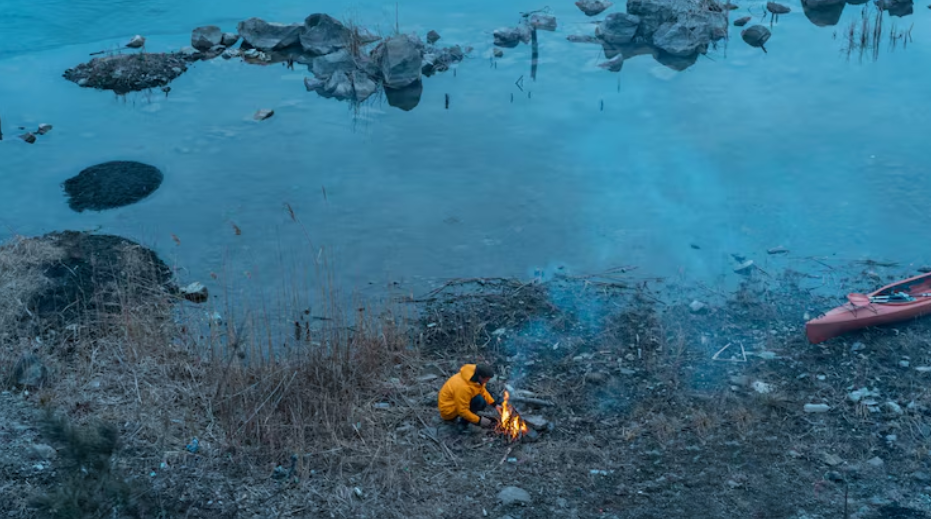
The Ocean Floor Is Becoming a Dumping Ground

In ways that scientists are still attempting to comprehend, they serve as a conduit for nutrients, provide habitat for vulnerable cold-water species, and link coastal ecosystems to the abyss. Many marine scientists believe that the amount of life that depends on these canyons is underestimated when they are treated like handy drainpipes.

You wouldn’t necessarily notice anything striking if you strolled along a coastline close to one of these operations, such as the rough Aegean regions of Turkey, the volcanic shores of Indonesia, or the fjords of Norway. Underwater, the pipe vanishes. The ocean has the same appearance. However, baseline studies in locations like Chile’s Chañaral, where tailings were dumped into surface waters between 1938 and 1975, demonstrated the duration of the harm. The ecological damage persisted decades after operations ceased.

With environmental impact assessments and discharge depths selected to maintain the slurry below the euphotic zone, modern DSTD is a more engineered process. However, only sixteen of the approximately 2,500 large industrialized mines in the world employ this technique, which is telling. It’s not a fringe solution, nor is it the norm. It occupies a strange middle ground and is taken seriously when land-based tailings storage isn’t practical, frequently in tropical mountainous areas where dam failures present their own disastrous risks.

The fact that the deep sea is dealing with more than just tailings complicates the discussion. It is taking in the effects of plastic pollution, overfishing, climate change, and now the impending threat of deep-seabed mining. Researchers who focus on cumulative effects contend that evaluating DSTD separately is ineffective. More pressure is being applied to the ocean floor from more directions than in the past.

The public discourse surrounding all of this is so thin that it’s difficult to ignore. There are only a few dozen researchers worldwide who focus on benthic recovery, plume behavior, and tailings dispersion—a small group with an enormous question. Unresolved issues include whether DSTD can be implemented responsibly, whether some sites are just too sensitive, and whether or not the next generation of mines will rely on it. As the rest of the world looks elsewhere, the slurry continues to flow in a few locations and settles somewhere on the deep seafloor.

Dumping Ground Ocean Floor
Share. Facebook Twitter Pinterest LinkedIn Telegram Reddit Email
Previous ArticleInside Deep Sea ID: The Field Guide That Travels Where Wi-Fi Can’t Reach
Next Article The El Niño Mystery: Why Oceanographers Admitted Their 2025 Models Were Completely Wrong
Derrick Lester

    Derrick Lester is a professor and editor at indeep-project.org. His academic career has been molded by a single, enduring obsession: the sea and all life in it. Drawing from marine biology, oceanography, and the kind of hard-won field knowledge that only comes from spending significant time on and under the water, Derrick's writing has the depth of a scholar thanks to his years of research and teaching experience. His writing delves into the science of marine life with the inquisitiveness of someone who has never fully moved past the wonder of what exists beneath the surface. Derrick hopes to introduce readers to a world that encompasses over 70% of the planet and is, in many respects, still largely unexplored through his contributions to indeep-project.org.

    Related Posts

    The Skidaway Institute of Oceanography Is Doing Research That Could Reshape Coastal Policy Across the South

    April 27, 2026

    The Secret “Surveillance Cover” Behind Modern Deep-Sea Mining Operations

    April 27, 2026

    Inside Deep Sea ID: The Field Guide That Travels Where Wi-Fi Can’t Reach

    April 27, 2026

    World Register of Deep-Sea Species: The Quiet Project Mapping Earth’s Final Frontier

    April 27, 2026
    Add A Comment
    Leave A Reply Cancel Reply

    You must be logged in to post a comment.

    Don't Miss

    The Skidaway Institute of Oceanography Is Doing Research That Could Reshape Coastal Policy Across the South

    By Derrick LesterApril 27, 2026

    On Skidaway Island, which is located just southeast of Savannah, there is a section of…

    How the Copernicus Ocean State Report Is Warning That Climate Change Has Now Reached Every Single Ocean Basin

    April 27, 2026

    A 10,000-Foot Dive: The Undergrad Who Discovered a New Ecosystem From Her Dorm Room

    April 27, 2026

    The UN’s “Game-Changing” Ocean Treaty Is Here. Will the U.S. Actually Abide by It?

    April 27, 2026

    The Secret “Surveillance Cover” Behind Modern Deep-Sea Mining Operations

    April 27, 2026

    The El Niño Mystery: Why Oceanographers Admitted Their 2025 Models Were Completely Wrong

    April 27, 2026

    The Ocean Floor Is Becoming a Dumping Ground — and Almost No One Is Watching

    April 27, 2026
    About Us
    About Us

    Indeep-project.org is dedicated to disseminating information that is supported by data, open about its sources, and truthful about the limits of human knowledge.
    Peer-reviewed studies, official scientific publications, and the knowledge of contributors with firsthand knowledge of ecology, environmental policy, and marine science are all sources of information used by our editorial team. Content that expresses opinion is clearly marked as such, whether it comes from our own contributors or from outside sources.
    Important Information Opinion pieces, commentary, and third-party viewpoints on subjects like science, technology, finance, politics, and public policy are among the content published on indeep-project.org. Only educational and informational purposes are served by this content. It does not constitute expert scientific, financial, legal, or medical advice; rather, it reflects the opinions of the original authors.
    We strongly advise readers to seek qualified professional advice appropriate to their particular circumstances before acting on political, financial, or scientific information published on this platform. Decisions based on third-party opinion content published here are not endorsed, recommended, or liable for by indeep-project.org.

    Our Picks

    The UN’s “Game-Changing” Ocean Treaty Is Here. Will the U.S. Actually Abide by It?

    April 27, 2026

    The Secret “Surveillance Cover” Behind Modern Deep-Sea Mining Operations

    April 27, 2026

    The El Niño Mystery: Why Oceanographers Admitted Their 2025 Models Were Completely Wrong

    April 27, 2026

    The Ocean Floor Is Becoming a Dumping Ground — and Almost No One Is Watching

    April 27, 2026

    Inside Deep Sea ID: The Field Guide That Travels Where Wi-Fi Can’t Reach

    April 27, 2026

    Mining, Fishing, Genetic Gold: The Battle Brewing Beneath the Waves

    April 27, 2026
    • Home
    • Privacy Policy
    • Terms of Service
    • Disclaimer
    • About
    • Indeep
    • Marine Life
    • News
    © 2026 ThemeSphere. Designed by ThemeSphere.

    Type above and press Enter to search. Press Esc to cancel.