
Close Menu
Indeep ProjectIndeep Project
  • Home
  • Privacy Policy
  • Terms of Service
  • Disclaimer
  • About
  • Indeep
  • Marine Life
  • News

Subscribe to Updates

Get the latest creative news from FooBar about art, design and business.

What's Hot

The Skidaway Institute of Oceanography Is Doing Research That Could Reshape Coastal Policy Across the South

April 27, 2026

How the Copernicus Ocean State Report Is Warning That Climate Change Has Now Reached Every Single Ocean Basin

April 27, 2026

A 10,000-Foot Dive: The Undergrad Who Discovered a New Ecosystem From Her Dorm Room

April 27, 2026
Facebook X (Twitter) Instagram
Indeep ProjectIndeep Project
SUBSCRIBE
  • Home
  • Privacy Policy
  • Terms of Service
  • Disclaimer
  • About
  • Indeep
  • Marine Life
  • News
Indeep ProjectIndeep Project
Home»Indeep»The Secret “Surveillance Cover” Behind Modern Deep-Sea Mining Operations
Indeep

The Secret “Surveillance Cover” Behind Modern Deep-Sea Mining Operations

Derrick LesterBy Derrick LesterApril 27, 2026No Comments4 Mins Read
Share
Facebook Twitter Reddit Telegram Pinterest Email

It’s difficult to ignore how rapidly the discourse surrounding deep-sea mining has evolved. Five years ago, the industry marketed itself as a clean-energy narrative: nickel for batteries, cobalt for electric vehicles, and a courteous attempt to save the environment. Now, as you read the more subdued pages of defense procurement journals or stroll through Singapore’s trade halls, you begin to sense something else humming beneath the surface.

The ships are larger than they should be. The sensor packages are unfamiliar. Furthermore, the maps of the seafloor that these businesses are covertly creating hardly resemble what a mining engineer would actually require.

Profile: The Deep-Sea Mining & Surveillance ConvergenceDetails
SectorIndustrial mineral extraction, dual-use marine technology
Geographic focusClarion-Clipperton Zone, Pacific Ocean, Cook Islands waters
Primary mineralsPolymetallic nodules: cobalt, nickel, manganese, rare earths
Key regulatorInternational Seabed Authority (ISA), Kingston, Jamaica
Notable corporate playersThe Metals Company, GSR, Lockheed Martin’s UK Seabed Resources
Estimated nodule reservesOver 21 billion tonnes of mineral-rich deposits
Surveillance hardware involvedAUVs, multibeam sonar, hydrophone arrays, fiber-optic seabed cables
Regulatory status (2026)Commercial mining code still under negotiation
Environmental oppositionMore than 30 nations supporting a moratorium
Independent ocean watchdogDeep Sea Conservation Coalition

Those who follow this closely feel that the surveillance angle was always part of the plan. Last spring, a retired hydrographer from Australia told me that he laughed when he saw the side-scan sonar specifications on one of the more recent nodule-collection vehicles. “That’s not for rocks,” he remarked. The resolution was incorrect. The frequency range was incorrect. It was not mineral tracking equipment; rather, it was submarine tracking equipment. With a shrug, he placed another coffee order. He wasn’t furious. He simply believed it to be clear.

It functions because of a subtle mechanism. What the industry refers to as “baseline environmental monitoring,” which sounds uninteresting enough to deter further inquiries, is necessary for deep-sea mining. However, in reality, baseline monitoring entails ongoing acoustic surveillance of large areas of international waters.
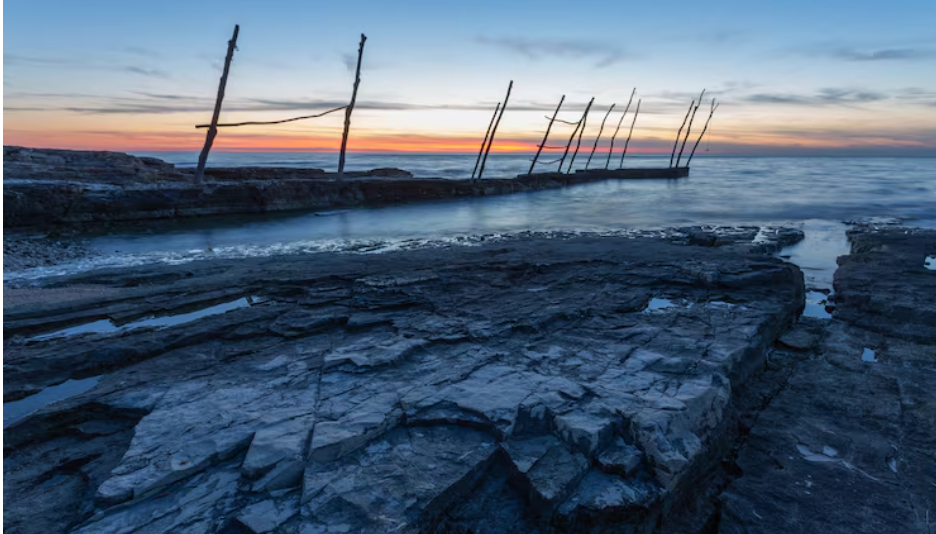
The Secret "Surveillance Cover"
The Secret “Surveillance Cover”

It refers to hydrophone arrays that are sensitive enough to detect a passing ship’s engine signature from hundreds of kilometers away. It entails fiber-optic lines and seabed-mounted cameras that, once installed, are difficult to remove. In other words, a permission slip to wire up the ocean floor is included with the mining license.

A few governments have taken notice. Concerns regarding Chinese research vessels using mining permits in the Atlantic have reportedly been voiced by Norwegian intelligence officials. On the more subdued end of the spectrum, American defense planners have begun to finance what they refer to as “dual-use” seabed mapping. The Pentagon does not use the word “surveillance.” They refer to it as “domain awareness.” It’s the same thing. You get the feeling from watching this play out over the last two years that everyone is aware of what’s going on, but hardly anyone wants to say it aloud.

My thoughts are primarily focused on the Pacific island nations that are caught in the midst of all of this. Small nations like Nauru, Tonga, and the Cook Islands signed mining sponsorship agreements years ago, sometimes under pressure from negotiators who flew in once and never returned, and sometimes for revenue figures that now appear modest. Infrastructure and royalties were promised to them. In reality, they might have consented to hosting other people’s listening posts within their territorial waters. Whether any of them comprehended the surveillance dimension completely is still unknown. I’ve spoken with some local officials who insist they did. More openly, some acknowledge that they did not read every annex.

Even though the prospectus makes no mention of it, investors appear to think that the surveillance value is now included in the valuations. Venture capital firms that are close to the defense industry have entered the market quite quickly. Even though the Metals Company’s stock chart is unpredictable, it follows geopolitical tension more closely than cobalt prices, which is a tell in and of itself. The story was supposed to be about mining. From the start, the story might have been something different.

It’s a little thing that sticks with me. During a port visit in Rotterdam last year, I observed a crew loading “scientific survey equipment” onto a ship headed for the Clarion-Clipperton Zone. The manifests were ambiguous, and the crates were sealed. The same crates had fallen off a naval contractor’s truck the previous week, a dockworker casually informed me. He said it the way people say things they shouldn’t be aware of. The ship set sail at dawn after he returned to his work.

Surveillance Cover The Secret
Share. Facebook Twitter Pinterest LinkedIn Telegram Reddit Email
Previous ArticleThe El Niño Mystery: Why Oceanographers Admitted Their 2025 Models Were Completely Wrong
Next Article The UN’s “Game-Changing” Ocean Treaty Is Here. Will the U.S. Actually Abide by It?
Derrick Lester

    Derrick Lester is a professor and editor at indeep-project.org. His academic career has been molded by a single, enduring obsession: the sea and all life in it. Drawing from marine biology, oceanography, and the kind of hard-won field knowledge that only comes from spending significant time on and under the water, Derrick's writing has the depth of a scholar thanks to his years of research and teaching experience. His writing delves into the science of marine life with the inquisitiveness of someone who has never fully moved past the wonder of what exists beneath the surface. Derrick hopes to introduce readers to a world that encompasses over 70% of the planet and is, in many respects, still largely unexplored through his contributions to indeep-project.org.

    Related Posts

    The Skidaway Institute of Oceanography Is Doing Research That Could Reshape Coastal Policy Across the South

    April 27, 2026

    The Ocean Floor Is Becoming a Dumping Ground — and Almost No One Is Watching

    April 27, 2026

    Inside Deep Sea ID: The Field Guide That Travels Where Wi-Fi Can’t Reach

    April 27, 2026

    World Register of Deep-Sea Species: The Quiet Project Mapping Earth’s Final Frontier

    April 27, 2026
    Add A Comment
    Leave A Reply Cancel Reply

    You must be logged in to post a comment.

    Don't Miss

    The Skidaway Institute of Oceanography Is Doing Research That Could Reshape Coastal Policy Across the South

    By Derrick LesterApril 27, 2026

    On Skidaway Island, which is located just southeast of Savannah, there is a section of…

    How the Copernicus Ocean State Report Is Warning That Climate Change Has Now Reached Every Single Ocean Basin

    April 27, 2026

    A 10,000-Foot Dive: The Undergrad Who Discovered a New Ecosystem From Her Dorm Room

    April 27, 2026

    The UN’s “Game-Changing” Ocean Treaty Is Here. Will the U.S. Actually Abide by It?

    April 27, 2026

    The Secret “Surveillance Cover” Behind Modern Deep-Sea Mining Operations

    April 27, 2026

    The El Niño Mystery: Why Oceanographers Admitted Their 2025 Models Were Completely Wrong

    April 27, 2026

    The Ocean Floor Is Becoming a Dumping Ground — and Almost No One Is Watching

    April 27, 2026
    About Us
    About Us

    Indeep-project.org is dedicated to disseminating information that is supported by data, open about its sources, and truthful about the limits of human knowledge.
    Peer-reviewed studies, official scientific publications, and the knowledge of contributors with firsthand knowledge of ecology, environmental policy, and marine science are all sources of information used by our editorial team. Content that expresses opinion is clearly marked as such, whether it comes from our own contributors or from outside sources.
    Important Information Opinion pieces, commentary, and third-party viewpoints on subjects like science, technology, finance, politics, and public policy are among the content published on indeep-project.org. Only educational and informational purposes are served by this content. It does not constitute expert scientific, financial, legal, or medical advice; rather, it reflects the opinions of the original authors.
    We strongly advise readers to seek qualified professional advice appropriate to their particular circumstances before acting on political, financial, or scientific information published on this platform. Decisions based on third-party opinion content published here are not endorsed, recommended, or liable for by indeep-project.org.

    Our Picks

    The UN’s “Game-Changing” Ocean Treaty Is Here. Will the U.S. Actually Abide by It?

    April 27, 2026

    The Secret “Surveillance Cover” Behind Modern Deep-Sea Mining Operations

    April 27, 2026

    The El Niño Mystery: Why Oceanographers Admitted Their 2025 Models Were Completely Wrong

    April 27, 2026

    The Ocean Floor Is Becoming a Dumping Ground — and Almost No One Is Watching

    April 27, 2026

    Inside Deep Sea ID: The Field Guide That Travels Where Wi-Fi Can’t Reach

    April 27, 2026

    Mining, Fishing, Genetic Gold: The Battle Brewing Beneath the Waves

    April 27, 2026
    • Home
    • Privacy Policy
    • Terms of Service
    • Disclaimer
    • About
    • Indeep
    • Marine Life
    • News
    © 2026 ThemeSphere. Designed by ThemeSphere.

    Type above and press Enter to search. Press Esc to cancel.