
Close Menu
Indeep ProjectIndeep Project
  • Home
  • Privacy Policy
  • Terms of Service
  • Disclaimer
  • About
  • Indeep
  • Marine Life
  • News
Indeep ProjectIndeep Project
SUBSCRIBE
  • Home
  • Privacy Policy
  • Terms of Service
  • Disclaimer
  • About
  • Indeep
  • Marine Life
  • News
Indeep ProjectIndeep Project
Home»Indeep»Scientists Are Discovering That Deep-Sea Ecosystems Are Far More Interconnected Than Any Model Predicted
Indeep

Scientists Are Discovering That Deep-Sea Ecosystems Are Far More Interconnected Than Any Model Predicted

Derrick LesterBy Derrick LesterMay 5, 2026No Comments4 Mins Read
Share
Facebook Twitter Reddit Telegram Pinterest Email

The deep ocean has been viewed for the majority of human existence as a sort of afterthought, a chilly, dark basement of the earth that is supposed to be biologically meaningless. That presumption is rapidly coming apart.

An increasing amount of research, much of which has only been published in recent years, indicates that the seafloor is more akin to a silently humming network that connects ecosystems over thousands of kilometers of dark water than it is to a collection of isolated pockets.

FieldDetail
Topic FocusDeep-sea ecosystem connectivity and biodiversity
Lead Research InstitutionsMuseums Victoria Research Institute and the University of Oxford, Department of Zoology
Landmark StudyBrittle star (Ophiuroidea) global DNA mapping
Specimens Analysed2,699 brittle stars from 48 natural history museums worldwide
Published InNature (2024) and Molecular Ecology
Lead ResearcherDr Tim O’Hara, Senior Curator of Marine Invertebrates
Depth Definition of “Deep Sea”Below 200 metres, where photosynthesis ends
Share of Earth’s Surface CoveredRoughly 60%, with average ocean depth around 3,800 m
Time Range Covered by StudyOver 100 million years of marine evolution
Key Threats IdentifiedDeep-sea mining, bottom trawling, pollution, climate change
Population Genetics Studies in 30 YearsOnly 77, covering just 115 species
Habitats of ConcernCold-water coral gardens, abyssal plains, seamounts, hadal trenches

The most remarkable recent case came from Museums Victoria in Australia, where scientists under the direction of Dr. Tim O’Hara examined the DNA of around 2,700 brittle stars that were taken from museum drawers worldwide. Glamorous animals are not brittle stars. They have been scuttling down the seafloor for almost 480 million years, and they resemble distant cousins of starfish with their spindly limbs and silent movement. However, by tracking their genetic connections, the team discovered something that the previous models had mostly overlooked: people from Tasmania and Iceland, which are separated by whole oceans, were connected by protracted, gradual migrations that took place over geological time.

It’s difficult to ignore how such discovery contradicts the previous mental image. Temperature, coasts, and the chaotic fluctuations of sunlight water all constrain shallow marine life. In contrast, the deep water is remarkably homogeneous—cold, dark, and stable—and that stability appears to function as a conveyor.
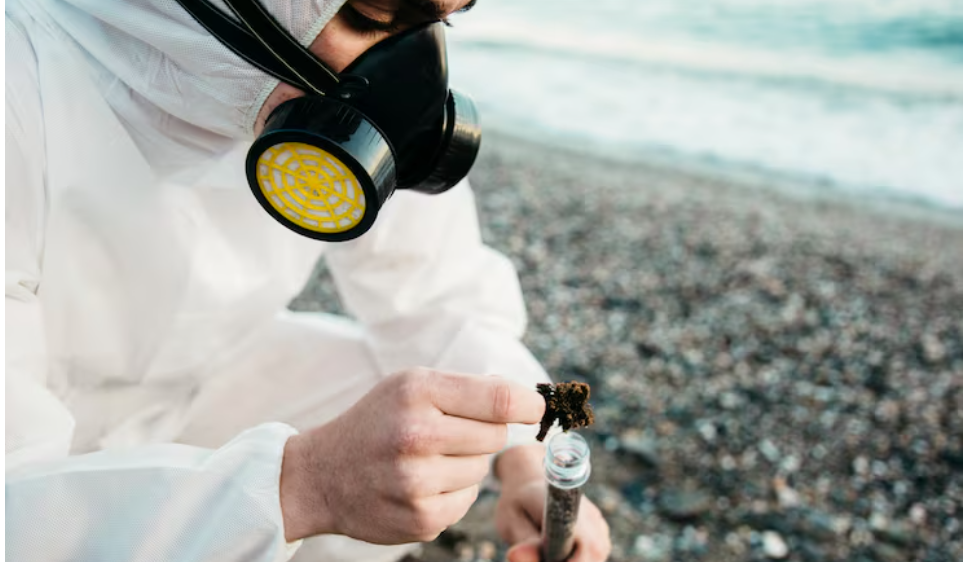
Scientists Are Discovering That Deep-Sea

For weeks or even longer, yolk-rich larvae float on deep currents on what O’Hara has dubbed a “connected superhighway.” Reading the study gives me the impression that scientists have been looking at a wide road and thinking it’s a wall.

The Oxford review, which was published in Molecular Ecology, adds an awkward footnote and comes to a similar result from a different perspective. Only 77 population genetics studies involving 115 species of deep-sea crustaceans have been conducted in the past thirty years. There is only one paper on life below 5,000 meters, which is a fourth of the planet’s seabed. There are concerns about how much of the picture is truly visible to us because the majority of the work has been concentrated in the shallower, commercially valuable zones.

One of the Oxford co-authors, Christopher Roterman, expressed the concern clearly. As he put it, we today possess an unparalleled capacity to disrupt societies that we hardly comprehend. Permits for deep-sea mining are being discussed. Coral gardens that may be older than some European cities are scraped by trawl gear. There are unidentified ways that plastic and heated water filter down. The paradox is that basic ecology is lagging behind the acceleration of exploitation.

The implication of the new connectivity research is what gives it more weight. In all honesty, damage in one location is hardly a local issue if a coral garden off the coast of Greenland is genetically linked to one in the South Pacific. Resilience in the deep water might rely on connections that scientists haven’t even identified yet. While many marine biologists are observing this, it is evident that investors in seabed mineral companies do not think the dangers are reasonable.

The entire image has a humble quality. Less than a thousandth of a percent of the world’s greatest habitat—more than a billion cubic kilometers of water and 326 million square kilometers of seafloor—has been physically sampled. Long before we did, the brittle stars were aware of the highway.

Deep-Sea Scientists
Share. Facebook Twitter Pinterest LinkedIn Telegram Reddit Email
Previous ArticleHow Climate Mitigation Scenarios Might Actually Hurt Emergent Deep-Ocean Patterns
Next Article The Golden Orb Mystery That Stumped Deep-Sea Researchers for Years Has Finally Been Solved
Derrick Lester

    Derrick Lester is a professor and editor at indeep-project.org. His academic career has been molded by a single, enduring obsession: the sea and all life in it. Drawing from marine biology, oceanography, and the kind of hard-won field knowledge that only comes from spending significant time on and under the water, Derrick's writing has the depth of a scholar thanks to his years of research and teaching experience. His writing delves into the science of marine life with the inquisitiveness of someone who has never fully moved past the wonder of what exists beneath the surface. Derrick hopes to introduce readers to a world that encompasses over 70% of the planet and is, in many respects, still largely unexplored through his contributions to indeep-project.org.

    Related Posts

    The Golden Orb Mystery That Stumped Deep-Sea Researchers for Years Has Finally Been Solved

    May 5, 2026

    The University of Delaware Student Who Dove Deeper Than Most Humans Have Ever Gone — and What She Found

    May 5, 2026

    UK and Portugal Are Quietly Building the Most Ambitious Deep-Sea Research Partnership in the North Atlantic

    May 5, 2026

    Inside the Mission to Chart Atlantic Deep-Sea Life Before Deep-Sea Mining Destroys It

    May 5, 2026

    The Unseen Threat of Underwater Noise Pollution Discovered by Oceanographers

    May 5, 2026

    China’s All-Weather Deep-Sea Megastructure Has the West on High Alert

    April 28, 2026
    Add A Comment
    Leave A Reply Cancel Reply

    You must be logged in to post a comment.

    Don't Miss

    The Golden Orb Mystery That Stumped Deep-Sea Researchers for Years Has Finally Been Solved

    By Derrick LesterMay 5, 2026

    When something unexpected shows up on the screen, a certain type of stillness descends upon…

    Scientists Are Discovering That Deep-Sea Ecosystems Are Far More Interconnected Than Any Model Predicted

    May 5, 2026

    How Climate Mitigation Scenarios Might Actually Hurt Emergent Deep-Ocean Patterns

    May 5, 2026

    The North Atlantic’s Ventilation Change: How Three Decades of Warming Altered the Seas

    May 5, 2026

    China’s New AI Ocean Tool: Scientific Breakthrough or Covert Surveillance Mastermind?

    May 5, 2026

    Inside China’s 30-Story Floating Island: The Dawn of a New Deep-Sea Arms Race

    May 5, 2026

    The University of Delaware Student Who Dove Deeper Than Most Humans Have Ever Gone — and What She Found

    May 5, 2026
    About Us
    About Us

    Indeep-project.org is dedicated to disseminating information that is supported by data, open about its sources, and truthful about the limits of human knowledge.
    Peer-reviewed studies, official scientific publications, and the knowledge of contributors with firsthand knowledge of ecology, environmental policy, and marine science are all sources of information used by our editorial team. Content that expresses opinion is clearly marked as such, whether it comes from our own contributors or from outside sources.
    Important Information Opinion pieces, commentary, and third-party viewpoints on subjects like science, technology, finance, politics, and public policy are among the content published on indeep-project.org. Only educational and informational purposes are served by this content. It does not constitute expert scientific, financial, legal, or medical advice; rather, it reflects the opinions of the original authors.
    We strongly advise readers to seek qualified professional advice appropriate to their particular circumstances before acting on political, financial, or scientific information published on this platform. Decisions based on third-party opinion content published here are not endorsed, recommended, or liable for by indeep-project.org.

    Our Picks

    The North Atlantic’s Ventilation Change: How Three Decades of Warming Altered the Seas

    May 5, 2026

    China’s New AI Ocean Tool: Scientific Breakthrough or Covert Surveillance Mastermind?

    May 5, 2026

    Inside China’s 30-Story Floating Island: The Dawn of a New Deep-Sea Arms Race

    May 5, 2026

    The University of Delaware Student Who Dove Deeper Than Most Humans Have Ever Gone — and What She Found

    May 5, 2026

    UK and Portugal Are Quietly Building the Most Ambitious Deep-Sea Research Partnership in the North Atlantic

    May 5, 2026

    Inside the Mission to Chart Atlantic Deep-Sea Life Before Deep-Sea Mining Destroys It

    May 5, 2026
    • Home
    • Privacy Policy
    • Terms of Service
    • Disclaimer
    • About
    • Indeep
    • Marine Life
    • News
    © 2026 ThemeSphere. Designed by ThemeSphere.

    Type above and press Enter to search. Press Esc to cancel.