
Close Menu
Indeep ProjectIndeep Project
  • Home
  • Privacy Policy
  • Terms of Service
  • Disclaimer
  • About
  • Indeep
  • Marine Life
  • News
Indeep ProjectIndeep Project
SUBSCRIBE
  • Home
  • Privacy Policy
  • Terms of Service
  • Disclaimer
  • About
  • Indeep
  • Marine Life
  • News
Indeep ProjectIndeep Project
Home»Indeep»Inside the Mission to Chart Atlantic Deep-Sea Life Before Deep-Sea Mining Destroys It
Indeep

Inside the Mission to Chart Atlantic Deep-Sea Life Before Deep-Sea Mining Destroys It

Derrick LesterBy Derrick LesterMay 5, 2026No Comments4 Mins Read
Share
Facebook Twitter Reddit Telegram Pinterest Email

The Atlantic abyss doesn’t look like much, according to scientists. Just mud. Brown muck, endless, chilly, and beyond the reach of any rover’s headlamp. However, after a few minutes of watching the live broadcast from a research vessel, something changes. A transparent worm floats by.

Almost lavender in color, a sea cucumber trudges on the muck as if it had a place. Watching this gives us the impression that the deep ocean is more like a slow, patient metropolis than an empty plain, one that we have been passing by without ever knocking.

Mission / DetailInformation
Project NameSMARTEX (Seabed Mining And Resilience To EXperimental impact)
Lead InstitutionNatural History Museum, London
Primary Researcher CitedMuriel Rabone, deep-sea biologist
Region of FocusClarion-Clipperton Zone & comparable Atlantic abyssal plains
Approximate Survey Depth4,000 – 5,500 metres
Estimated Undescribed SpeciesRoughly 6,000 to 8,000
Regulatory BodyInternational Seabed Authority
Funding PartnerPew Charitable Trusts
Key ThreatPolymetallic nodule extraction
Linked PublicationCurrent Biology, 2023
Vessels InvolvedRRS James Cook, RRS Discovery
Years of Active Survey2013 – present

The work that is currently taking place across the Atlantic and, more notably, in the Pacific’s Clarion-Clipperton Zone takes place against this unsettling backdrop. Teams from the SMARTEX project and researchers from the Natural History Museum in London are collecting sediment cores, taking pictures of nodule fields, and cataloging species that have never been given names. Over 90% of what they discover may be novel to science. It used to seem like an exaggeration. It no longer does.

There is a sense of urgency from above. Supported by national sponsors, mining corporations seek to collect the metallic nodules—small, blackened chunks of manganese, nickel, cobalt, and copper—scattered throughout the seafloor. the type of metals found in wind turbine magnets and batteries for electric vehicles.
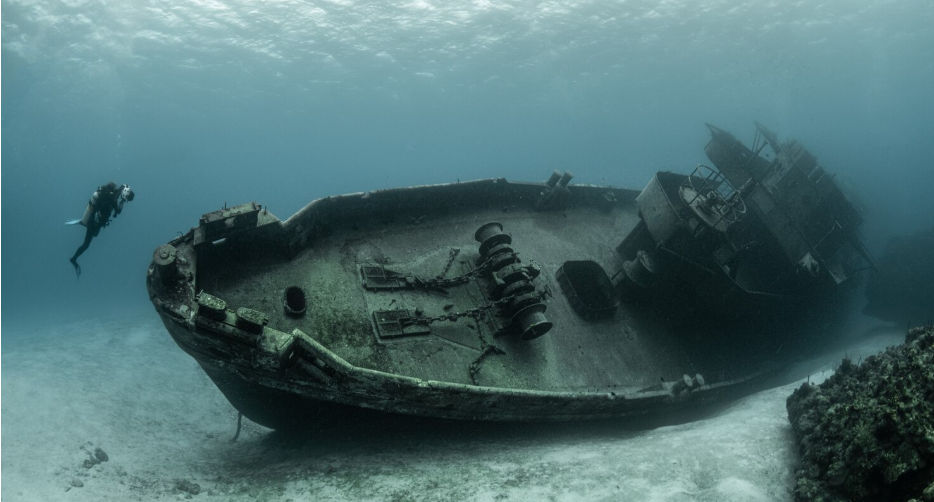
Inside the Mission to Chart Atlantic Deep-Sea

The well-crafted and practiced argument is that they are necessary for the green transition. Quieter but more difficult to reject is the counterargument that we are on the verge of industrializing an ecology that we hardly comprehend.

After years of sorting through decades’ worth of deep-sea archives, Muriel Rabone discovered something disturbing. It came out that a stunning portion of the data—at least a quarter, probably a third—were duplicates. Names are misspelled, records are double-logged, and specimens have inconsistent labels. It seems to be a clerical problem. It isn’t. The process of granting mining permits is directly influenced by diversity estimations. The damage is permitted on paper that doesn’t exactly match the seabed if the baseline is incorrect and the regulation is incorrect.

The images returned from these missions have an odd charm. A purple sea slug with a ribbon-like tail. Silt that hasn’t been touched in millions of years is threaded by hairy worms. Anemones that float on the current are ghostly. As you watch it happen, you can’t help but think of the crew of the HMS Challenger in the 1870s, when they dredged similar nodules onto a wooden deck and thought they had discovered something interesting. They were unaware that the curiosity would eventually be worth trillions of dollars.

Ecologist Andrew Thaler was informed twenty years ago by an industry CEO that commercial deep-sea mining would not occur for ten years. It remains thus. Prospects fail, the law becomes complicated, technology stalls, and new ones emerge. However, the regulatory clock is now running in a new way. There is genuine pressure on the International Seabed Authority to finalize a mining code for cobalt, copper, and nickel. Investors appear to think that this decade will witness the start of extraction. Because the environment continues to show how little we know, scientists remain unsure.

When you read the new studies, you are struck by how modest the science is in comparison to the magnitude of the stakes. While the bulldozers wait outside, researchers are effectively attempting to create the first official guest list for a celebration that has been going on for millions of years. It’s still unclear if that list will ever be completed and if it will make any adjustments. However, there’s a sense that we’re about to make a choice that we can’t undo as we watch the rovers travel across that silent, dark dirt.

Atlantic Deep-Sea
Share. Facebook Twitter Pinterest LinkedIn Telegram Reddit Email
Previous ArticleHow Climate Change Is Threatening the Economic Backbone of the Entire Pacific
Next Article UK and Portugal Are Quietly Building the Most Ambitious Deep-Sea Research Partnership in the North Atlantic
Derrick Lester

    Derrick Lester is a professor and editor at indeep-project.org. His academic career has been molded by a single, enduring obsession: the sea and all life in it. Drawing from marine biology, oceanography, and the kind of hard-won field knowledge that only comes from spending significant time on and under the water, Derrick's writing has the depth of a scholar thanks to his years of research and teaching experience. His writing delves into the science of marine life with the inquisitiveness of someone who has never fully moved past the wonder of what exists beneath the surface. Derrick hopes to introduce readers to a world that encompasses over 70% of the planet and is, in many respects, still largely unexplored through his contributions to indeep-project.org.

    Related Posts

    The Golden Orb Mystery That Stumped Deep-Sea Researchers for Years Has Finally Been Solved

    May 5, 2026

    Scientists Are Discovering That Deep-Sea Ecosystems Are Far More Interconnected Than Any Model Predicted

    May 5, 2026

    The North Atlantic’s Ventilation Change: How Three Decades of Warming Altered the Seas

    May 5, 2026

    The University of Delaware Student Who Dove Deeper Than Most Humans Have Ever Gone — and What She Found

    May 5, 2026

    UK and Portugal Are Quietly Building the Most Ambitious Deep-Sea Research Partnership in the North Atlantic

    May 5, 2026

    The Unseen Threat of Underwater Noise Pollution Discovered by Oceanographers

    May 5, 2026
    Add A Comment
    Leave A Reply Cancel Reply

    You must be logged in to post a comment.

    Don't Miss

    The Golden Orb Mystery That Stumped Deep-Sea Researchers for Years Has Finally Been Solved

    By Derrick LesterMay 5, 2026

    When something unexpected shows up on the screen, a certain type of stillness descends upon…

    Scientists Are Discovering That Deep-Sea Ecosystems Are Far More Interconnected Than Any Model Predicted

    May 5, 2026

    How Climate Mitigation Scenarios Might Actually Hurt Emergent Deep-Ocean Patterns

    May 5, 2026

    The North Atlantic’s Ventilation Change: How Three Decades of Warming Altered the Seas

    May 5, 2026

    China’s New AI Ocean Tool: Scientific Breakthrough or Covert Surveillance Mastermind?

    May 5, 2026

    Inside China’s 30-Story Floating Island: The Dawn of a New Deep-Sea Arms Race

    May 5, 2026

    The University of Delaware Student Who Dove Deeper Than Most Humans Have Ever Gone — and What She Found

    May 5, 2026
    About Us
    About Us

    Indeep-project.org is dedicated to disseminating information that is supported by data, open about its sources, and truthful about the limits of human knowledge.
    Peer-reviewed studies, official scientific publications, and the knowledge of contributors with firsthand knowledge of ecology, environmental policy, and marine science are all sources of information used by our editorial team. Content that expresses opinion is clearly marked as such, whether it comes from our own contributors or from outside sources.
    Important Information Opinion pieces, commentary, and third-party viewpoints on subjects like science, technology, finance, politics, and public policy are among the content published on indeep-project.org. Only educational and informational purposes are served by this content. It does not constitute expert scientific, financial, legal, or medical advice; rather, it reflects the opinions of the original authors.
    We strongly advise readers to seek qualified professional advice appropriate to their particular circumstances before acting on political, financial, or scientific information published on this platform. Decisions based on third-party opinion content published here are not endorsed, recommended, or liable for by indeep-project.org.

    Our Picks

    The North Atlantic’s Ventilation Change: How Three Decades of Warming Altered the Seas

    May 5, 2026

    China’s New AI Ocean Tool: Scientific Breakthrough or Covert Surveillance Mastermind?

    May 5, 2026

    Inside China’s 30-Story Floating Island: The Dawn of a New Deep-Sea Arms Race

    May 5, 2026

    The University of Delaware Student Who Dove Deeper Than Most Humans Have Ever Gone — and What She Found

    May 5, 2026

    UK and Portugal Are Quietly Building the Most Ambitious Deep-Sea Research Partnership in the North Atlantic

    May 5, 2026

    Inside the Mission to Chart Atlantic Deep-Sea Life Before Deep-Sea Mining Destroys It

    May 5, 2026
    • Home
    • Privacy Policy
    • Terms of Service
    • Disclaimer
    • About
    • Indeep
    • Marine Life
    • News
    © 2026 ThemeSphere. Designed by ThemeSphere.

    Type above and press Enter to search. Press Esc to cancel.