

Climate scientists worked quietly confidently about the Southern Ocean for about thirty years. The numbers made it very evident that it was absorbing a significant amount of carbon. It was verified by models. Datasets supported it. The broader understanding of the global carbon cycle was constructed, at least in part, on the basis of this settled assumption. The type of paper that forces readers to read the abstract twice then emerged.
A team led by Guorong Zhong from the Chinese Academy of Sciences discovered something unsettling in a 2024 publication in Communications Earth & Environment: the Southern Ocean’s carbon sink had been overestimated by about 16% over the course of three decades. That overestimation has increased to roughly 29% since 2010. The average annual carbon uptake between 1992 and 2021 decreased from −1.01 PgC to −0.87 PgC according to the updated data. That is not a rounding error in the context of carbon science. The amount that the ocean has truly been doing for humanity has been meaningfully revised.
| Research Topic | Southern Ocean CO₂ carbon sink accuracy and historical overestimation |
|---|---|
| Lead Author | Guorong Zhong et al., Institute of Oceanology, Chinese Academy of Sciences |
| Published In | Communications Earth & Environment, Volume 5 (2024), Article No. 398 |
| Method Used | Boosting ensemble learning feed-forward neural networks (machine learning) applied to SOCAT pCO₂ dataset |
| Key Finding | Southern Ocean carbon sink overestimated by ~16% over three decades; by ~29% since 2010 |
| Corrected Sink Value | −0.87 PgC yr⁻¹ (revised down from original −1.01 PgC yr⁻¹ during 1992–2021) |
| Root Cause | Severe seasonal data gap — far fewer winter pCO₂ measurements than summer, skewing machine learning outputs |
| Region of Greatest Error | South of 60°S, beneath sea ice cover where winter ocean pCO₂ is much higher than previously accounted |
| Potential Future Risk | If sea ice melts completely, Southern Ocean carbon sink could shrink by a further ~0.14 PgC yr⁻¹ |
| Broader Significance | The global ocean absorbs ~25% of anthropogenic CO₂ emissions; recalibrating Southern Ocean estimates revises the global carbon budget |
| Related Long-Term Study | Evidence suggests deep Pacific Ocean CO₂ storage increased over 4.5 million years as Earth cooled (Novak et al., AGU Publications, 2026) |
It wasn’t a huge error. Its origins were almost unremarkable. Researchers have conducted significantly more surface ocean CO2 measurements in the summer than in the winter using a technique known as pCO₂ sampling. Winters in the Southern Ocean are harsh, isolated, and actually dangerous. The ships just don’t travel as frequently.
Over time, machine learning algorithms that mapped ocean carbon uptake worldwide were fed those skewed seasonal measurements. The patterns that were presented to the algorithms were learned. patterns, mostly in the summer. As a result, the amount of CO2 that the ocean was releasing back into the atmosphere during the cold months was systematically underestimated, even though the actual numbers are quite different.
This finding is especially noteworthy because it reveals the location of the worst underestimation. The CO2 concentrations in the surface ocean beneath winter sea ice south of 60°S are much higher than those in the atmosphere above. You wouldn’t anticipate that from a potent carbon sink. It is more in line with the opposite. Data that would have significantly altered the picture had been hidden by the sea ice, which had effectively served as a lid. The researchers discovered that the Southern Ocean’s ability to absorb carbon could decrease by an extra 0.14 PgC annually if that sea ice were to completely melt. This figure carries some weight given the current warming trends.
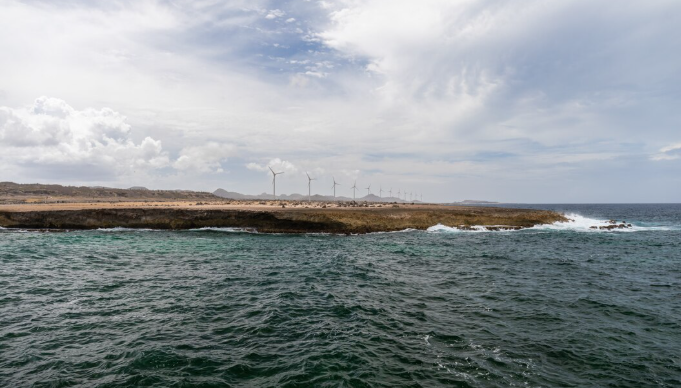
It is worthwhile to consider the implications of this type of correction on a large scale. Approximately 25% of annual anthropogenic CO2 emissions are believed to be absorbed by the world’s oceans; this figure is frequently brought up in policy papers, international negotiations, and climate discussions. About 40% of that oceanic uptake occurs in the Southern Ocean, which is located south of 35°S. The wider accounting of what the planet’s natural systems are actually absorbing and what is still in the air is affected when estimates of that region are reduced by almost a third.
Beneath all of this is a longer geological tale. According to a different study that was published in AGU Publications in early 2026, the deep Pacific accumulated more respired CO2 as Earth cooled and ice sheets expanded, tracing the relationship between deep ocean carbon storage and global climate back 4.5 million years. It implies that the ocean’s function in controlling atmospheric carbon is a planetary mechanism functioning over timescales that are difficult for humans to fully comprehend, rather than merely a contemporary convenience. The current disruption of that mechanism is the kind of thing that tends to matter more in retrospect than it does at the time, regardless of how small it seems year over year.
There’s a feeling that this correction will force a more thorough examination of the level of trust that the scientific community has in incomplete data. The Southern Ocean was just undersampled; it wasn’t lying. Now, the question is how many other climate science presumptions have similarly patchy, seasonal foundations. The complete ramifications for global carbon models are still unknown. However, the ocean kept its own records, and when scientists eventually figured out how to interpret them more accurately, the figures revealed a different narrative than the consensus.
